History
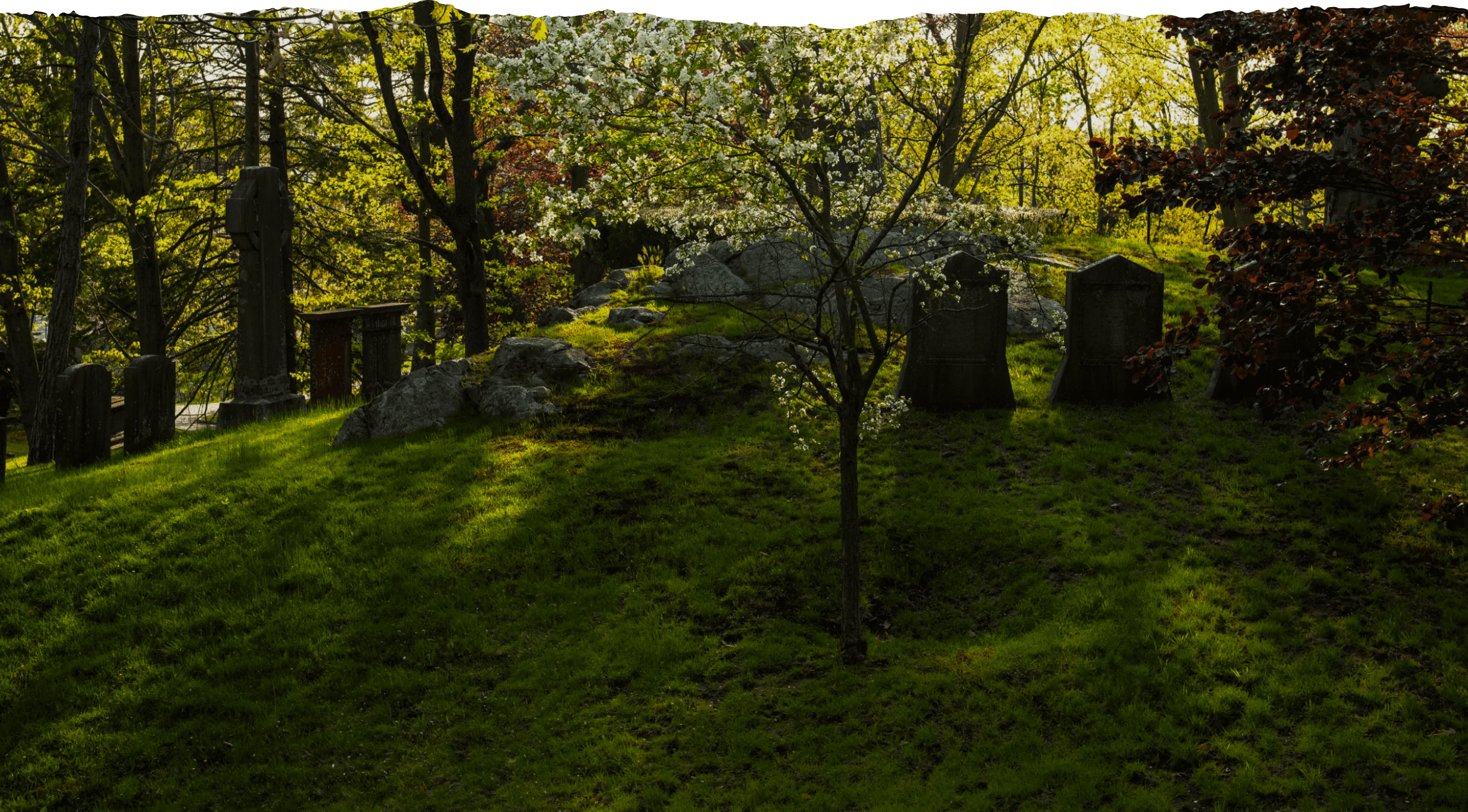
Harmony Grove Cemetery was founded in 1840 as a picturesque final resting place for loved ones.
History & Timeline
Harmony Grove Cemetery: An Historical Overview
In 1837, Colonel Francis F. Peabody proposed the creation of a rural cemetery for the City of Salem. At the time, existing burial sites in the city were becoming overcrowded. A new movement toward rural cemeteries was gaining momentum, inspired by the founding of Mount Auburn Cemetery in Cambridge in 1831. This movement reflected romantic ideals about nature, art, and death, influenced by cemetery designs in England and France.
As shown in the timeline below, economic conditions initially delayed progress toward establishing a cemetery association. However, by 1839, enough funds had been raised to purchase 35 acres of land, formerly owned by various citizens of Salem and the neighboring Town of Danvers. After evaluating multiple locations, a committee chose this site for its varied landscape, which included a rocky cliff, wooded knolls, open plains, and shaded groves. As early as 1824, locals had referred to this area as Harmony Grove for its natural beauty and serene atmosphere.
In February 1840, the “Proprietors of Harmony Grove Cemetery” were officially incorporated. At that time, the boundaries between Salem and Danvers were adjusted to place the entire cemetery within Salem city limits.
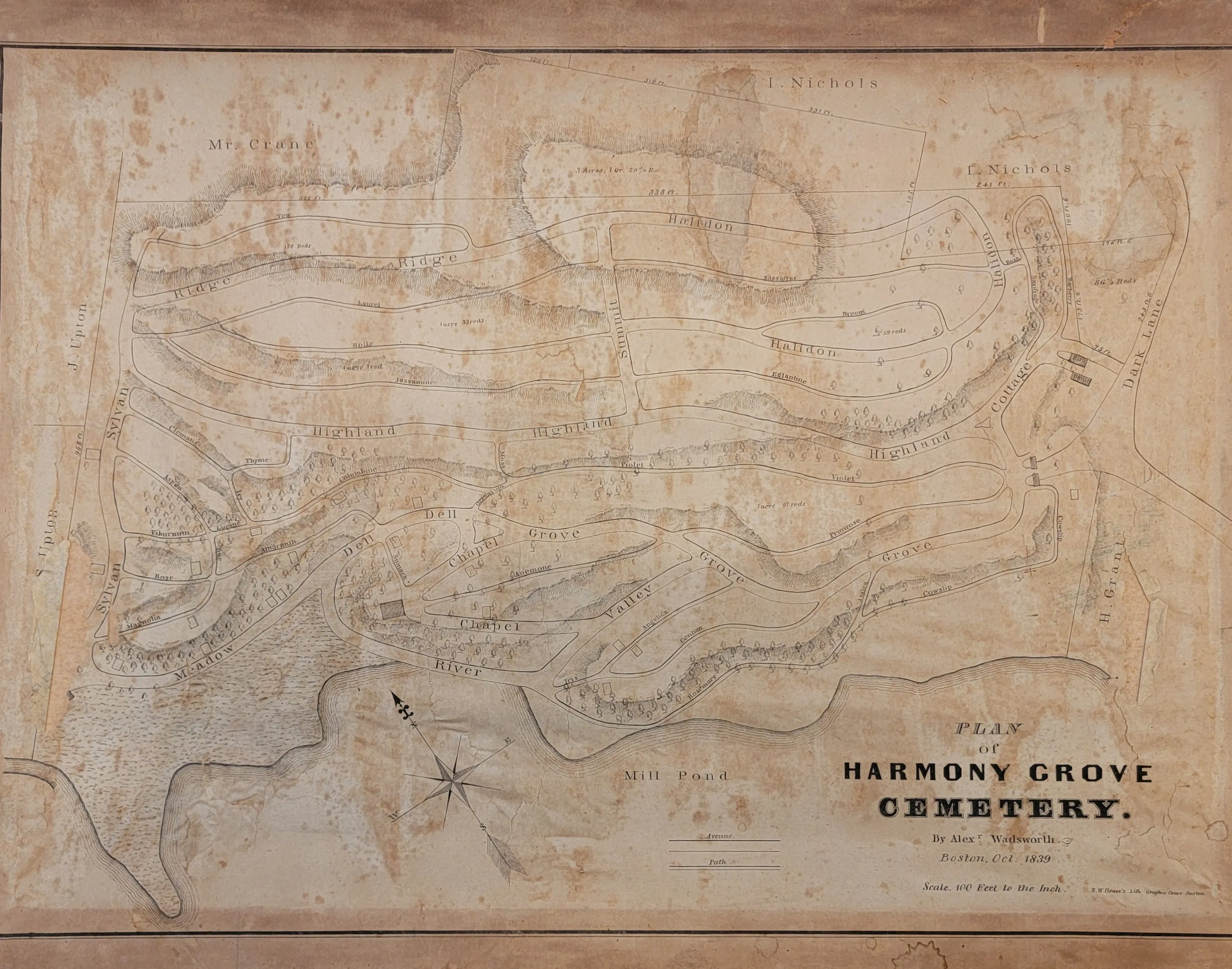
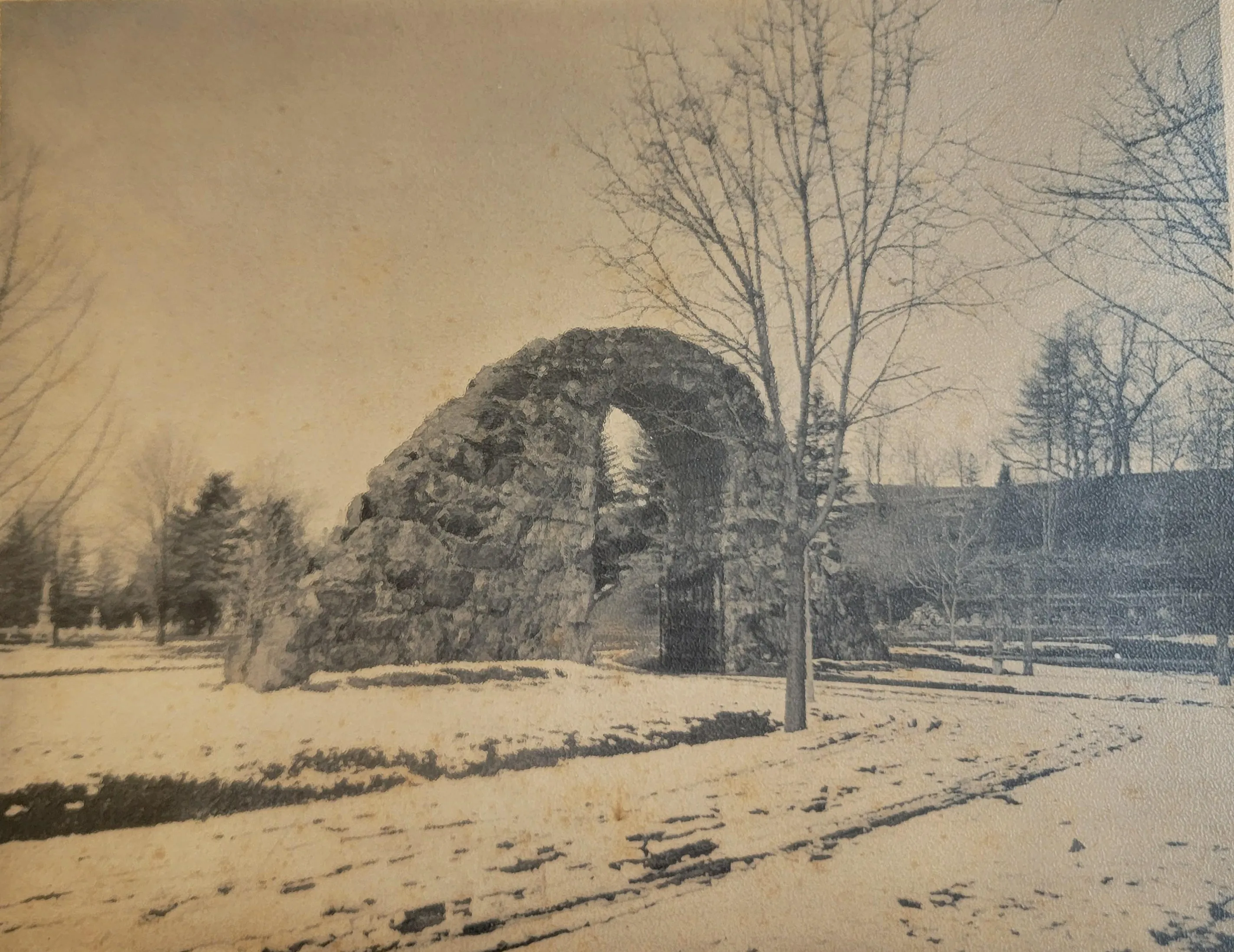
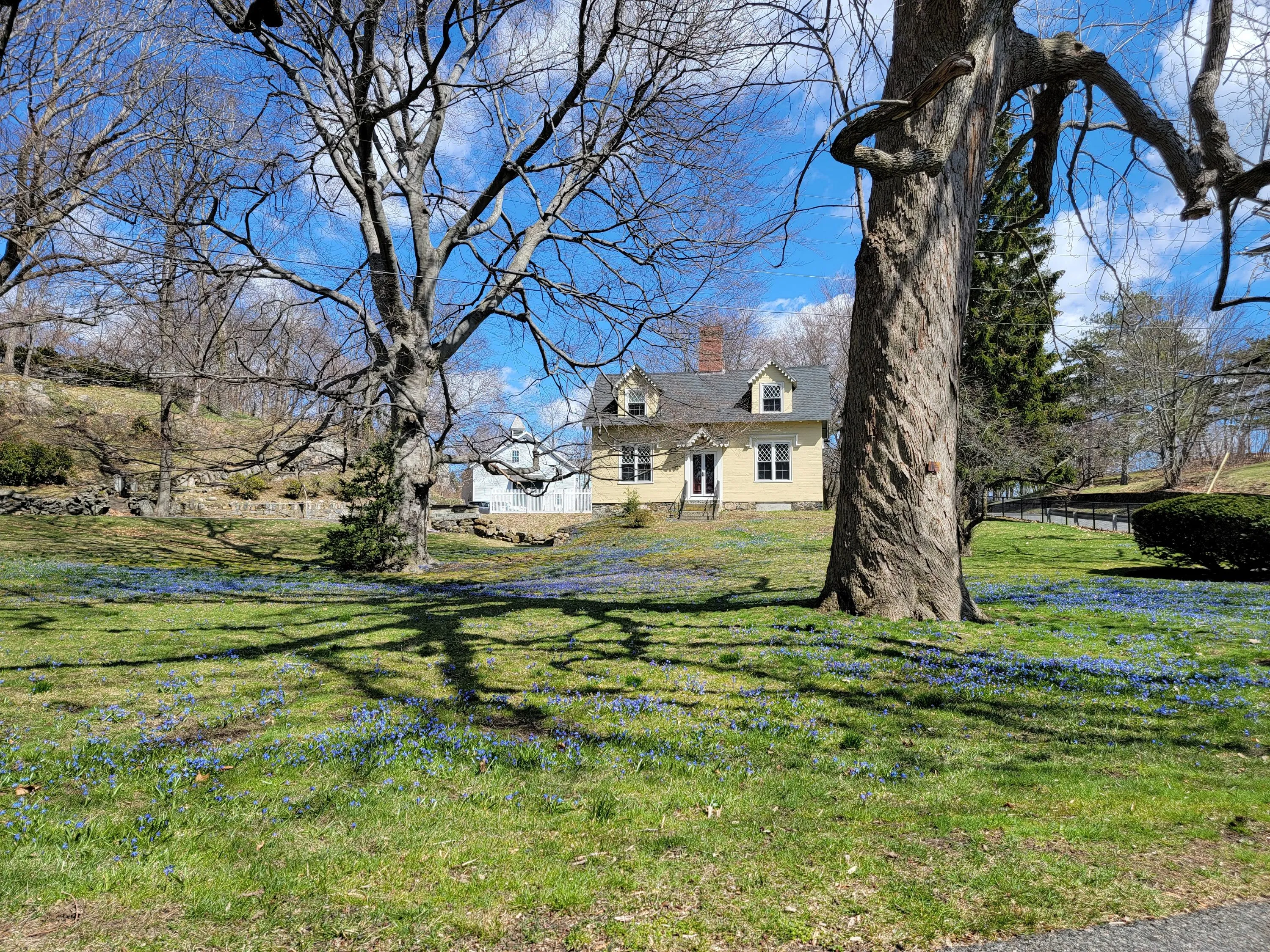
The layout of Harmony Grove, with its winding paths and natural contours, was designed by Alexander Wadsworth, who also worked on the design of Mount Auburn Cemetery. Before the cemetery’s consecration in June 1840, a rustic stone gateway and a Gothic-style superintendent’s cottage were constructed.
Growth and Development
In 1863, the cemetery’s Trustees established Soldiers' Lot to honor Salem residents who had died in the Civil War. A monument erected at its center reads:
“To the Memory of the Soldiers and Sailors of Salem who gave their lives in Defense of the Union 1861–1865.”
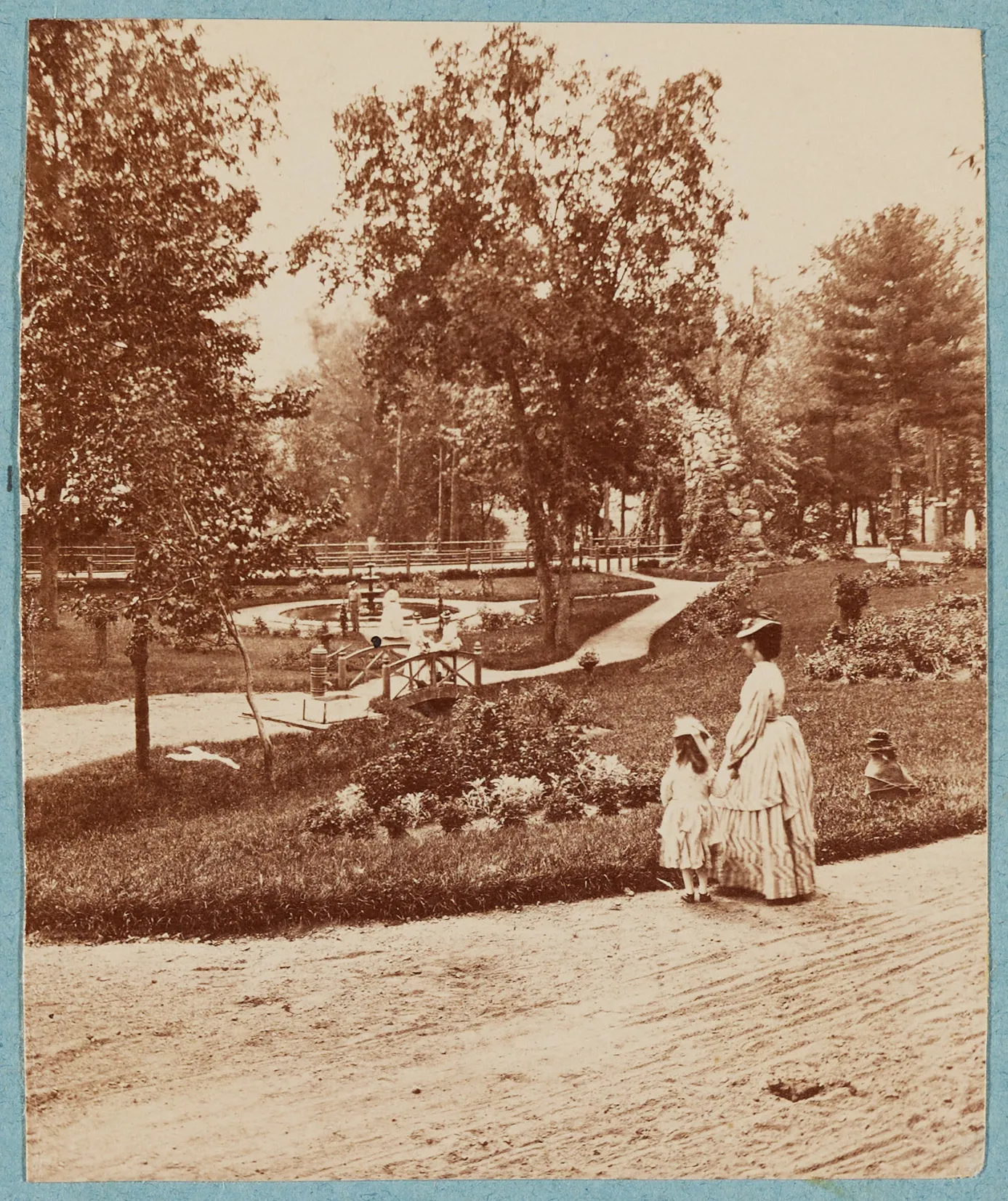
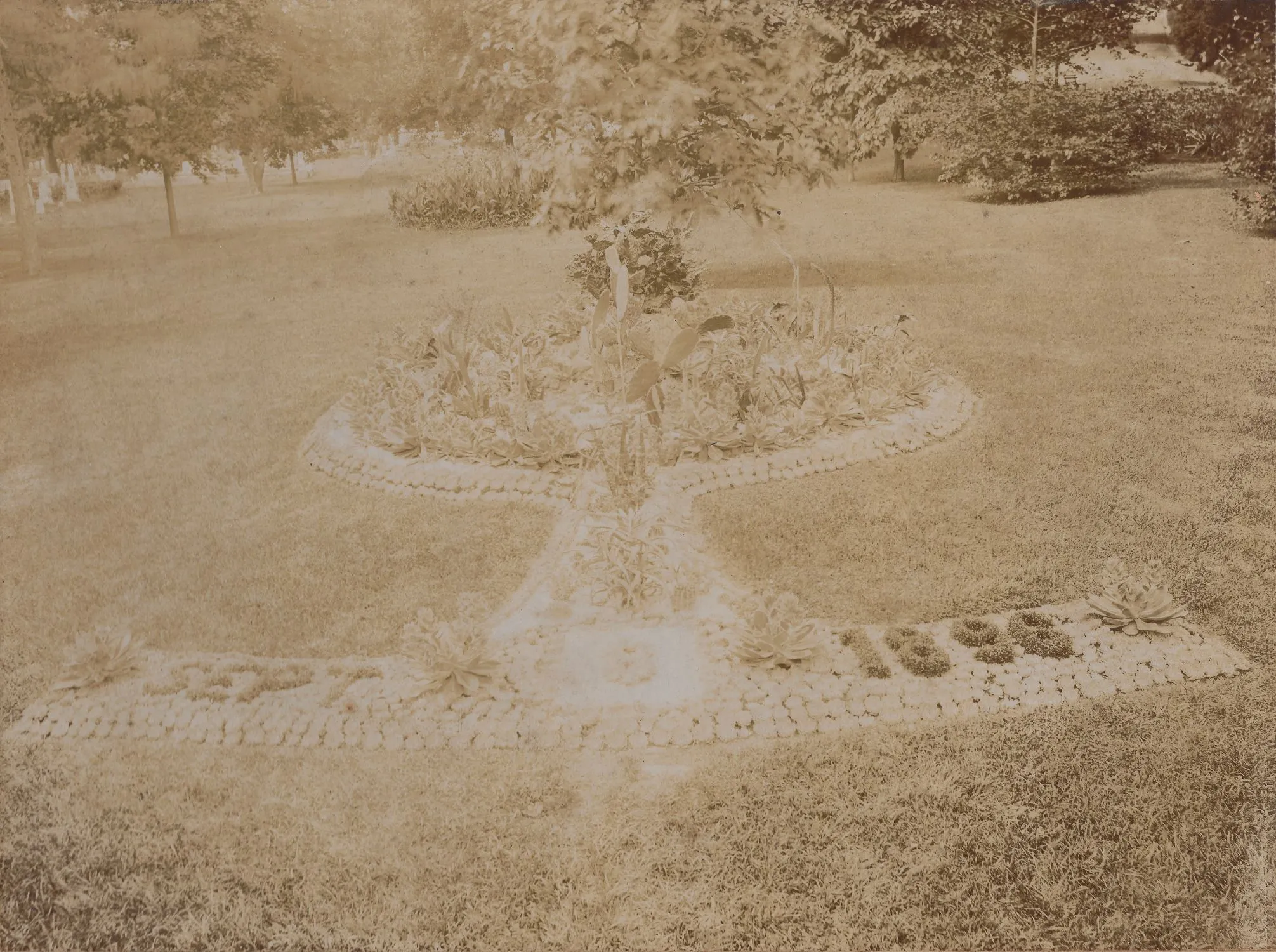
Throughout the 1870s, several improvements were made to the cemetery’s gates and fencing. A particularly notable development was the construction of three greenhouses over a seven-year period. These made it possible for the cemetery to grow its own flowers and shrubs, reducing reliance on outside suppliers and enhancing the grounds' beauty. In the early 1880s, road and pathway signs were installed. In 1888, iron fences and chains—once believed to be durable—were removed from all lots due to deterioration. The following year, Lot #1606 on Halidon was donated by the cemetery to the Salem Firemen’s Relief Association. By the 1890s, the cemetery saw further upgrades, including the installation of underground drainage systems and the grading of new burial areas. With support from the Salem Mayor and the Trustees, the U.S. War Department donated three Dahlgren cannons with Marsilly carriages for display in the Soldiers' Lot. These cannons had been key naval weapons during the Civil War. Around the same time, the cemetery’s greenhouses were renovated. In 1900, the cemetery adopted a Perpetual Care policy for all future lot sales, ensuring ongoing maintenance.
The Blake Memorial Chapel
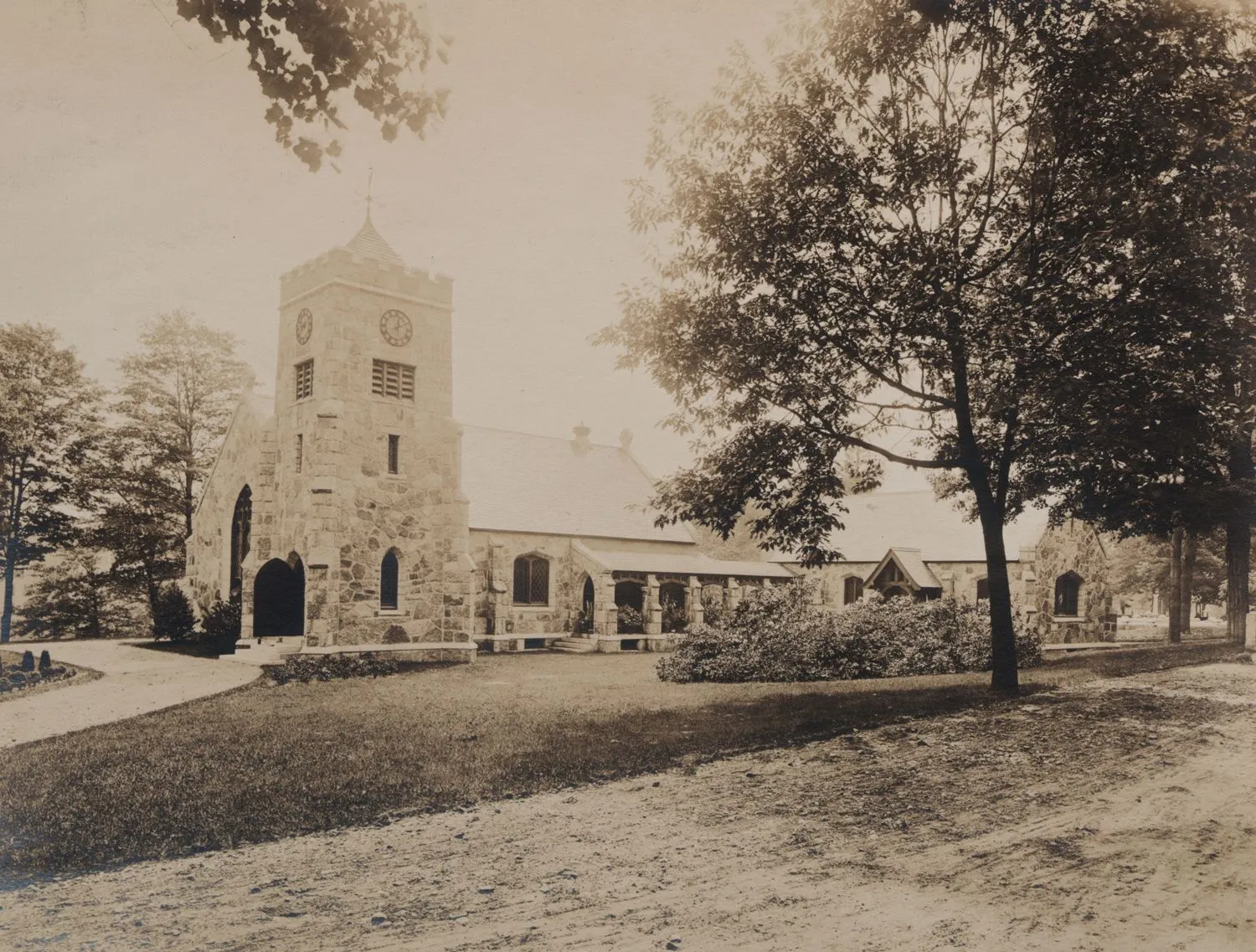
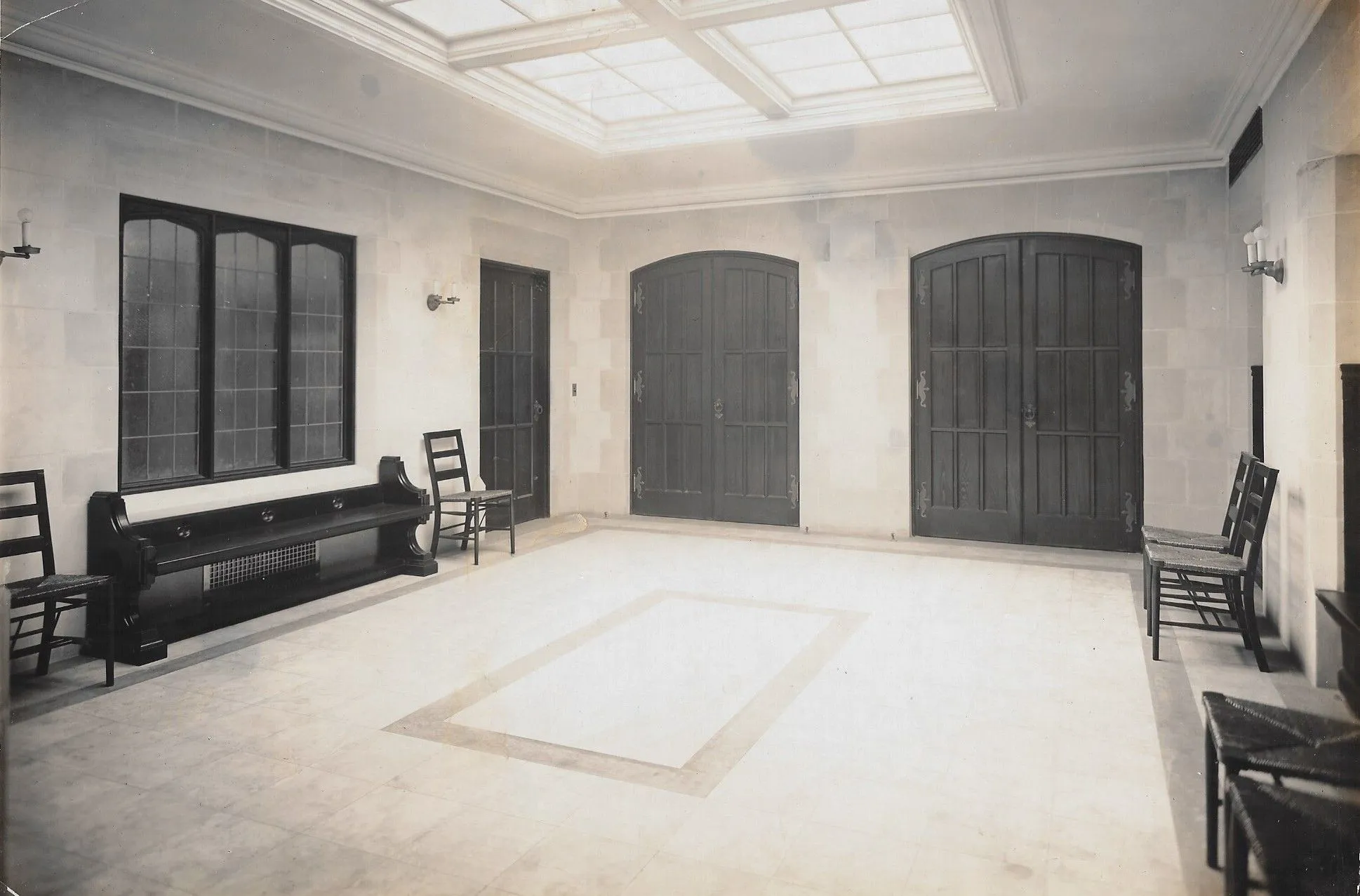
In 1901, the cemetery received notice of the will of Nancy Cordwell Blake, who had passed away on January 10. Her will directed that a chapel be built in memory of her son, George Harrison Blake. She requested that it be named The Blake Memorial Chapel and that a portrait of George be permanently displayed inside. Completed in 1904, the Blake Memorial Chapel included a chapel space, administrative offices, and a receiving tomb. For more details about the chapel’s architecture and stained-glass windows, please visit the Chapel History section on this website.
Cremation and Modernization
In 1917, two crematories were added to Harmony Grove. Though modernized several times over the years—most recently in 2023—they remain fully operational, and cremation services are still offered today.
Legacy
Over time, various properties, houses, and land were acquired, sold, or relocated to accommodate the cemetery’s needs. Thanks to the vision and dedication of its early founders, Harmony Grove Cemetery now spans nearly 57 acres of beautifully maintained and historically significant grounds.
1837
1837: Meeting held at The Lyceum to discuss the merits of establishing a Rural Cemetery on February 24th.
1839: The first 35 acres of land were purchased.
1839: The services of Alexander Wadsworth, a surveyor, civil engineer and map maker were secured to make a topographical plan and layout the grounds with walkways and paths.
1839: Stone gateway designed by Col. Frances Peabody built.
1840
February 19: “Proprietors of Harmony Grove Cemetery” was officially incorporated.
April and May: Superintendent's house built.
June 14: Consecration occurred with an estimated attendance between 6000 and 8000 people present.
July 9: First burial took place.
1860
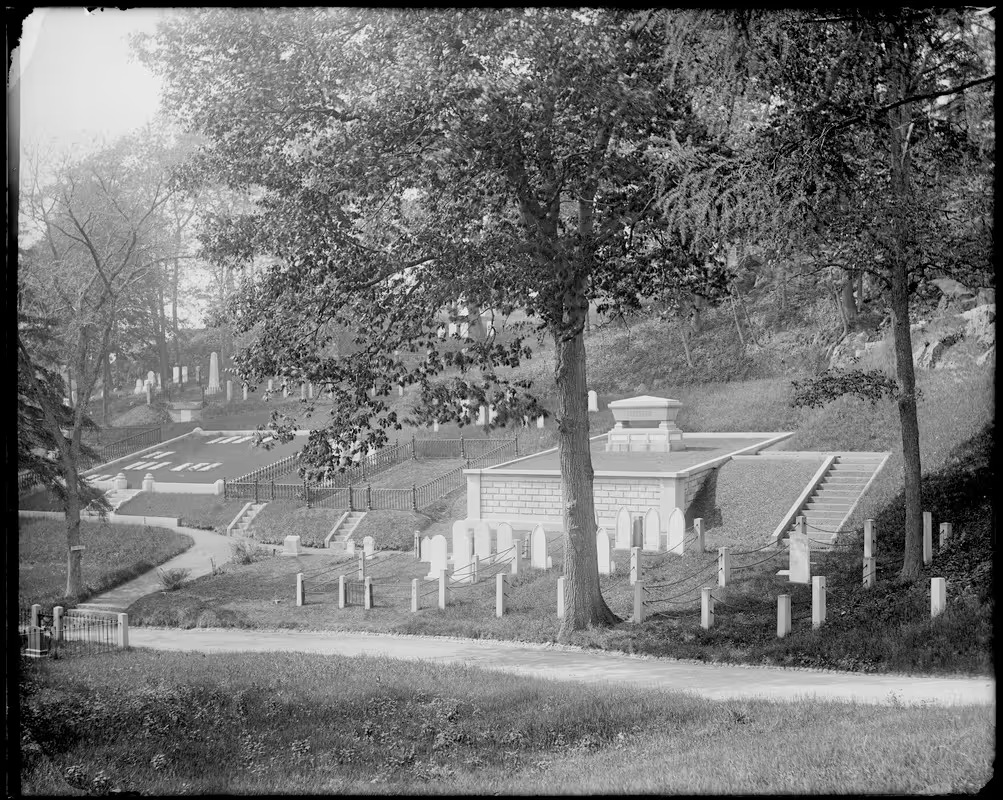
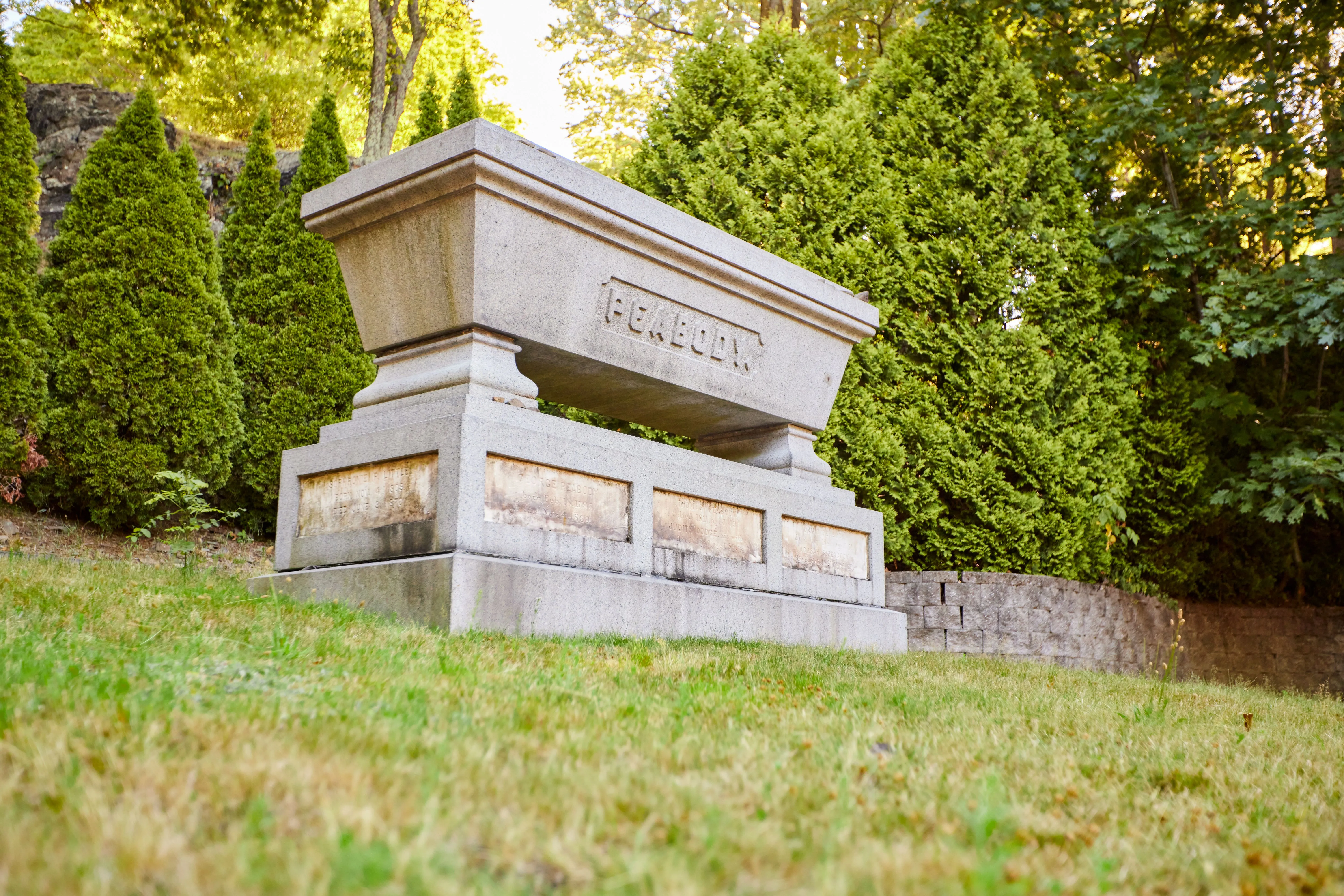
1860: Work begins on the George Peabody Tomb.
1863: Soldiers' Lot established to honor Salem residents who had died in the Civil War.
1870
1870: George Peabody interred.
1870: Fencing at main gate installed.
1871: First of three greenhouses built along with fountain and rustic bridge.
1876: "Centennial Tree" Ginkgo Biloba presented in memory of Joseph Cabot. The tree still stands on Tritoma Path.
1880: Road and pathway signs installed.
1889: Lot 1606 on Halidon donated by the cemetery to the Salem Firemen’s Relief Association.
1890
1891: Barn and stable built.
1898: U.S. War Department donates three Dahlgren cannons for display in the Soldiers' Lot.
1900: The cemetery adopted a Perpetual Care policy for all future lot sales, ensuring ongoing maintenance.
1900
1901: Nancy Cordwell Blake bequeathed her estate to build a chapel in memory of her son, George Harrison Blake. Architect Ernest M.A. Machado is hired to design the chapel, administration building, and a receiving tomb.
1903: Bell cast in 1862 by Henry N. Cooper & Co. installed in the chapel.
1904: The Blake Memorial Chapel is completed.
1905: Pipe organ donated by Charles H. Nichols installed in the chapel.
1910
1917: A crematory with two retorts and columbarium was added. The first cremation was performed on July 5, 1917.
1921: First of nine stained glass windows designed by the Charles J. Connick Studio installed.
1925: Dedication of stained glass windows.
1960
1964: Original stone arch dismantled and replaced with pillars and gate to better accommodate automobiles.
1972: First female board member, Sally Pickering, elected.
1973: New family crypts installed in the columbarium.
1990
1990: New crematory building added at the rear of the chapel.
2007: Historic barn (c. 1892) renovation, including new slate roof, new windows, and clapboards.
2014: Caretaker's Cottage renovated and returned to its original 1840 configuration.
2020
2021: Beginning of Avenue and Pathways sign and post restoration and replacement.
2022 through 2023: Crematory renovation and installation of three new retorts.
2024 through 2026: Initiated a forward-looking strategic and master plan to ensure the cemetery can continue honoring its perpetual care responsibilities well into the future.

Join the Community
Support Harmony Grove and be among the first to hear about our programs.