.png)

Joseph Andrews
Joseph Andrews
As a young man, Salem native Joseph Andrews worked in Boston banks, but he would later become known for his distinguished military service. Andrews served at various times as the commander of the Salem Light Infantry and, during the Civil War, as the Brigadier General of the Massachusetts Militia and commander of Fort Warren in Boston Harbor.
Andrews' organizational and leadership skills made him qualified to run a city, but his route to the mayoral office was unusual. In 1854-55, the secretive, anti-foreigner, anti-Catholic Know-Nothing party swept elections on local, state, and federal levels. In the Salem mayoral race held in 1853, that party’s candidate, George Newcomb, crushed incumbent Asahel Huntington. Newcomb followed through on his threat not to serve if elected, and so a special runoff election had to be held. Joseph Andrews defeated Gen. William Sutton and was elected to a second term the following year.
Issues facing Mayor Andrews included redefining the city’s relationship with Essex County government, negotiating rates for the city's new gas-lighting service, and establishing both Plummer Farm and a chronic disease hospital on Salem Neck.
Joseph Andrews later moved to Boston, where he died in 1869.
He is buried on Grove Avenue, Lot #139.

Hannah Crowninshield Armstrong

Hannah Crowninshield Armstrong
Parents:
- Benjamin Crowninshield (nickname “Sailor Ben”)
- Mary Lambert Crowninshield
Hannah Crowninshield Armstrong was a portrait artist, most notably for Revolutionary War General John Stark of New Hampshire. Growing up in Salem, she was the pupil of Rev. William Bentley. Nearly all the known information about her comes from his diaries. He was a boarder in her mother’s house. Her father had died young. Bentley baptized her and when she was old enough, took her on many outings across the North Shore and beyond to Boston and Cambridge. They visited museums, attended funerals of his friends, went sailing and fishing, and were guests at several Harvard commencements. He called her “My Hannah’ and “my favorite pupil.” he married US Navy Commodore James Armstrong in 1819. The ceremony was performed by Rev. William Bentley, who wrote of his concerns “Why did not so accomplished a girl find a bosom friend in Salem? Those who respected her did not dare to ask… I hope H. will be happy; it will be my happiness.”
Two years after Hannah’s death on May 4, 1834 James Armstrong married her sister Elizabeth Crowninshield.
Hannah Crowninshield Armstrong is buried in Harmony Grove Cemetery, Summit Avenue, Plot #819, Grave #1.
Paintings attributed to Hannah Crowninshield Armstrong. On the left is her father, “Sailor Ben”: on the right is her brother, “Philosopher Ben”. No portrait of Hannah can be found at this time.
Sources Consulted:
- The Diary of William Bentley DD. Pastor of the East Church, Salem Massachusetts, volume 4 p. 583-584 Peter Smith, Gloucester, Massachusetts, 1962.
- Findagrave.com /memorial/18843833/Hannah-Armstrong
.webp)
James Armstrong
James Armstrong
Burial Location: Summit Ave, Lot 819, Grave 2.
James Armstrong was born in Shelbyville, Kentucky, on August 7, 1794. He joined the Navy as a midshipman in 1809 and was serving on the sloop-of-war Frolic when it was seized by the British in 1814 when the United States was at war with Britain during the War of 1812. Armstrong was taken prisoner under horrific conditions.
In 1855, Armstrong was promoted to Commodore and was given command of the East India Squadron. He served on the squadron’s flagship, San Jacinto during China’s Second Opium War. After the battle of the Pearl Forts in 1857, he was unwell and returned to the United States.
In 1860 he returned to service and was given command of the Pensacola Florida Navy Yard. Two days after the state of Florida voted to secede from the United States, he surrendered the fort to the secessionists because his men were outnumbered. He was court-martialed for this action; the papers are missing from the National Archives so it is not possible to know what occurred or was said during the proceedings.
James Armstrong was married twice, in 1819 to Hannah Crowninshield, and in 1836 to her sister Elizabeth Crowninshield. He died on August 27, 1868.
Photo: Wikipedia.
Sources Consulted:
- Find a Grave.
- Wikipedia.
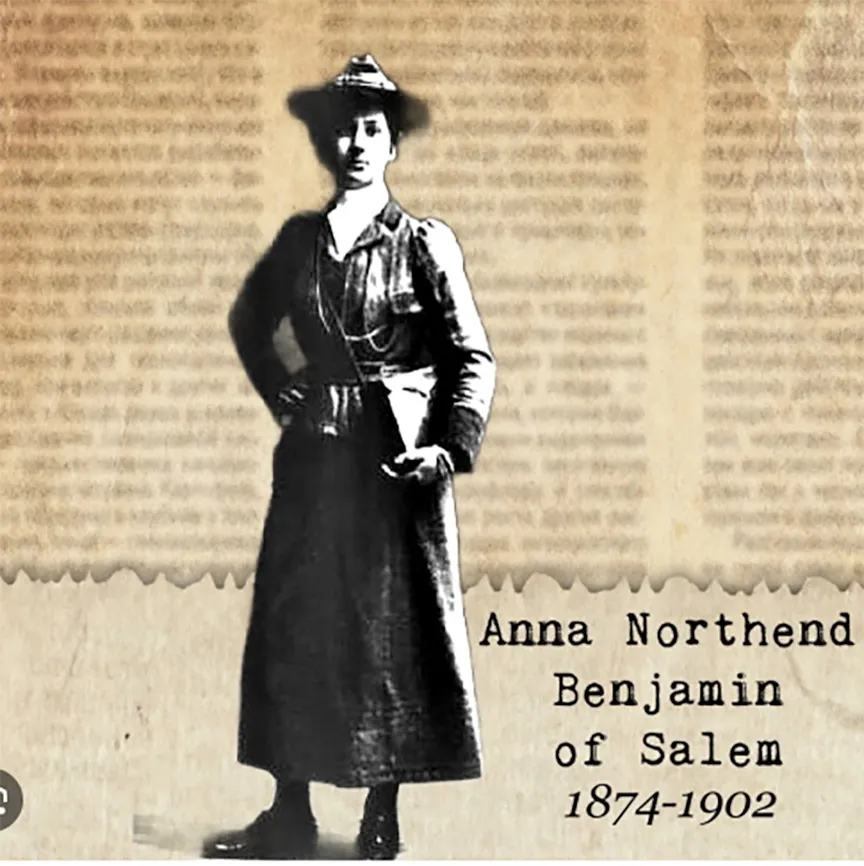
Anna Northend Benjamin
Anna Northend Benjamin
Born: October 6, 1874, Salem, MA.
Died: January 20, 1902, Paris, France.
Burial Location: Grove Ave, Lot 378, Grave #3.
Parents:
- Father: Charles A. Benjamin.
- Mother: Louisa H. Northend.
Anna Northend Benjamin graduated from St. Gabriel’s School in Peekskill NY in 1892. She was well liked by all who knew her. Working as a correspondent for Frank Leslie’s Illustrated Weekly, she was with the US Army in Tampa, Florida, then in Key West, Florida. Then she was sent to Cuba during the Spanish American War. She made her name in journalism. She was an impressive reporter on the war, being the only women reporter to enter Santiago, Cuba before its surrender. In 1899, she was based in the Philippines, thus making her the only woman to be present in both battlefields of the war. After departing from the Philippines, she visited Japan and Korea, and then traveled across Russia, visiting Siberia, Vladivostok and Moscow. She was said to have been one of only three American women to have made this overland trip at this time. When she returned to America, she gave lectures about her travels, accompanied by lantern slide photographs.
She had also reported for The Outlook, the McClure Syndicate, The Herald, The Post, other New York newspapers, and Look Magazine. A short story called “A Siberian Evangeline” was published in the Atlantic Magazine April 1902 edition. Unfortunately she would not live to see it.
Miss Benjamin died at age 27 in Paris, France at her sister’s home on January 21, 1902. She was working on a book describing her experiences. She was buried there, at Chateau de la Lande, but her remains were moved several years later. On October 3, 1905, she was buried at Harmony Grove Cemetery in her family’s lot 378 on Grove Ave. Grave #3. In her obituary she was praised for her courage and strong will, as well as for her sweet temper.
Photo: Streets of Salem, blog by Donna Seger.
Sources Consulted:
- Atlantic Magazine Archive: Atlantic Monthly Group LLC; April 1902.
- Harmony Grove Cemetery: Burial Card and Lot Card for Anna Northend Benjamin.
- Trove.org: Bradford Courier and Reedy Creek Times; Bradford, Victoria, Canada, Friday, 4 april 1902.
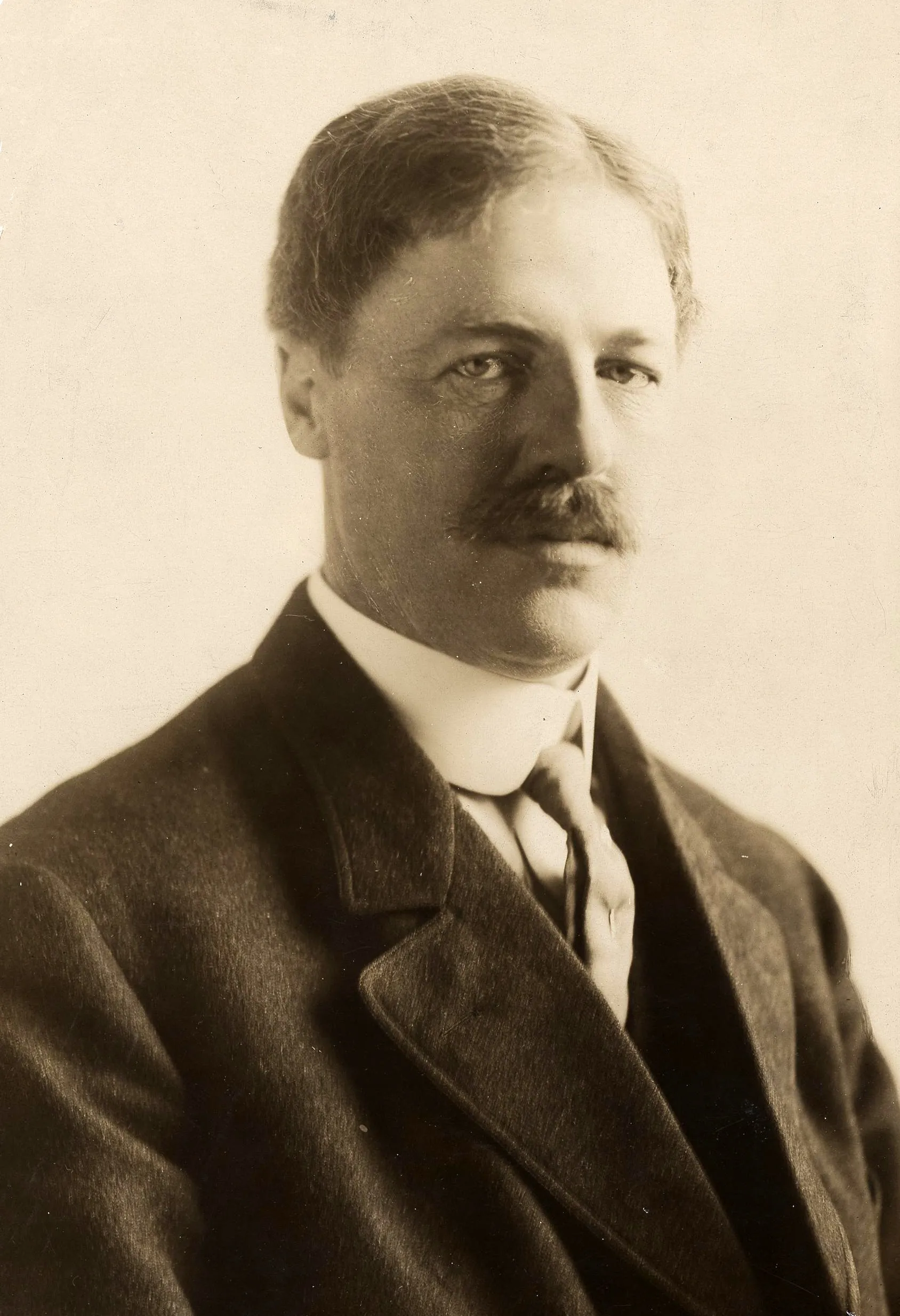
Frank W. Benson
Frank W. Benson
Born: March 24, 1862
Died: November 15, 1951
Burial Location: Harmony Grove Cemetery, Lot 913, Grave 12, Woodbine Path
Frank Weston Benson was born to parents George Wiggin Benson and Elisabeth Poole Benson.
In his early years, he lived at 46 Washington Square, Salem, later (1925-1951) at 14 Chestnut St. Salem. He was descended from a long line of ships captains. He had one brother, John Prentiss Benson. Frank Benson was fascinated by nature. This fact contributes to the beauty of his paintings: his use of light, portraits and sporting pictures.
Benson attended the School of Drawing and Painting at Boston’s Museum of Fine Arts from 1880 until 1882. In 1883 he moved to Paris and studied at the Academie Julien until 1885. He had received a gift of $2,000.00 from his parents who told him he could study until he ran out on funds.
Returning to the United States, he shared a studio with Philip Little. In 1888, he married Ellen Perry Peirson. The couple had four children: Eleanor, George, Elisabeth and Sylvia. The children were often the subjects of their father’s art works.
Benson worked as an instructor at the Portland Maine School of Art. In 1889, he became a member of the faculty at the Museum of Fine Arts School of Drawing and Painting in Boston, a position he held until 1923.
During his long career, many exhibitions of his work were held. His work was called fresh and vital. He worked in various mediums: watercolor, oil and etching. Benson’s still life work contained many objects which were perhaps brought back from the worldwide voyages of his ancestors.
Other than the items given to friends and family members, most of his work was sold during lifetime and resides in many museums today.
Sources Consulted:
- Book:
- The Art of Frank W. Benson: American Impressionist, Exhibition Catalog and Essays.
- Editors: Faith Andrews Bedford, Laurene Buckley, Dean T. Lahikainen, Jane M. Winchell.
- Salem, Massachusetts. Peabody Essex Museum: 2000.
- Websites:
- Salwiki: www.noblenet.org/salem/wiki/ index.php? title Frank Weston Benson&oldid= 10175accessed 5/19/2022
- Wikipedia: en Wikipedia/org/w/index. php? title=Frank_ Weston_Benson&oldid1066062552 accessed 5/19/2022.
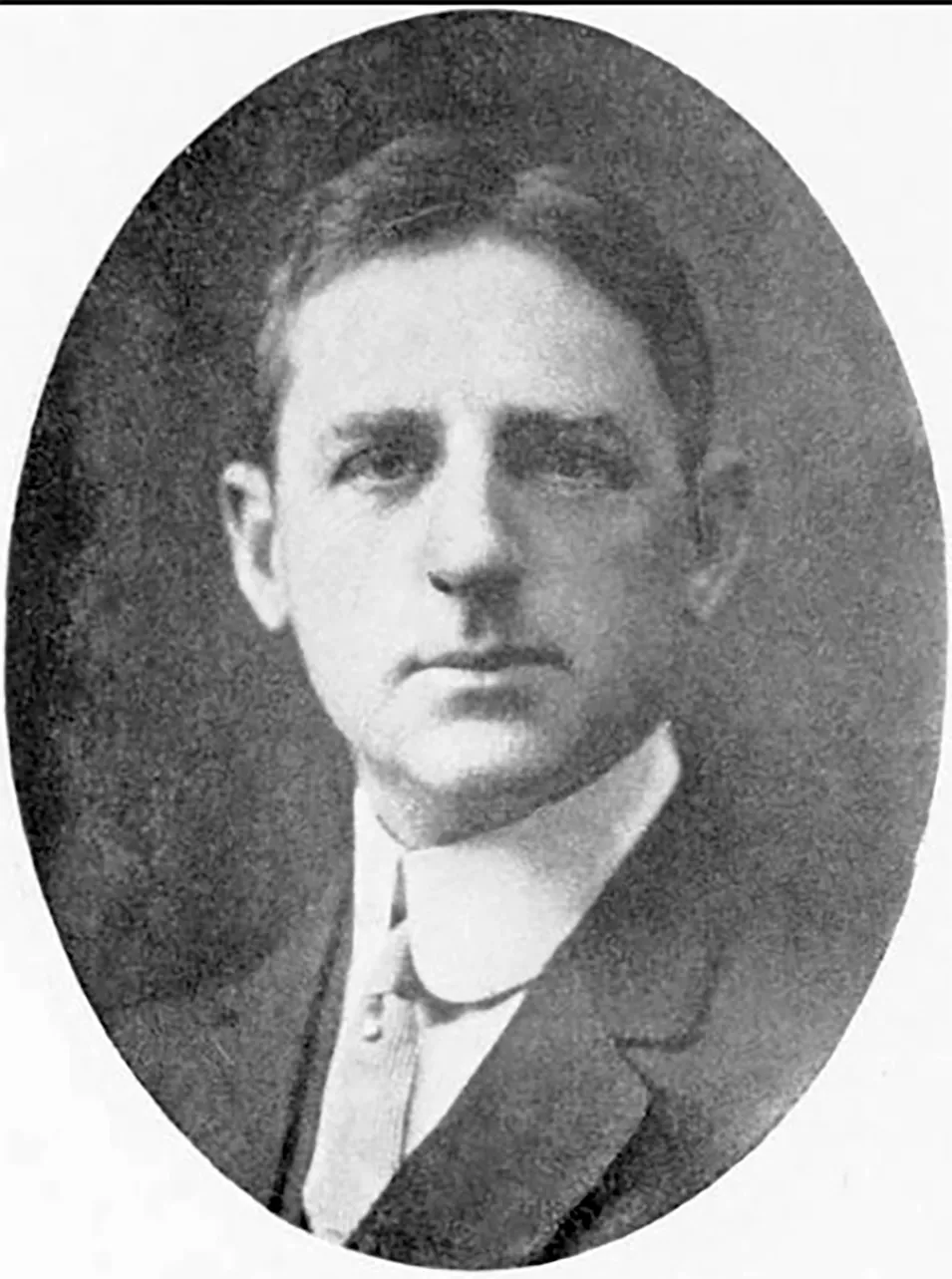
John Prentiss Benson
John Prentiss Benson
Born: February 8, 1865, Salem, Massachusetts
Died: November 16, 1947, Kittery, Maine
Burial Location: Woodbine Path, Lot 913, Grave 11
John Prentiss Benson was a member of Salem’s well known Benson family who lived at 47 Washington Square. Educated in Salem’s schools, he then went on to Ecole Julian and Ecole des Beaux Arts in Paris, following in the footsteps of his older brother Frank Weston Benson. tch# His father encouraged him strongly to choose a different profession than art. It is said that John was told that one artist (his brother Frank) in the family was enough. John Benson became an architect. On his return from Paris he was hired by the firm McKim, Mead and White. After a few months there, he founded his own firm (Benson and Brockway) in partnership with Paris school friend Albert Brockway.
In 1893, he married Sarah Bissell Whitman. The couple had four children; the family lived in Plainfield, New Jersey and then in Flushing, New York. In 1904-1905, John Benson published a comic strip, called “The Woozlebeasts”. This became a book, published by Moffat,Yard and Company. It consisted of limericks, accompanied by Benson’s comical drawings.
In 1921, on his 56th birthday, Prentiss Benson received a telegram from his brother Frank. It read: “John, if you are going to paint, PAINT! “ John had continued to paint in his spare time, mostly nautical themes. Perhaps inspired or motivated by his brother’s message, John and Sarah went to England. There he rented a studio and began to paint. He sent seven or eight paintings to the Kennedy Galleries in New York City. When six of these were sold, he became a full time painter, moving to Kittery, where he bought a house called Willowbank. His studio was conveniently located across the street. He kept careful records, and painted more than 500 canvasses during his years in Kittery. Visitors purchased many of his works on the spot. He also had exhibits in New York, Philadelphia and Boston. He painted right up to the time of his death. A memorial exhibition of his work was held in 1948 by the Guild of Boston Artists and in 1968 a retrospective exhibition was held at the Peabody Museum in Salem.
Sources Consulted:
- About John Benson: Crockergraphics Inc. 2022
- Nonsenselit.org 2022 John Prentiss Benson
- Wikipedia: Wikipedia.org/w/index.php?title=John_Prentiss_Benson&oldid=1087835676
Henry Perkins Benson
Henry Perkins Benson
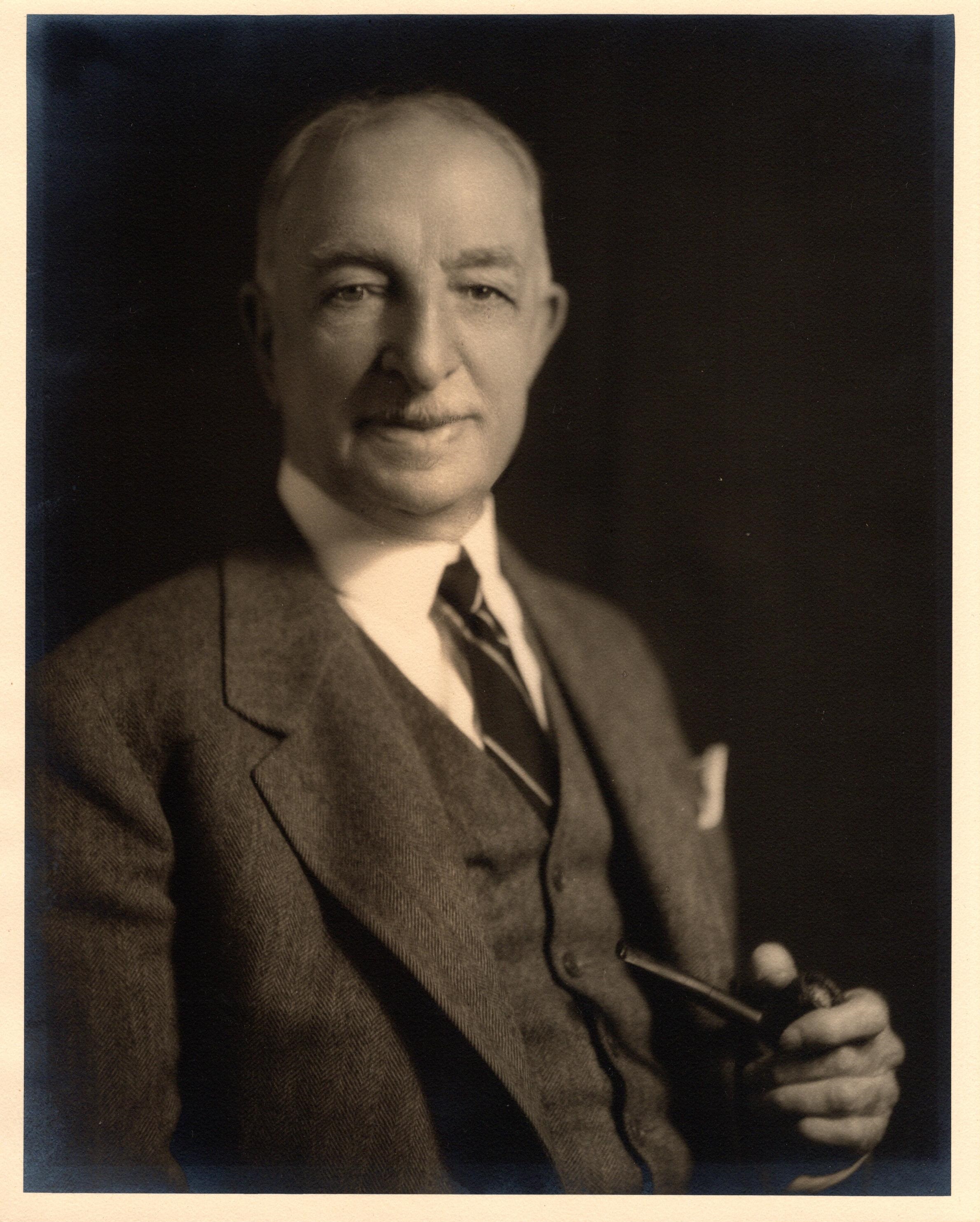
Henry Perkins Benson served as the thirty-ninth mayor of Salem from 1916 to 1917, beginning his term at a difficult time in the city’s history, following the devastating Salem Fire of 1914. Elected under a new city charter in December 1915, Benson brought clear vision and effective leadership to the task of recovery and rebuilding. His administration helped guide Salem through the immediate post-fire crisis, restoring civic stability and laying the groundwork for the city’s renewal. Before becoming Mayor, he was already involved in civic affairs, serving in the Salem City Council in 1902 and the board of aldermen in 1906.
Benson was born on December 30, 1866, in Salem, the son of George W. Benson and Elizabeth Poole, and the grandson of shipmaster Capt. Samuel Benson. He grew up in a family of notable accomplishments: his brother Frank W. Benson was a world-renowned Impressionist painter, while another brother, John P. Benson, became a respected architect and later an artist noted for his maritime paintings. Henry attended the Phillips School and Salem High School before enrolling at the Massachusetts Institute of Technology, from which he graduated in 1886.
In 1892, Benson married Rebecca Appleton Broadhead of Salem, the daughter of Frederick Broadhead and Eliza T. Broadhead. The couple had three daughters: Rosamund (Storrow), Ruth (Pickering), and Rebecca (Haskell).
Following his education, Benson entered the cotton trade, joining the Boston firm A. Emerson & Co., where he rose to become president. In 1905, he became a director of the Naumkeag Steam Cotton Company, one of the nation’s leading textile producers, and in 1920, he was elected its president, a position he held until his retirement in 1946. Beyond business, Benson maintained wide-ranging interests, including early automobile ownership, reflected in his 1949 memoir, Half Century of Motoring in Essex County, as well as yachting, golf, and society life (Union Club, Newcomen Society, and many others).
Henry P. Benson lived a long and productive life, remaining active in business and community affairs well into his later years. He died on May 9, 1957.
He is buried in Section G, Forest Avenue, Lot #1964.
Photo from the Pickering House, Salem, MA.
Reverend William Bentley
Reverend William Bentley
Birth: June 22, 1759, Boston, MA.
Death: December 29, 1819, Salem, MA.
Burial Location: Amaranth and Rue Paths.
William Bentley was the son of parents Joshua and Elizabeth Paine Bentley. He had three siblings: Elizabeth, Susanna and Samuel. William entered Harvard College at the age of 14. He graduated in 1777. He found work at the Boston Latin School and also tutored in Latin and Greek at Harvard.
He was ordained as a minister on September 24, 1783. He had been a preacher at the East Church in Salem since May of 1783. After his ordination, he became associate pastor there. His sermons were thought to be both interesting and instructive. This was perhaps because he was determined never to preach the same sermon twice. He favored good works over rigid doctrine.
He had many talents: he could speak twenty one languages, seven of them fluently. Eventually he had a library made up of over four thousand volumes, specializing in Latin and Greek classics, philosophy, sciences and early Christianity. It was perhaps for these attributes that President Thomas Jefferson asked him to become President of the University of Virginia. Previously Jefferson had asked Bentley to be chaplain of the United States Congress. Reverend Bentley turned down both of these offers, preferring to remain as pastor of the East Church, where he remained until his death in 1819.
He was a member of several societies: the American Philosophical Society in Philadelphia and the American Antiquarian Society were two of these. He wrote columns for The Salem Gazette, as well as for The Salem Register. His interest in people and in Salem area events made the columns important reading for the citizens of Salem. Topics varied from the China trade to the French Revolution and slavery. He could be considered an early abolitionist as he was anti-slavery and pro education for Black people.
Bentley never owned property. From 1791 until 1819, he boarded with the widow Hannah Crowninshield in the house that today bears both their names. He tutored young Hannah Crowninshield and took her and her friends on outings to the ocean and to Boston and Cambridge.
In addition to all his other activities, Bentley kept diaries throughout his adult life; in these he recorded his own activities, sometimes switching languages in the middle of an entry. He also recorded the activities of many of his friends, parishioners and local citizens providing future researchers with a valuable resource for his time and place.
William Bentley was disappointed that he did not receive an honorary degree from Harvard until shortly before his death. Because of this he left his papers to the American Antiquarian Society in Worcester Massachusetts. His books went to Allegheny College in Pennsylvania, a newly formed school which must have been happy to receive them. He died suddenly on December 29, 1819. His funeral several days later was well attended by citizens of Salem and others from many areas.
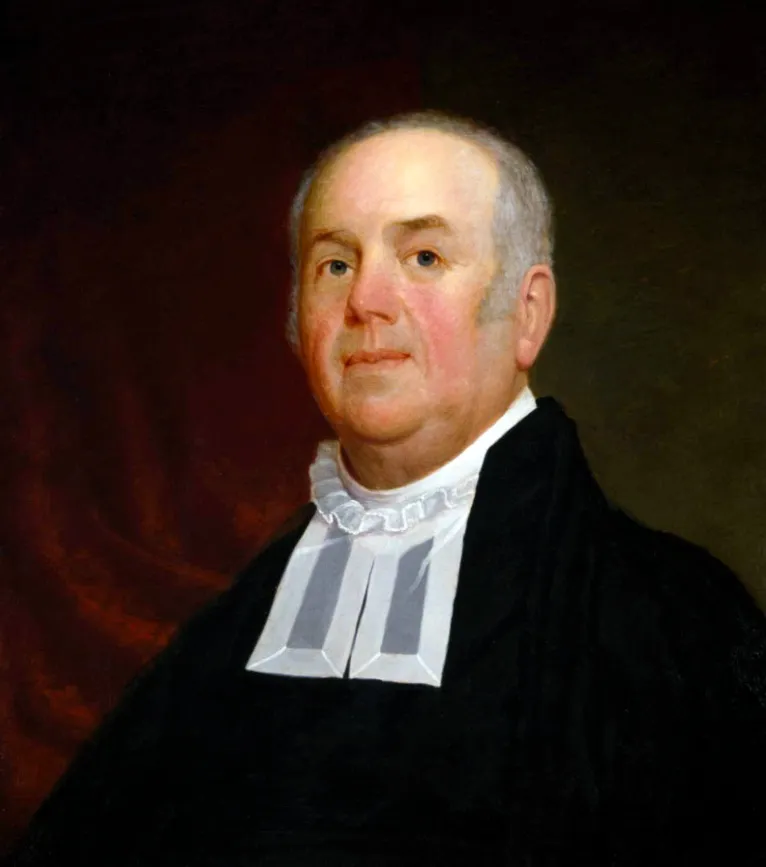
Photo: James Frothingham, Portrait of the Reverend William Bentley, early 19th century. Courtesy of Peabody Essex Museum, Salem, MA.
Sources Consulted:
- Diary of William Bentley, Volume 1, April 1784-December 1792. Salem, MA: Essex Institute, 1905.
- Find a Grave.
- Salem Links and Lore.
- Wikipedia.
Jacob Berry
Jacob Berry
Burial Location: Grove Avenue, Lot 218, Grave 7
Jacob Berry was born in Grafton Vermont on March 24, 1814. He was the oldest of six children; his parents were Samuel and Hannah (Anna) Darling Berry. His ancestors had lived in Middleton, Massachusetts. When he was five years old, his family moved to Troy, New Hampshire. After living there for four years, the family settled in Salem, where Jacob Berry lived for the rest of his long life. He attended the Centre School, which was kept by Master Jocelyn. The school was on Washington St.
Samuel Berry was a baker, and when Jacob completed his schooling, he became his father’s apprentice. He continued to work with his father until the older man retired. He then left the bakery business, becoming a supervisor at the Salem Jail and also a Salem policeman on the night shift. He had the latter job only for several months, but continued to work as a substitute officer for several years.
Jacob Berry never married. He became a member of the Masons in 1857, and was also a member of St. Peter’s Episcopal Church in Salem from about 1832. He was known as a strong member of the Republican Party and was active in the anti-slavery movement. He died on December 12, 1898.
Sources Consulted:
- CemeteryFind.com Powered by Docufree
- FindAGrave.com/memorial ID/151215656/Jacob_Berry citing Harmony Grove Cemetery, Salem, Essex County, Massachusetts, USA
- Salem Evening News: Obituaries, December 12, 1898
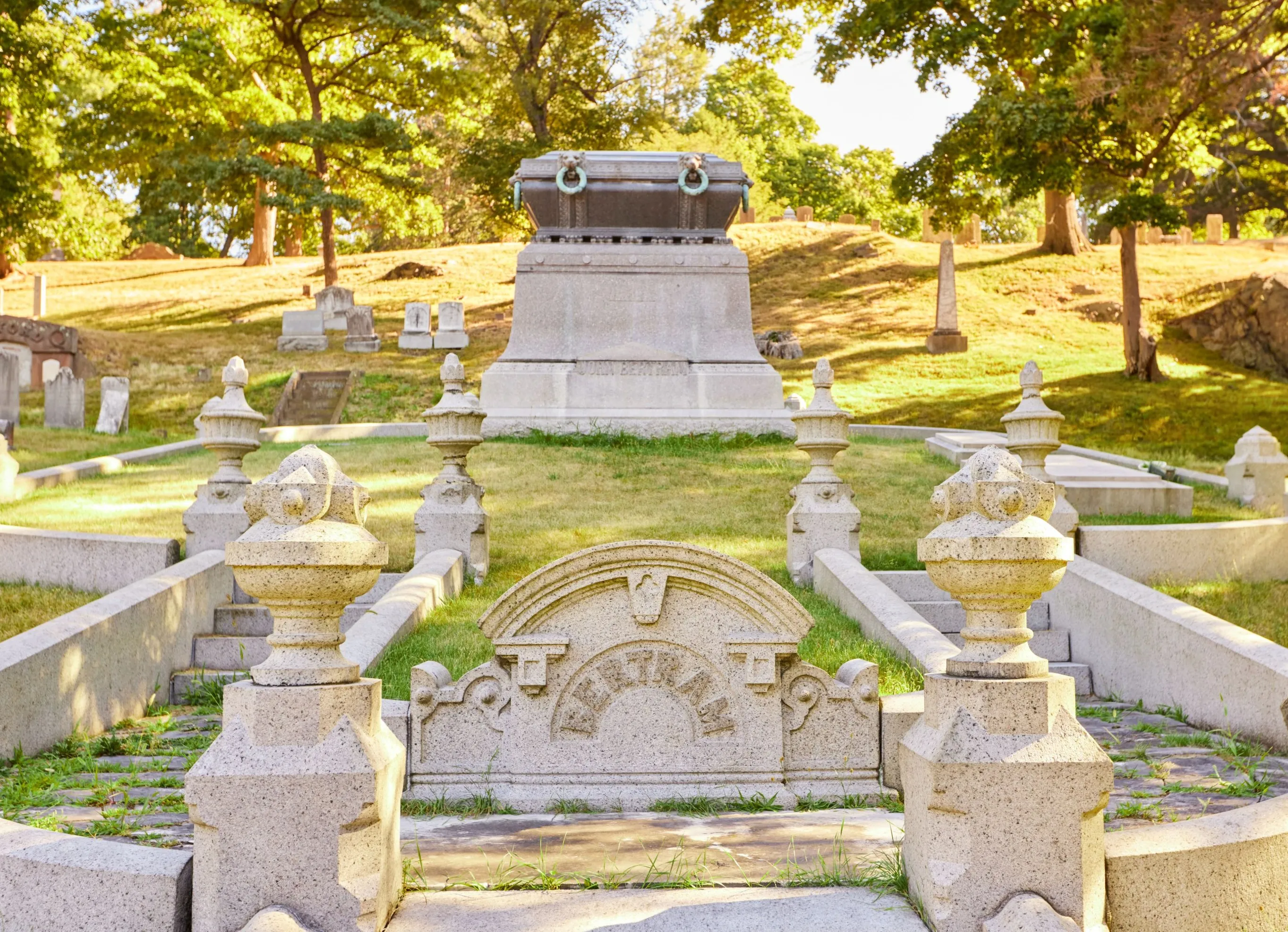
John Bertram
John Bertram
Born: February 11, 1796
Died: March 22, 1882
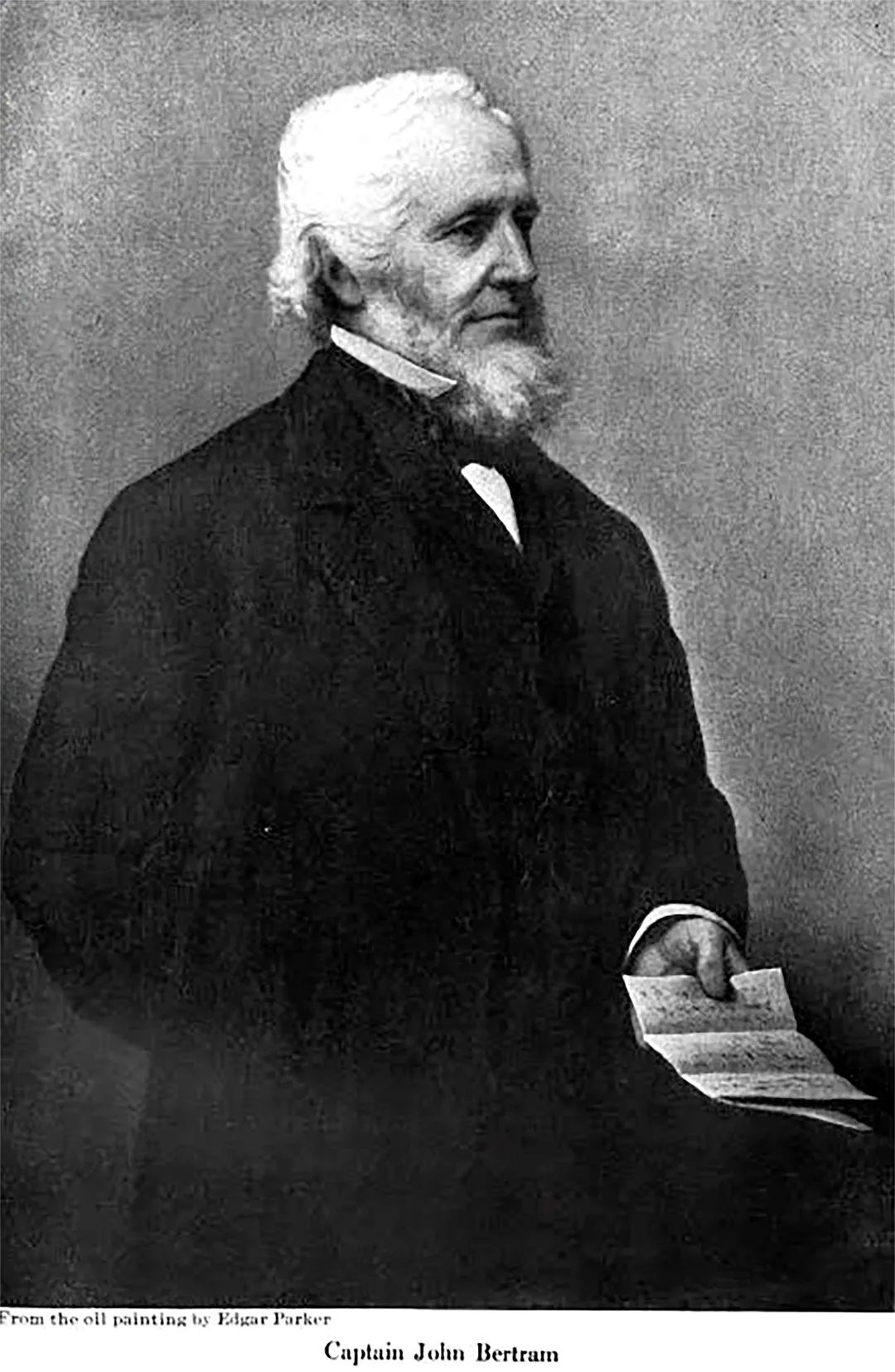
John Bertram was born on the Isle of Jersey off the coast of Normandy, France. His father, Jean was a farmer and also a master carpenter. His mother was Marie Perchard Bertram. John Bertram had two brothers and three sisters. John attended primary school and an English grammar school. He and his family spoke French. In July of 1807, the family left the Isle of Jersey on a ship bound for Baltimore. The ship developed a leak and landed in Boston. A fellow Jersey man suggested that they go to Salem. They took him up on this suggestion. John attended Mr. Hacker’s school briefly, but left to work with his father and help out at home. He had the equivalent of an eighth grade education, but was an avid reader throughout his life.
Between Jefferson’s Embargo and the War of 1812, the economy of Salem fell on hard times. John’s father had both a house and carpentry shop on Central Street. Young John was later quoted as saying that he had “no taste for the mechanical trade.” He wanted to add to the family income and help to pay off their debts. He decided to go to sea. He first served as a cabin boy; in December of 1812 he made his first voyage. He rapidly rose through the ranks, promoted to Master or Captain in 1824; he was called by the title for the rest of his life. He made wise investments in cargos, and was able to retire in 1832 at the age of 36. He was known for taking risks, but also for being careful in his investments as well as in his decisions as ship’s captain. He brought these qualities into civilian life as well, becoming a merchant and ship owner. He invested in the rubber trade, in gum copal used for making lacquer, ivory, coffee, and spices. He shipped supplies to prospectors in California during the Gold Rush. He was involved in railroads from their beginning; becoming a stockholder in the Eastern Railroad in 1836. He was the founder and served as Vice President of the Chicago, Iowa and Nebraska Railroad. In 1868, this branch linked with the Union Pacific Railroad, two years ahead of his competitors.
His personal life contained much tragedy. His father died at 51, making John Bertram who was then the only surviving son, the support for his mother and younger sisters. His first two wives both died in childbirth. Two sons died in infancy, and an adopted son died at the age of 41. An adopted daughter died at age 8.
Perhaps as a result of these events and because of his own personality, Captain John Bertram used his wealth to help many people. In 1860, he became a founder of the Old Ladies Home (now Brookhouse.) In 1873 he gave twenty five thousand dollars to found the Charter Street Home which became today’s Salem Hospital. In 1877, he founded the Bertram House for Aged Men. In 1879, he set up the Bertram Fund to provide fuel assistance for Salem Residents. In 1882 he purchased a building to house the Women’s Friend Society. He was also a benefactor for the Children’s Friend society and for the Plummer Home for Boys.
He was also active in the Freemasons, the Salem Marine Society, the East India Marine Society, and served on the Salem Council in 1837 and1838 and in the Massachusetts General Court as a representative in 1857 and again in 1863.
John Bertram died on March 22, 1882 at the age of eighty six. His daughters carried out his desire to donate their home at 370 Essex Street to Salem to be used at the city’s Public Library. The doors opened on July 8, 1889.
Sources Consulted:
- Selina F. Little. Captain John Bertram: Seafarer, Merchant, Philanthropist. Salem Public Library, Salem, MA: 1990, 1996.
- Internet:
- Findagrave.com/memorial/7885476/john-bertram-citing Harmony Grove Cemetery, Salem, Essex County Massachusetts, USA
- Salemweb.com Salem Tales: John Bertram: 1795-1882 Philanthropist Jim McAllister
- Salwiki noblenet.org/salem/wiki/index. php? title=Bertram, John &oldid=10686
- wikipedia.org/w/index.php?=title John-Bertram- (Massachusetts businessman) oldid 1057920790
Agnes Baldwin Brett
Agnes Baldwin Brett
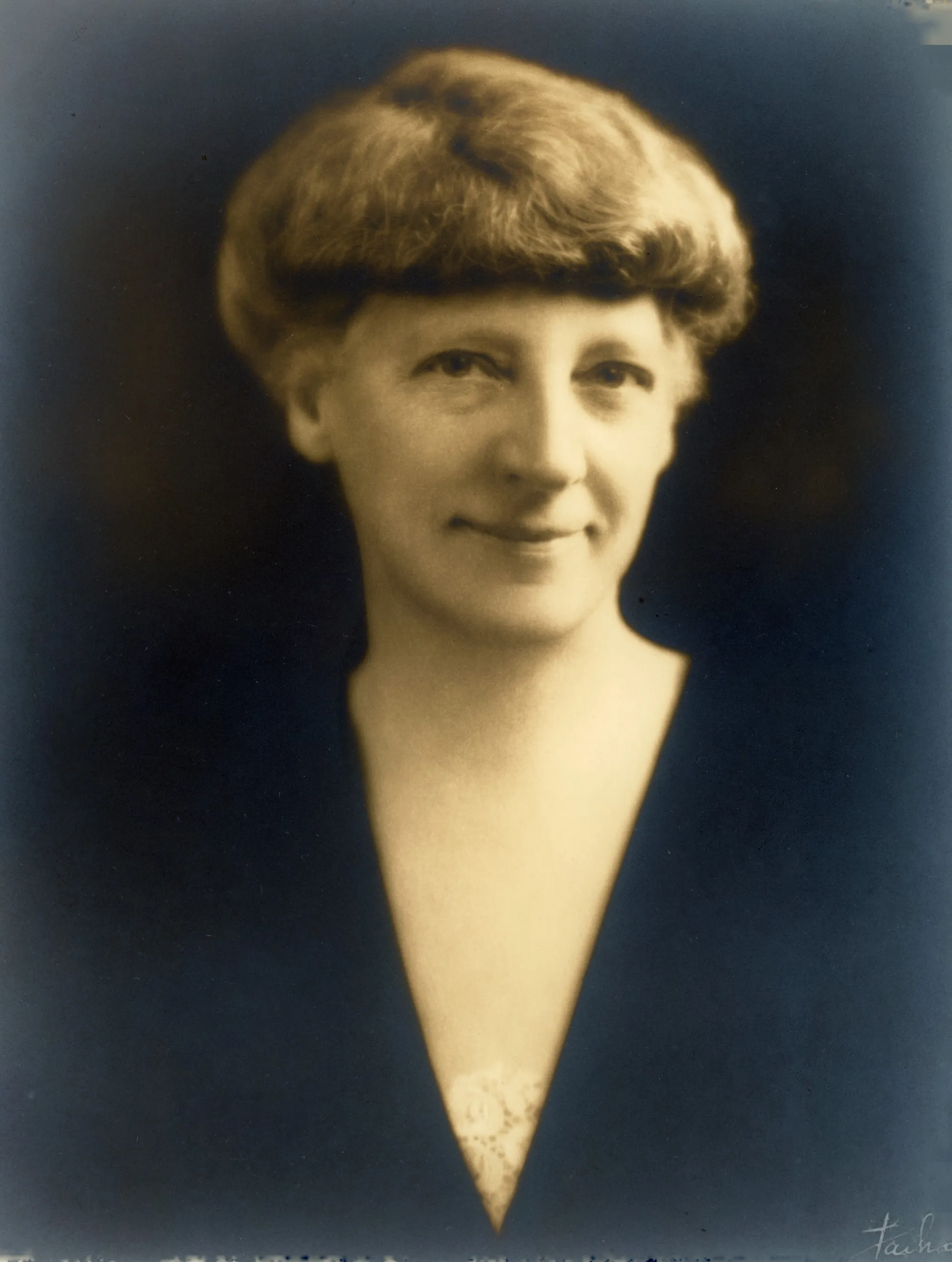
Agnes Baldwin Brett, Ancient coin expert
September 25, 1876 - December 26, 1955
Burial location: Meadow Ave. Sec. F, Grave 1
Agnes Baldwin Brett was born in Newark, NJ, on September 25, 1876, the daughter of Frederick Wellington Baldwin and Mary Augusta Wheeler. She was the third of the Baldwin’s children, and had one brother and four sisters. Early in life, Agnes displayed attributes of intelligence, determination, and a willingness to defy the conventions of her gender, all of which were apparent throughout her life. Agnes attended Barnard College, “the only college in New York City, and one of the few in the nation, where women could receive the same rigorous and challenging education available to men.”[1]
Agnes received a B.A. degree in classics from Barnard College in 1897, and went on to receive a master’s degree in archaeology from Columbia University in 1900. The first women to receive a master’s degree in any subject at Columbia did so only four years earlier. After graduation, she spent two fellowship years at the American School in Athens, where she first developed her interest in ancient coins. In 1910, she worked as Curator of the American Numismatics Society in New York City, the first female to hold this position. During this time, she studied at the Cabinet des Médailles in Paris (now The BnF Museum), and published her first treatise, “The Electrum Coinage of Lampsakos.” In 1919, she received the ANS’s Archer M. Huntington Medal Award for her work. She went onto compile important catalogues for the ANS and National Sculpture Society. She was a visiting lecturer in archaeology at Columbia, as well as an instructor in numismatology, the study of ancient coins. She published books, articles, and papers extensively, including four books on Roman medallions, and while honorary Curator of Classical Coins at Boston’s Museum of Fine Arts, published the acclaimed Catalog of Greek Coins. In 1943, Agnes became the second American, and first American woman to receive a medal from the Royal Numismatic Society in London.[2] She was a pioneer in the male dominated study of ancient coins and archaeology, and was greatly respected among her peers in this field. At the height of her career and for decades afterword, she has been acknowledged internationally as the foremost authority on ancient coins. To her friends and family, Agnes was warm and kind, had a wonderful, dry sense of humor, and was very quiet about her accomplishments. She had a wide life-long circle of friends, many of whom knew little about what she did.[3]
In 1914, Agnes married George Monroe Brett, an accounting professor and academic kindred spirit. Together they traveled extensively, each writing books in their specialized field. Agnes and George became fascinated with ancient Egyptian culture and artifacts, and were present at the excavation of ancient Egyptian tombs in the 1930s. Agnes taught herself several languages, including Greek, German, and Hungarian. She was a brilliant and intrepid life-long seeker of knowledge. George and Agnes had one daughter, Barbara Brett Sanders, born in 1920, who they doted on. George passed away in 1941, and Agnes and Barbara moved to Marblehead, MA, in 1951. Agnes died of pneumonia in Marblehead on Dec. 26, 1955, at age 79.[4]
Text and photo: Martha Baldwin Sanders.
Sources Consulted:
[1] Barnard’s History - barnard.edu
[2] American Numismatics Society’s bio - numismatics.org/authority/brett
[3] American Numismatics Society’s interview of Barbara Brett Sanders, 2005.
[4] American Numismatics Society’s interview of Barbara Brett Sanders, 2005.
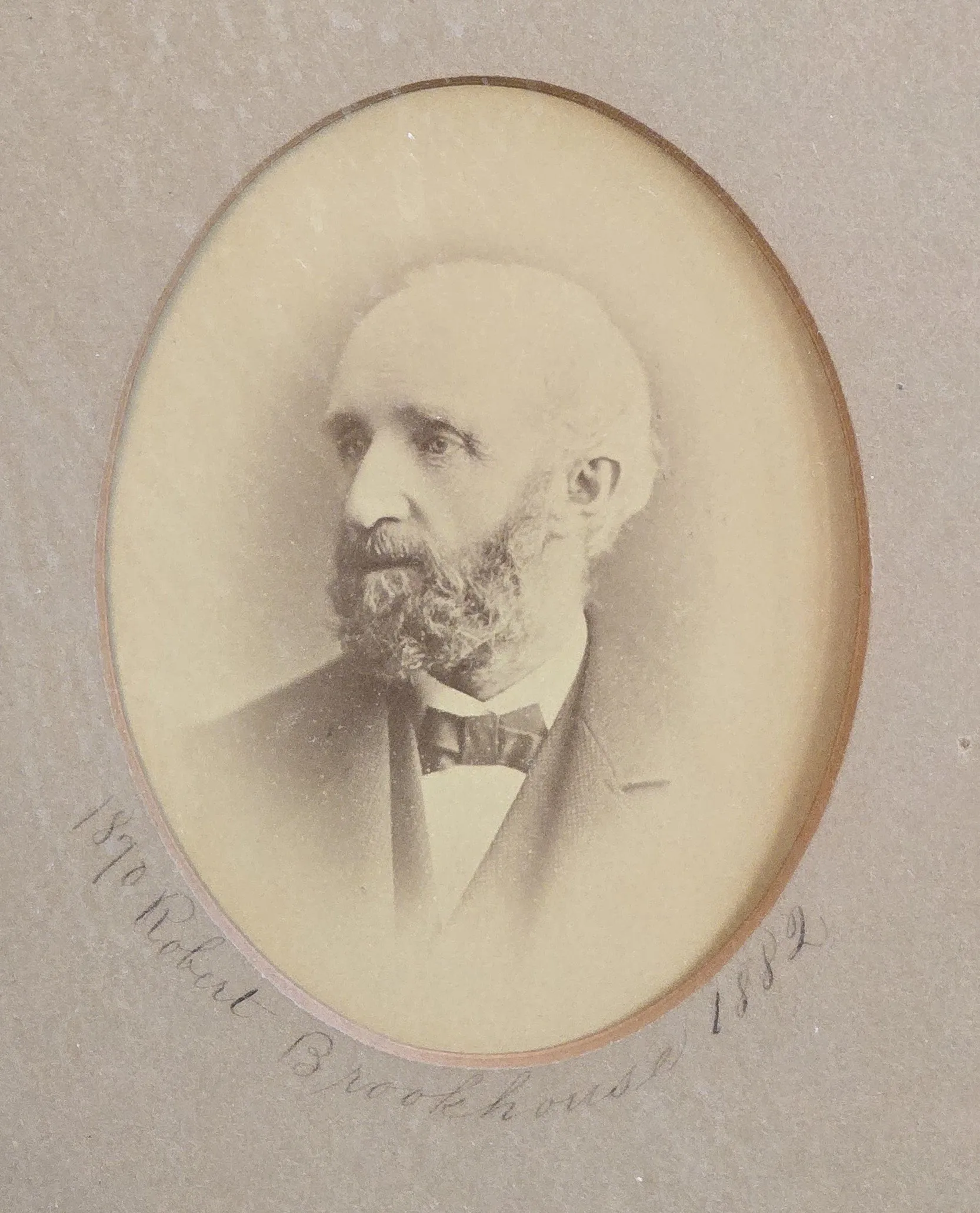
Robert Brookhouse
Robert Brookhouse
Birth: December 8, 1779, Salem MA
Death: June 10, 1866, Salem MA
Burial Location: Linden Ave, Lot 994, Grave 1
Robert Brookhouse began his working life pursuing the career of a craftsman and an artist. He ended that life as a philanthropist whose contribution has lasted to this very day. He married Martha Farley on March 16 1805 in Salem.
From 1800 until 1819, Brookhouse worked as a silversmith. He had a shop on Essex Street. On March 23, 1819, he sold the business to his former apprentice, Edward Farley. Robert Brookhouse then became a trader in general goods. He made a fortune in the West Africa cowhide trade in the 1830’s and 1840’s. His firm was the Robert Brookhouse Company.
Once he had made his fortune, Brookhouse began to use his money like many other Salem men, to see what he could do to help those less fortunate. In 1840 he endowed the Carpenter Street Home for Orphan Children. He was also one of the founding trustees for Harmony Grove Cemetery.
In March of 1854, Brookhouse bought the Crowninshield House on Derby Street for $5,000.00. He intended for it to be an “Old Sailor’s Home.” For some reason the plans for a sailor’s home did not work out. Brookhouse donated the building to the Association for the Relief of Aged and Destitute Women. The gift was accepted by the Association in June 1861. The purpose of the home was declared to be “to provide quality support to senior women and to encourage them to live active and satisfying lives.”
Robert Brookhouse served on the first governing board, along with John Bertram. Robert Brookhouse’s son was one of the three Vice Presidents of that board. The work that Robert Brookhouse started still continues today.
Sources Consulted:
- https://www.findagrave.com/memorial/234944759/robert-brookhouse
- Pem.as.atlas-sys.com/repositories/2/resources/301 Robert Brookhouse
- https://freepages.rootsweb.com/~silversmiths/genealogy/makers/silversmiths/113932.html
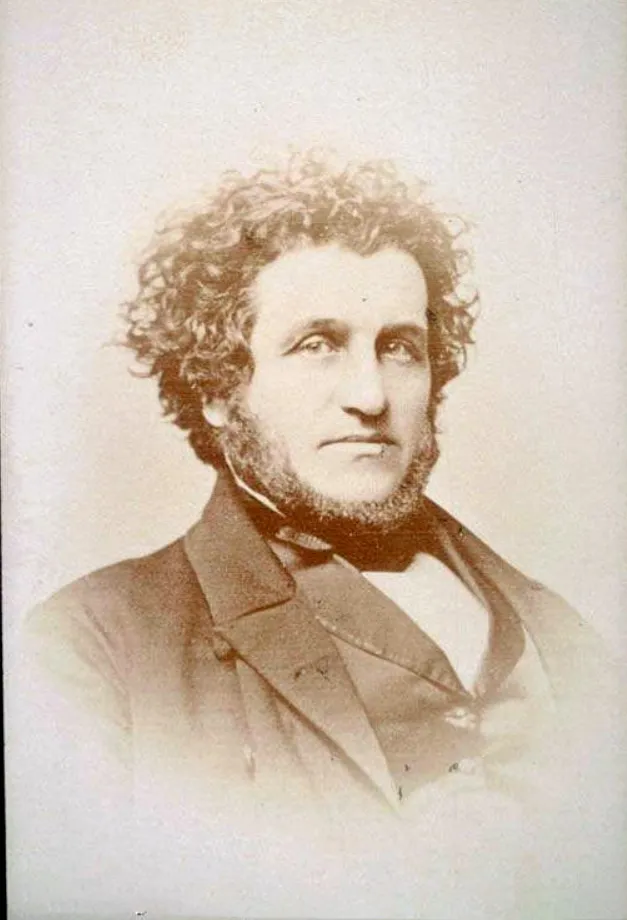
Albert Gallatin Browne Sr.
Albert Gallatin Browne Sr.
Birth: December 8, 1805, Salem, MA
Death: October 9, 1885, Salem, MA
Parents:
- Father: James Browne
- Mother: Lydia Vincent Browne
Burial Location: Jessamine Path, Lot 755, Grave 5
Albert Gallatin Browne followed in his ancestors’ footsteps, like them, he worked in the making of cordage and supplies for ships. By 1836, he had his own business “Albert G. Browne and Co.,” located at 110 Derby Street in Salem, “next door east of the Custom House”. Later he also started a business in Boston.
Early in his career, he made business trips and kept diaries to document them. He traveled to New Orleans in 1838. He then traveled north to Cincinnati. He saw slavery in practice and was shocked by that, as well as by the drinking and gambling he also saw. He saw the remains of several steamboats that had exploded and commented that it was safer to travel across the Atlantic Ocean, then to go from New Orleans to Cincinnati.
Another trip in 1842, took him to Washington DC., where he met Daniel Webster and President John Tyler. From there he went to Missouri, where he met with Native Americans, visited hemp growing farms, and saw wagon trains headed west.
Returning home, he joined the Massachusetts Charitable Mechanics Association, and was a member of the Governor’s Council, he also joined the Emancipation League, and was a founder of the Liberty Party. He was a member of the Barton Square Independent Congregational Church. Later he and his wife joined the Unitarian North Church. His children inherited his energy for abolition of slavery.
During the Civil War he left his business, having received an appointment as Supervising Special Agent of the US Treasury Department. His assignment took him to the coast of South Carolina, which was occupied by Union troops. He was ordered to take charge of captured and abandoned Confederate property (mainly cotton) and supervise its shipment north. During the three years he served in this position, he lived in Beaufort South Carolina and later in Savannah, Georgia.
Albert Gallatin Browne (also known as AGB), caught malaria and returned to Salem in October 1866 to recover. During this time, his son Albert Gallatin Junior took over his father’s duties. For the rest of his life the senior Browne suffered from the effects of malaria. He also suffered from the fact that the US government never sufficiently compensated him for his service.
General William Tecumseh Sherman wrote in his memoirs that “AGB” suggested to him that Sherman send President Lincoln “as a Christmas gift, the city of Savannah, with one hundred and fifty heavy guns, and plenty of ammunition, also about twenty-five thousand bales of cotton.
Sources Consulted:
- Findagrave.com: findagrave.com/memorial/217513070/albert-gallatin-browne
- Massachusetts Historical Society: Albert Gallatin Browne Papers Guide to the Collection: Biographical Sketch.
- Steve Chamberlin.com/family/public/albert-gallatin-browne-551
Photo Credit
-
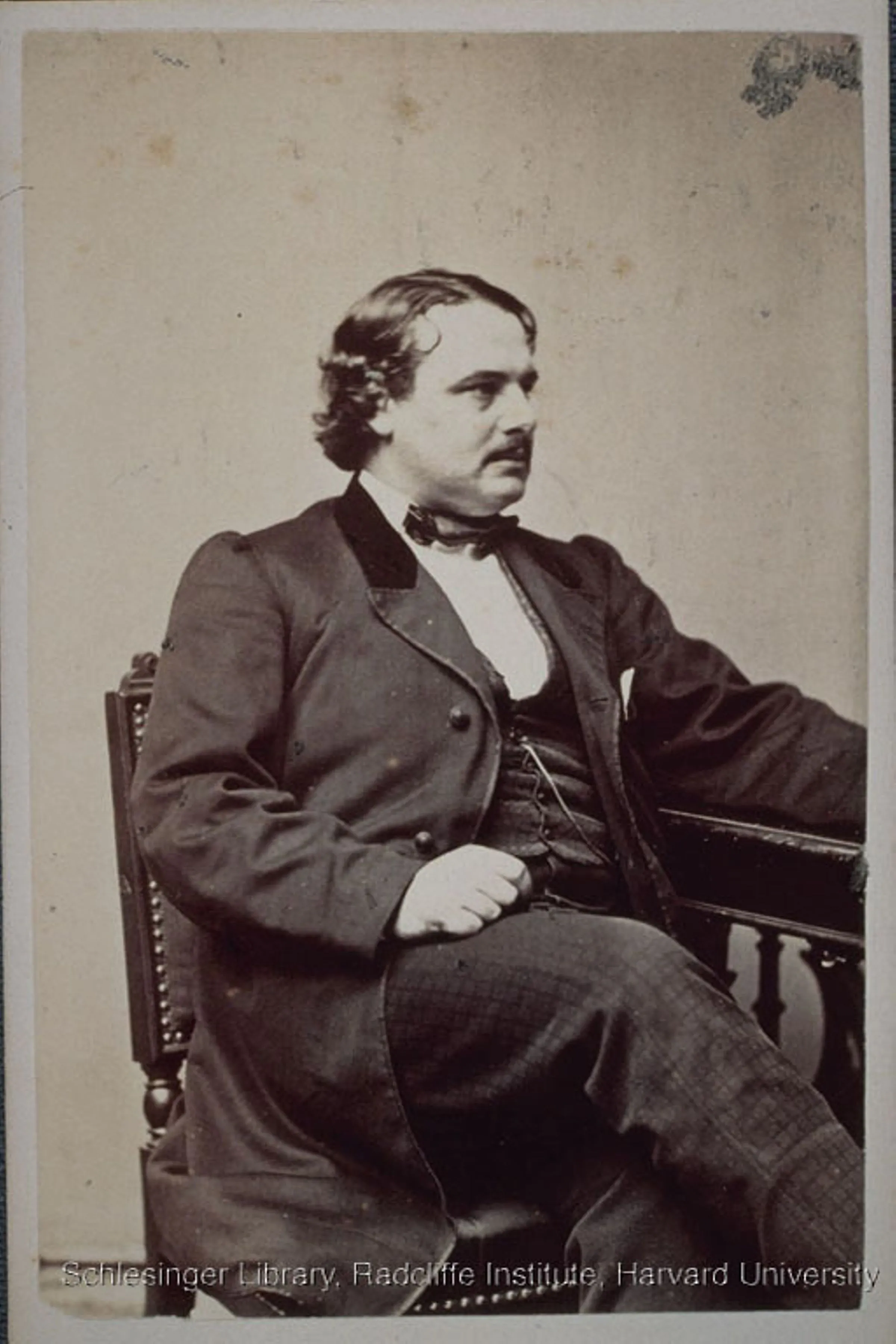
Albert Gallatin Browne Jr.
Albert Gallatin Browne Jr.
Burial Location: Jessamine Path, Lot #730, Grave #7
Albert Gallatin Browne Junior was born on February 14 1835 in Salem. His parents were Albert Gallatin Browne, Senior and Sarah Smith Cox Browne. He was an 1853 graduate of Harvard College. He then received a doctorate from the University of Heidelberg.
He later was a law student with John A. Andrew, who was a well known abolitionist. Andrew was later Governor of Massachusetts, and the two men would again work together.
In 1854, Browne was indicted for murder and jailed with other abolitionists after assisting in trying to take Anthony Burns, an enslaved man who had escaped federal custody which was a violation of the Fugitive Slave Act. A constable died during the incident. Charges were later dropped.
Albert Browne joined the New York Tribune as a correspondent, and accompanied Albert Sidney Johnston’s expedition to Utah in 1857 against Brigham Young and the Mormons, who wanted to set up an independent state in the territory. His dispatches during this time not only gained him fame as a reporter but also built his relationships with the military authorities of the time period. Browne was asked to return to Washington to request reinforcements and supplies. He made both trips and the positive response from the US government convinced Brigham Young to negotiate a settlement. He was removed as governor and Mormons were given an amnesty. Browne then returned to law practice.
He was Military Secretary for Massachusetts during the Civil War under Massachusetts Governor John Andrew.
After the war, he became Managing Editor for the NY Evening Post, and also served as correspondent for the New York Herald.
He married Mattie Griffith after Civil War in New York City. The couple had no children.
Albert Gallatin Browne ended his varied career as a successful banker in Boston. He died on June 24, 1891 in Boston.
Sources Consulted:
- Findagrave.com: findagrave.com/memorial56818655/albert-gallatin-browne, citing harmony Grove Cemetery, Salem, Essex County Massachusetts, USA
- Hollisarchive.lib.harvard.edu/repositories/8/resources/4967
- Massachusetts Historical Society Albert Gallatin Browne Papers Finding Aid Biographical Sketch
- stevechamberlain.com/family/public Albert-Gallatin-Browne 551
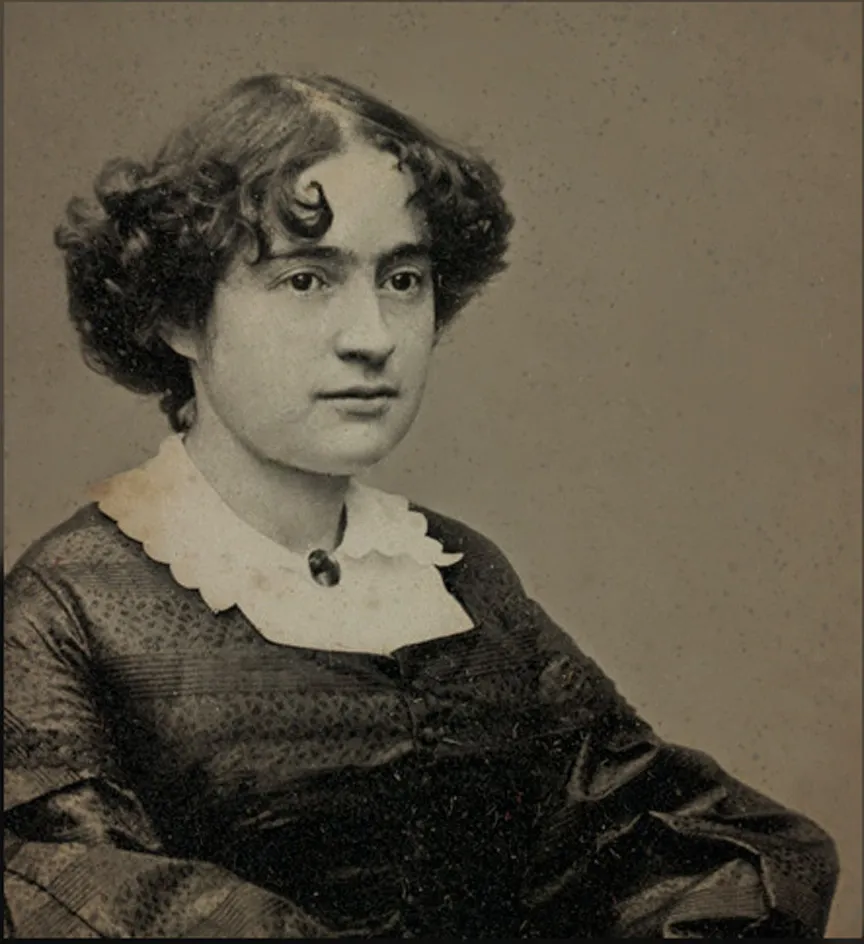
Martha Griffith Browne
Martha Griffith Browne
Burial location: Jessamine Path, Lot 755, Grave# 8.
Martha (Mattie) Griffith was born far from Salem, in Owensboro Kentucky on October 2, 1828. She was an orphan at a young age. Her mother, Martha (Mattie) Young Griffith died in childbirth and her father Thomas Griffith, died when Mattie was only two years old. She was cared for by her paternal grandfather Caleb Griffith until his own death in 1846. Later, she would free the slaves she had inherited, much to the dismay of her pro-slavery relatives.
By 1850 Miss Griffith was writing poetry which was published in the Louisville Daily Courier and a collection was later published which was titled Poems by Mattie Griffith. Her best known work though, was a novel called Autobiography of a Female Slave. Told through the voice of an enslaved woman called Ann, this book gained the attention of such well known abolitionists as William Lloyd Garrison, Wendell Phillips and Lydia Maria Child. Published in 1856, her writing led to a role as a speaker in the cause of abolition. She also worked with Maria Weston Chapman in planning and carrying out National Anti-Slavery Bazaars which were the major sources of funding for the American Anti-Slavery Society.
Griffith traveled to Europe in 1860 and returned to the United States in 1861.
In 1863, Griffith joined the Women’s National Loyal League which stood not only for women’s rights, but also for emancipation and universal suffrage during the Civil War.
On June 27, 1867, Mattie Griffith married journalist, abolitionist and banker Albert Gallatin Browne Junior in New York City. She died on May 25, 1906.
Sources Consulted:
- Documenting the American South: Collections>Titles by Martha Griffith Browned. 1906
- Encyclopedia.Com 1080 Carolyn Wedin Sylvander: Browne, Martha Griffith
- En.wikipedia.org/w/index.php?title=Mattie_Griffith_Browne&oldid=1071605180
Susan Burley
Susan Burley
Born: September 2, 1791
Died: June 3, 1850
Burial Location: Anemone Path
Susan Burley was the oldest child of William Burley and Susan Farley Burley. She had two younger siblings, Elizabeth and Edward. Though nothing is known of her childhood or her education, she was noted for her skills as a clever hostess and for the intellectual groups she hosted at the home of her sister Elizabeth and Elizabeth’s husband Frederic Howes with whom she lived in Salem. One of her guests was Nathaniel Hawthorne who attended her Saturday gatherings with the Peabody sisters, Elizabeth, Mary and Sophia, whom he would later marry. Hawthorne named these gatherings “Hurley-Burleys”. Many of the guests were members of Salem’s North Church as Susan and her family was. The interests of the group were literature, history and philosophy all of which were elements of Transcendentalism. Susan Burley was also a great benefactor. She helped to publish Hawthorne’s short story The Gentle Boy in 1839. This work also contained a drawing by Sophia of the main character. It marked the only collaboration by the couple.
When Hawthorne moved to Boston to work at the Customs House, Susan Burley arranged a membership for him at the Boston Athenaeum. In this way, he could continue the research that was necessary for his writing. Miss Burley moved to Boston in 1840. While she lived there, she attended the conversations conducted by Margaret Fuller, covering similar topics to the Saturday evening salons in Salem.
By 1848, Susan Burley was back in Salem, where she instituted the Salem Book Club, which expanded to become the Salem Athenaeum.
Susan Burley died on June 3, 1850 and is buried with members of the Howes family at Harmony Grove Cemetery. She was remembered as a loyal friend. No known portrait exists of her, but Sophia Peabody Hawthorne remembered her glowing eyes and long dark hair.
Sources Consulted:
- Internet: Findagrave.com/memorial/214080369/susan-burley
- Books:
- Van Wyck Brooks: The Flowering of New England: 1815-1865, Emerson, Thoreau, Hawthorne and the Beginnings of American Literature, Boston: Houghton Mifflin Co. 1936.
- Megan Marshall: The Peabody Sisters: Three Women Who Ignited American Romanticism, Boston: Houghton Mifflin Co. 2005.
- James R. Mellow: Nathaniel Hawthorne In His Times: Boston: Houghton Mifflin Co, 1980.
- Edwin Havilland Miller: Salem Is My Dwelling Place: A life of Nathaniel Hawthorne, Iowa City: University of Iowa Press, 1991.
- Margaret B. Moore: The Salem World Of Nathaniel Hawthorne; Columbia: University of Missouri Press, 1998.
.JPG)
Joseph Sebastian Cabot
Joseph Sebastian Cabot
Joseph S. Cabot was the president of the Asiatic Bank and the Salem Savings Bank. He later served as the Massachusetts State Bank Commissioner. He was also the first president of Harmony Grove Cemetery, a position he held from 1840 to 1874.
During the 1830s, he ran unsuccessfully for Congress as a Republican-Democratic Party candidate four times. The Democrats claimed to be the workingman’s party, so it was unusual for a banker to run as a member of that party. Democratic candidates had a difficult time being elected in Essex County in those years.
Cabot’s avocation was horticulture, and he was president of the Massachusetts Horticultural Society from 1852 to 1857, at a time when that was a highly prestigious position.
Cabot inherited and lived in the Cabot mansion at 365 Essex Street in Salem. The home was built in 1745 by another Joseph Cabot, a shipping merchant. It is a prominent yellow wooden mansion across from the Salem Public Library. Cabot’s garden extended from Essex Street across what is now Warren Street to Chestnut Street and could be viewed from the Chestnut Street side.
He is buried on Chapel Avenue, Lot #23.
Samuel Calley
Samuel Calley
Samuel Calley was born in Salem, Massachusetts, on April 21, 1821. He began his public service as an elected councilor, serving in 1860, 1861, 1862, and 1869, and represented Salem in the Massachusetts House of Representatives in 1871.
Elected mayor in 1872 as a Prohibition Party candidate, Calley enforced the law strictly, a stance that proved unpopular and led to his defeat in the following elections. He returned to office in 1881, during which time, his administration was considered effective and addressed several municipal abuses.
Beyond politics, Calley built a successful house painting business and later became a prominent real estate owner. He was also active in the fire department, serving as foreman for the Franklin Hook and Ladder Company at the time of his first mayoral election and later in the Enterprise Fire Club.
Following his wife’s death in 1881, Calley became despondent, and after attending the inauguration of the incoming mayor on New Year’s Day in 1883, he took his own life.
He is buried on Highland Avenue, Lot #857.

William Cogswell
William Cogswell
Born: August 23, 1838, Bradford, Massachusetts.
Died: May 22, 1895, Washington, D.C.
Burial: Harmony Grove Cemetery, Lot 1675 Grave 1 Chapel Ave.
William Cogswell’s parents were George and Abigail Parker Cogswell. His father was a surgeon, and was a founder of the Massachusetts Republican Party. He was educated at Atkinson Academy in New Hampshire, Kimball Academy in Meriden, New Hampshire, Phillips Academy in Andover, Massachusetts and Dartmouth College in Hanover, New Hampshire. He entered Dartmouth in 1855, and attended the school for a short time. He went on a voyage around the world, serving as a sailor in 1856 and 1857. When he returned to the United States in 1858, he entered Harvard Law School.
On September 8, 1860, Cogswell was admitted to the bar in Essex County, Massachusetts. He worked in the office of Attorney William D. Northend, and then opened his own office in Salem, Massachusetts in April 1861. He had begun to serve in the Second Corps of Cadets in the winter of 1860-1861.
On April 19, 1861, news reached Salem that the Sixth Massachusetts Regiment had been attacked in Baltimore on its way to defend Washington D. C. at the beginning of the Civil War. Cogswell transformed his law office into a recruiting station. In 24 hours, he had raised a full company; this was the first full company recruited for the war. This became Company C of the Second Massachusetts Volunteers. Cogswell was Captain in command. He was commissioned on May 11, 1861. He was promoted to Lieutenant Colonel on October 23, 1862 and to Colonel on June 25, 1863. He was appointed Brevet Brigadier General of Volunteers by President Lincoln on December 12, 1864. This appointment was confirmed by the United States Senate on February 14, 1865. Cogswell served with General William Tecumseh Sherman on the march through Georgia. He was mustered out of the service on July 24, 1865. He returned to his law practice.
Cogswell served as mayor of Salem 1867-1869, and 1873-1874. He served in the Massachusetts House of Representatives in 1870, 1871 and 1881-1883. He served in the Massachusetts State Senate in 1885 and 1886. He was a delegate to the Republican Convention in 1892.
He was elected to the 50th United States Congress in 1886 and served four succeeding terms until his death in 1895.
On June 20, 1865, he married Emma Thorndike Proctor. They had two children, William and Emma. His wife died on April 1, 1877. Cogswell married second wife Eva M. Davis on December 12, 1881. They had no children.
Photo: Library of Congress, Washington, D.C, via Flickr.
Sources Consulted:
- American Battlefied Trust.
- Salem Links and Lore.
- Wikipedia.
.jpg)
Eleanor Creesy
Eleanor Creesy
Burial Location: Lot 1358 Grave 2 Seaview Avenue
Eleanor Prentiss Creesy was born in Marblehead, Massachusetts, on September 21, 1814. Her parents were Joshua and Eleanor Prentiss. Eleanor was interested in seafaring from the time she was a very little girl. She learned the actual skills from her stepfather and Uncle John Prentiss, a master mariner who married her mother after her father died at sea in 1817.
To be interested in seafaring was most unusual for a girl at that time, when most girls and women stayed at home and took care of their families while the men were often gone for years at a time and often died at sea. Another unusual part of Eleanor’s personality was her stated goal to marry a sea captain and then sail on his ship.
She succeeded in meeting that goal after rejecting many suitors, and in 1841, she married Josiah Creesy. Serving as his navigator, she traveled on the vessel Oneida on a voyage to Shanghai, China. In May of 1851, she sailed on the Flying Cloud on a trip from New York City to San Francisco, having read Matthew F. Maury’s Sailing Directions. This voyage set a record for the number of days at sea: 89 days and 21 hours, they broke their own record two years later; it was not broken again until 1989. Eleanor Creesy’s skills were considered to be the major factor in the ship’s safe and swift passage according to an article in the Daily Alta California, published on April 20, 1854.
Josiah Creesy was forced to retire from the sea due to poor health after serving in the Civil War. He and Eleanor lived on a farm in Salem. She outlived him by 29 years, dying on August 25, 1900, at the age of eighty-five.
Photo: Wikimedia Commons.
Sources Consulted:
- Time and navigation, Smithsonian Institution.
- Wikipedia.
Josiah Perkins Creesy
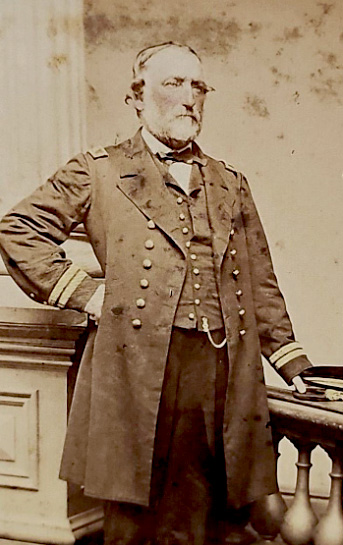
Josiah Perkins Creesy
Burial Location: Seaview Avenue Lot 1358, Grave 1
Josiah Perkins Creesy Jr., was born in Marblehead Massachusetts on March 23, 1814. The last name had numerous spellings: Cressey, Cressy, were just two of these. Even he sometimes spelled his surname in different ways!
He went to sea as a young boy, as was common at that time. Because promotion was rapid, he was commanding a ship by the time he was twenty-three. He had several fast runs from China, which gave him the reputation of being a successful “driver.” The Grinnell, Minturn and Company of New York gave him the command of their clipper ship, the Flying Cloud which had been built at East Boston by Donald McKay. She left New York for San Francisco on her maiden voyage, on June 2, 1851, just seven weeks after she was launched. On board was Eleanor Prentiss Creesy, Josiah’s wife who would serve as navigator.
Since they were pursuing a record, speed was all important. Only three days out at sea, three spars floated away, the mainmast cracked a week later, sails were torn to bits. Repairs were made without losing any speed. Just before noon on August 31, the ship was anchored in San Francisco. The voyage had been completed in eight-nine days and twenty-one hours, breaking all previous records.
Leaving San Francisco, the ship continued on to China to trade for tea. Returning to New York the following April after a ninety four day run around the coast of Africa. In 1854, another voyage was made to San Francisco, taking thirteen hours less than the previous one.
Retiring in 1855 to a farm in Salem, he resumed duty during the Civil War. He was made a volunteer acting lieutenant on August 2, 1861 and took command of the ship Ino. Having been in command for so many years, reporting to a commanding officer proved difficult for him. Early in 1862, when his squadron commander ordered him to release two Confederate prisoners, Creesy replied “I positively decline to give these men up”, and sailed away. Creesy was dismissed from service on July 18, 1862. He died June 5, 1871.
Photo: Find a Grave.
Sources Consulted:
- Family Search.
- Find a Grave.
- World Biographical Encyclopedia.
John Tucker Daland
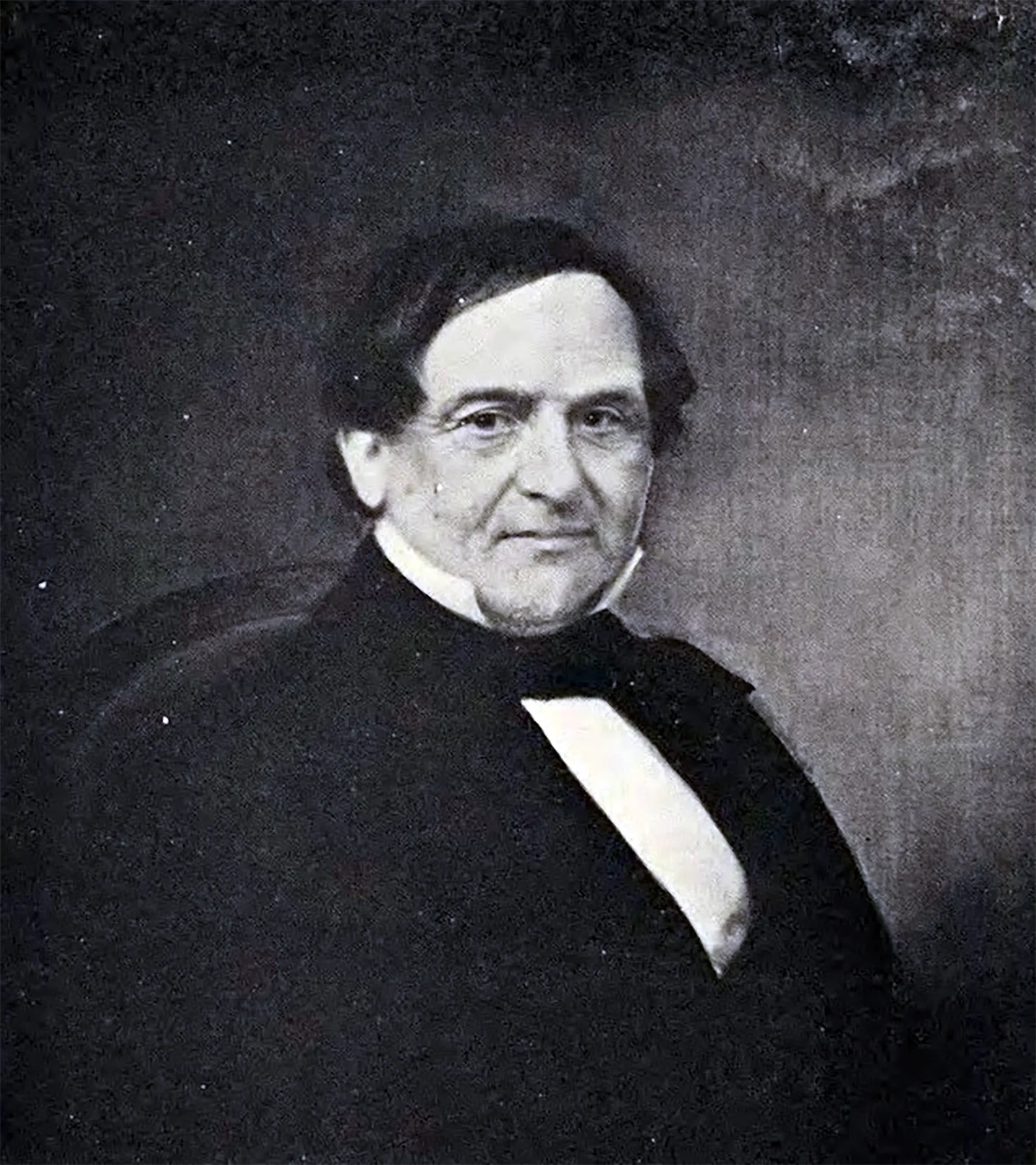
John Tucker Daland
Born: June 12, 1795 Salem, MA.
Died: May 31, 1858 Salem MA.
Burial Location: Lot #563 Grave #3.
Parents: John and Elizabeth Tucker Daland.
Spouse
- Elizabeth Whitridge Daland (one child) Elizabeth Tucker Daland Williams
- Eliza Silver Daland
Children:
- Mary Fowler Putnam
- Henry Tucker Daland
- William S. Daland
- Susan S. Daland
- John Daland
- Edward Francis Daland
- Horace Augustus Daland
- Sarah Cox Shreve
John Tucker Daland was one of Salem’s most successful merchants. He was apprenticed in the counting house of Captain Joseph Peabody and was very involved in the East India trade and owned or partly owned at least nineteen sailing vessels. He married first in 1818, and his wife died in 1820. He married again in 1823. In his obituary, he was praised for being punctual in his obligations and honorable in his settlements. He had his portrait painted by Charles Osgood. When he had his home built on Essex Street, he hired architect Gridley J. F. Bryant, who designed in the Italianate architectural style. The home later became part of the Essex Institute.
Photo: Wikimedia Commons.
Sources Consulted:
- Internet:
- Cemetery Find.
- Daland Family Papers: Finding Aid Phillips Library at the Peabody Essex Museum.
- Books:
- A. Frank Hitchings, Stephen Willard Phillips Ship. Registers of the District of Salem and Beverly, Massachusetts, 1789-1900. The Essex Institute, Salem, MA, 1906.
- Bryant F. Tolles, Jr. with Carolyn K. Tolles. Architecture in Salem. Essex Institute with the Cooperation of Historic Salem, Inc. Salem, MA, 1983.
- Bryant F. Tolles, Jr. The John Tucker Daland House. Essex Institute Salem, MA, 1978.
Theodore Frelinghuysen Dwight
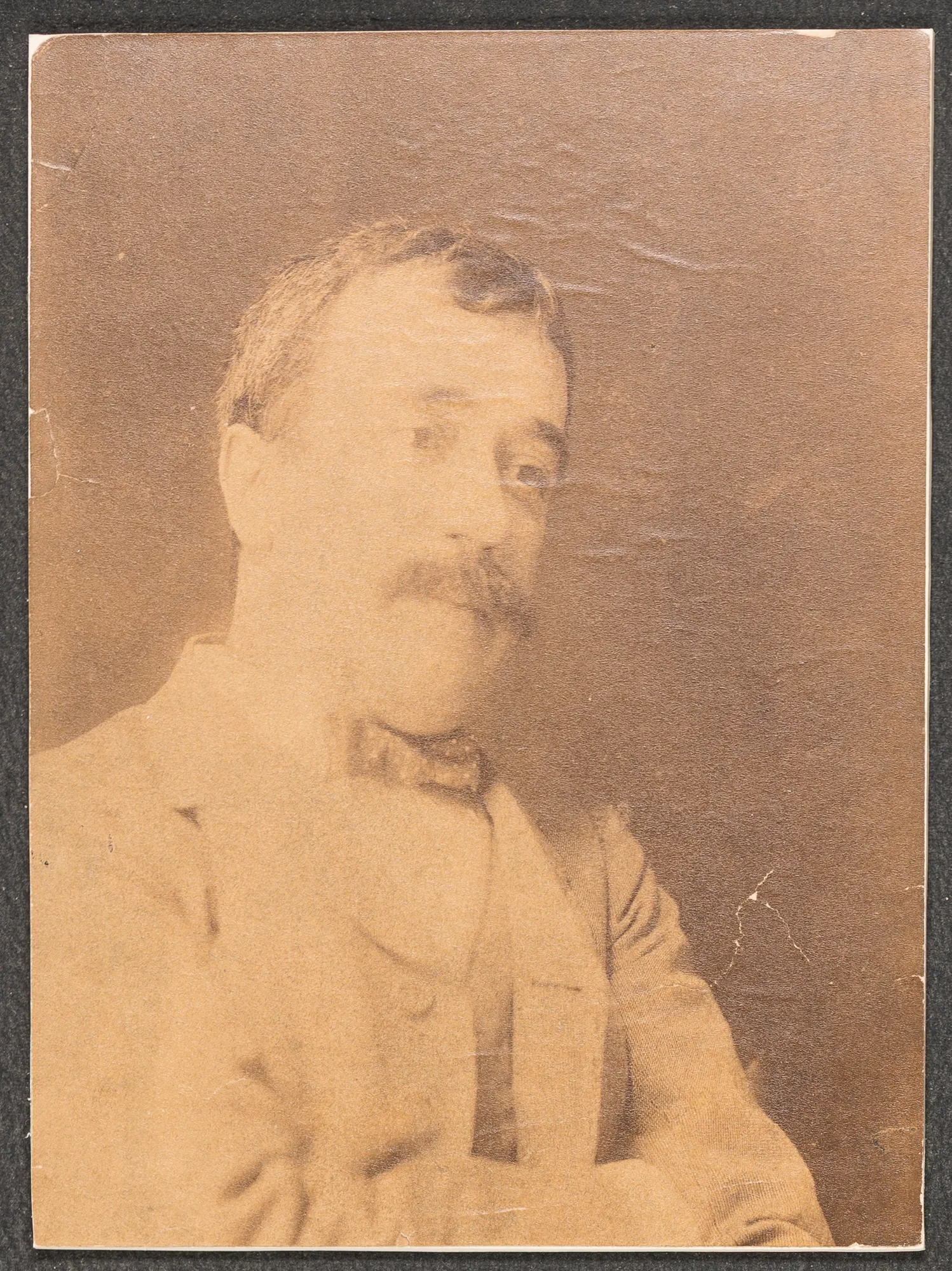
Theodore Frelinghuysen Dwight
Born: June 11, 1846, Auburn NY
Died: February 3, 1917: Boston, MA
Parents: Almon Dwight and Cyria Charge White
Theodore F. Dwight was a noted librarian and archivist. He also worked for Henry Adams as his secretary. From 1865-69, Dwight attended Rochester Collegiate Institute. He worked in a hardware and saddle shop to pay his way. In 1873, he worked at G.P. Putnam Publishing Company, but by 1875 he was working in Washington DC as literary assistant to historian George Bancroft. This job then led to a position as US State Department Librarian, working with manuscripts concerning foreign relations of the US starting in 1789. He assembled “the best international law library outside of the British Museum.” He was instructed to help the US government obtain papers of Benjamin Franklin which were being sold in London. He was successful in this task.
While working at the State Department, Dwight lived at the home of Henry Adams and his wife Marian “Clover” Adams. Henry Adams was getting ready to publish his History of the United States. Dwight negotiated with Scribner and Sons and was able to get the book published. He also looked after the couple’s newly built house, first when Henry Adams and Clover Adams traveled together hoping to restore her health. After her suicide in 1885 he traveled to Cuba with Henry, and then worked on the papers of John and John Quincy Adams during a summer spent in Quincy Massachusetts at the Adams family’s ancestral home.
In 1892, Dwight was hired to be the head of the Boston Public Library. He left after one year with poor health given as the reason for his departure. Next, he represented Isabella Stewart Gardner in Rome, where she was acquiring art and furniture for her new home which became a museum. He also published several volumes of Civil War history for the Military Historical Society of Massachusetts.
In 1904 Sen. Henry Cabot Lodge requested an appointment for Dwight as US consul at Geneva, Switzerland. The appointment was withdrawn after Dwight tried to impose conditions. Then Lodge requested an appointment for Dwight as Consul in Vevy Switzerland. This was approved. At age 49 in 1895, Dwight married Sally Loring. There had been rumors regarding his sexuality for some years. The couple lived in Weston, MA. In 1896, they had a son, Lawrence Dwight. Lawrence spent much of his childhood in Switzerland, but graduated in August 1917 from West Point. He died in France in 1917 of pneumonia.
Theodore Dwight died at the age of 70 in Boston. His obituary made no mention of his wife or his son. He is buried next to his wife at Harmony Grove Cemetery.
Sources Consulted:
- Books:
- Patricia O’Toole. The Five of Hearts: An Intimate Portrait of Henry Adams and His Friends, 1880-1918.Ballantine Books, New York: 1990.
- Ernest Samuels. Henry Adams. Belknap Press of Harvard University Press, Cambridge, Massachusetts and London England: 1989.
- Internet: Wikipedia.org/w/index.php?=Theodore_Freylinghuysen_Dwight&oldid=1075662317.
Manuel Emilio
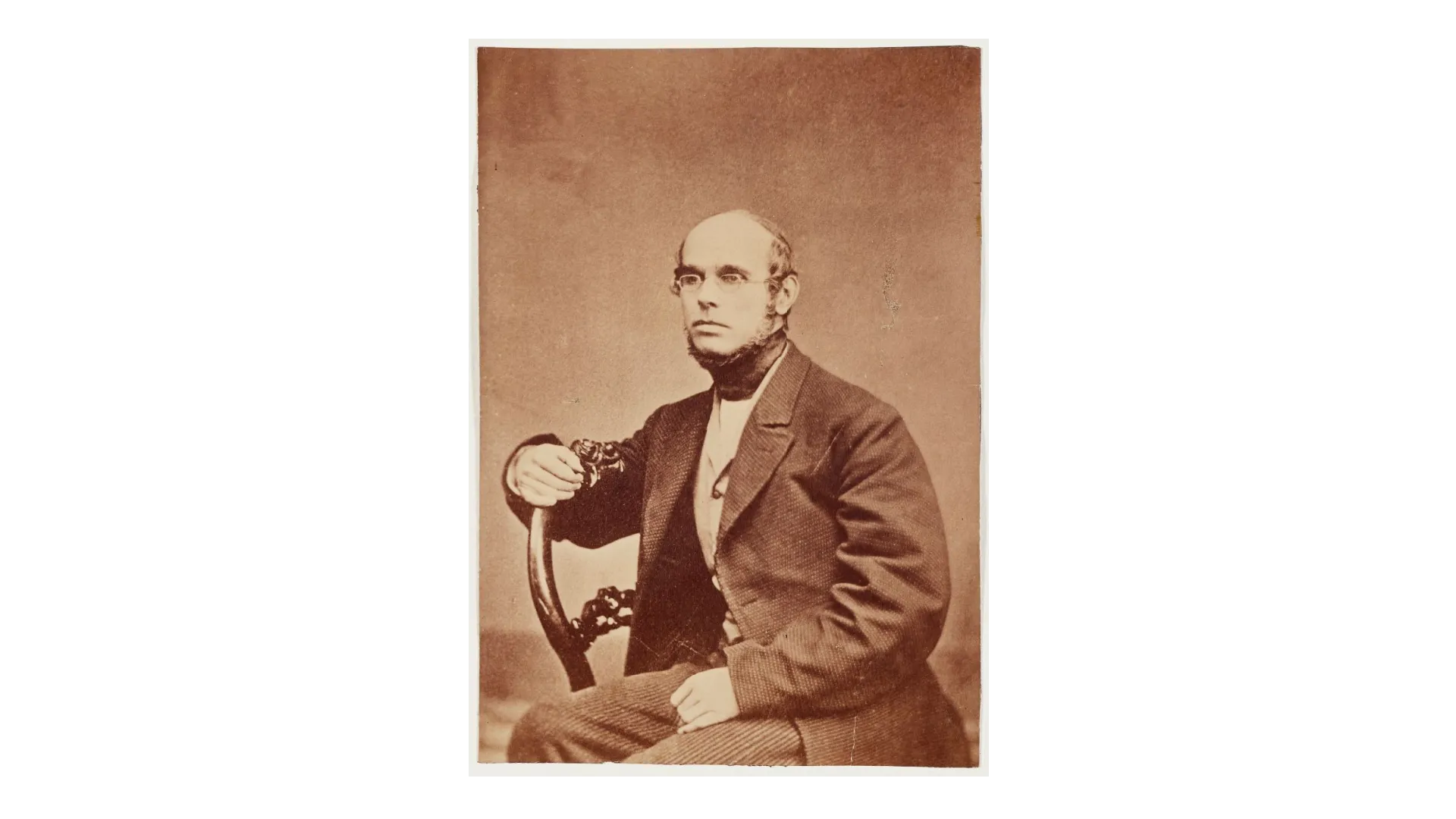
Manuel Emilio
Manuel Emilio was born in Cullera Provincia, de Valencia, Valenciana, Spain on May 9, 1812. His parents were Louis Emilio and Frances Grau Emilio. In 1838 he came to America on board the frigate The United States with his future brother in law, Manuel Fenollosa. He was a band master, and upon settling in Salem, formed a band there and a school, together with Fenollosa. In 1844, Manuel Emilio married Isabella Fenollosa. They had six children: Luis F. Emilio, born 1844, Isabel Maria, born 1847, Enrique Victor 1851, Mary Silsbee born 1853, Clara Luisa, born 1855 and Manuel Fenollosa, born 1858.
Manuel Emilio was an active abolitionist. He wrote sheet music to accompany one of john Greenleaf Whittier’s poems: “Little Eva, Uncle Tom’s Guardian Angel.” It was dedicated to Harriet Beecher Stowe in 1852. He also contributed to the establishment of the Massachusetts 54th Regiment.
Manuel Emilio died on August 25, 1871, and is buried at Harmony Grove Cemetery, Pansy Ave. Lot 1754, Grave # 1.
Sources Consulted:
- Book: A Brave Black Regiment: The History of the 54th Massachusetts, 1863-1865. Luis F. Emilio. Da Capo Press, NY: 1995.
- Internet:
- Ancestry.com @1997-2022 Manuel Emilio (1812-1871).
- Find A Grave.com/memorial 210385520/manuel __emilio
- Genealogywise.com Manuel Fenollosa, Spanish Immigrant to Salem Massachusetts 1838. Heather Wilkinson Royo, Blog, March 13, 2011.
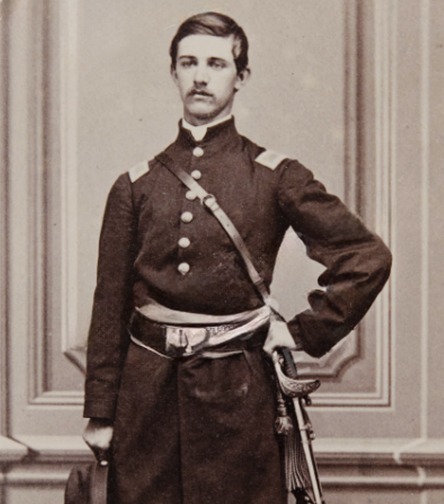
Luis Fenollosa Emilio
Luis Fenollosa Emilio
Birth: December 22, 1844
Death: September 16, 1918
Burial Location: Pansy Path
Luis Emilio was born to parents Manuel Emilio and Isabel Fenollosa. His father was a band leader and composer. The family was active in the abolition movement before the Civil War and Manuel Emilio wrote songs with anti-slavery themes.
Luis enlisted in the Union Army on October 19, 1861. He claimed to be eighteen, but was only sixteen years old. After completing his basic training, he was mustered into Company F of the 23rd Massachusetts Infantry on December 4, 1861. He fought in the battle of Roanoke Island and was noted for his confidence and bravery. This resulted in a promotion to the color guard with the rank of sergeant.
After President Lincoln signed the Emancipation Proclamation, there was a movement to form a Black regiment, although the commanding officers would all be white. Luis Emilio was offered a commission by Massachusetts Governor John Andrew. In addition, he received a personal letter from the regiment’s commander Robert Gould Shaw, asking him to join. He agreed and fought in several battles in South Carolina, and then in the battle of Fort Wagner. Ninth in line of command, he became the regiment’s acting commander. He fought in several more battles and was honorably discharged on March 29, 1865.
In 1867, he moved to San Francisco where he worked n real estate. In 1876, he married Mary E. Belden. They had a son, Victor Emilio. In 1881, the family moved to New York City. Luis Emilio was always interested in veteran’s affairs as well as in military history. He was an active member in veteran’s organizations. He researched and collected material regarding the 54th regiment, and was often asked to write articles on the Battle of Fort Wagner. In 1891 he published a book, Brave Black Regiment: History of the 54th Regiment of the Massachusetts Infantry 1863-1865. This book has been called the most thorough history of this famous regiment and provided source material for the movie Glory.
Luis Fenollosa Emilio died in New York City at the age of 73. He was buried in his hometown of Salem.
Sources Consulted:
- Book: Hope & Glory: Essays on the Legacy of the 54th Massachusetts Regiment. Edited by: Martin H. Blatt, Thomas J. Brown and Donald Yacovone, Foreword by General Colin L. Powell; University of Massachusetts Press:2001.
- Internet:
- Civil War Wiki: Luis F. Emilio.
- Findagrave.com/memorial9375584/luis-fenollosa-emilio-citing Harmony Grove Cemetery, Salem, Essex County Massachusetts, USA.
- National Park Service Article: Captain and Story Keeper of the 54th Massachusetts Regiment, Boston African American Historic Site; Salem Maritime National Historic Site, Contributed by Sherry Gullen, Park Guide. Last Updated February 9, 2022.
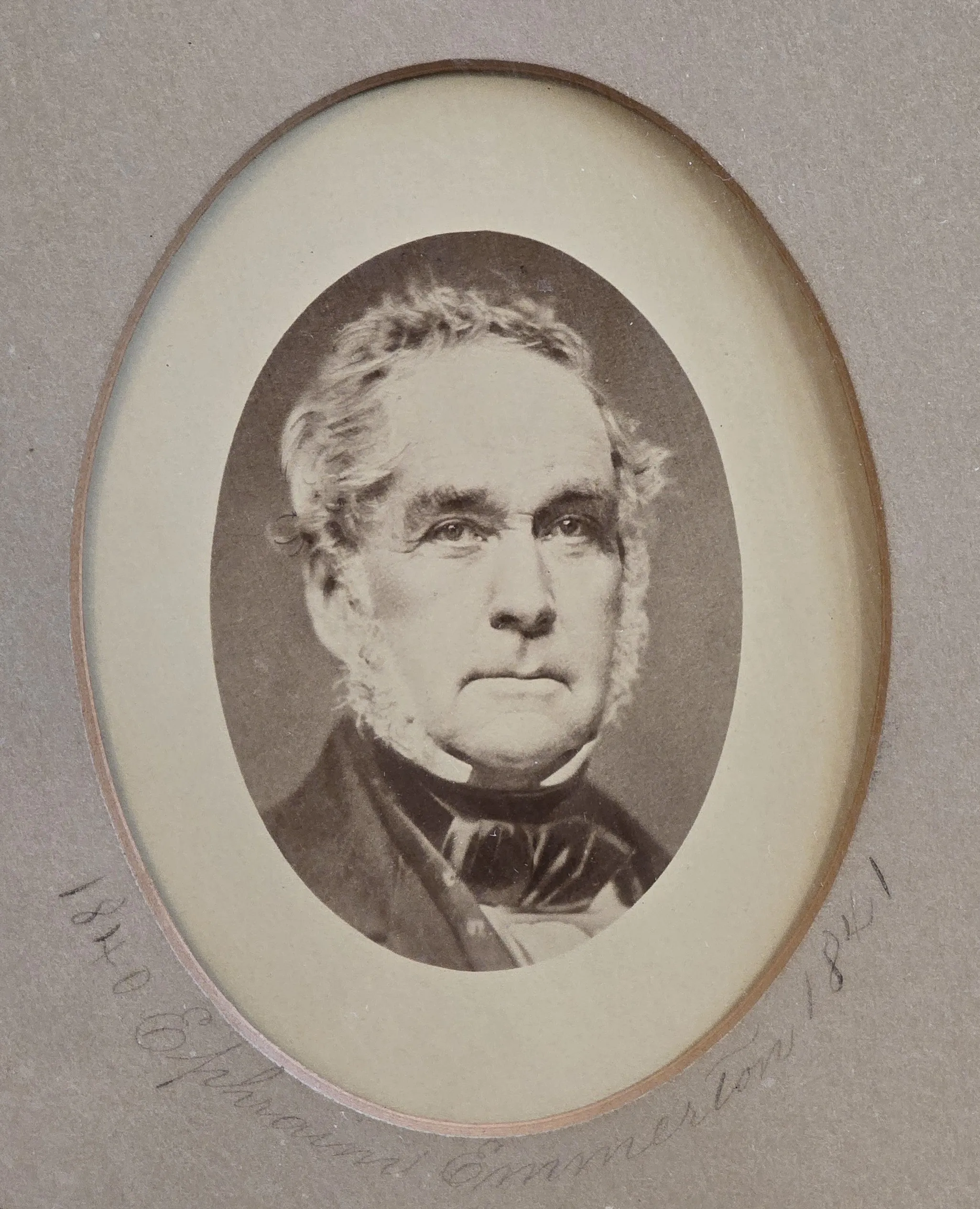
Ephraim Emmerton
Ephraim Emmerton
Born: July 6, 1791
Died: March 22,1877
Burial Location: Anemone Path, Lot 131 A Grave 8, TOMB
Ephrahim Emmerton was the son of Jeremiah and Elizabeth (Newhall) Emmerton. As a young man, he worked as a clerk for his relative, Clifford Crowninshield and then for Robert Stone, Jr. Like many Salem young men, he wanted the adventure and challenges of life at sea. Sailing on vessels engaged in the East India trade, he worked his way up to the position of supercargo onboard the ships Francis, Glide and George and then ship’s captain. He sailed to Russia, as clerk to Captain Timothy Wellman. He served in a company on land, called the Washington Rangers. This group was made up of men too young to serve in the local militia.
Emmerton married Mary Ann Sage on June 8, 1826. After his marriage, he remained in Salem. The couple had ten children. His son George was the father of Caroline O. Emmerton. Another son, Ephrahim Augustus was a professor at Harvard University.
Ephrahim Emmerton was active in many Salem organizations, the East India Marine Society, the Essex Guards during the War of 1812, and the Essex Institute in which he was a founding member. He was a founding trustee of Harmony Grove Cemetery. He was very interested in pomology, and joined the Natural History Society in 1834. He served as alderman in 1839-1841. He was asked to run for other offices but was prevented from doing so by increasing deafness.
He worked as an agent for John Bertram from 1869 until 1877. He was known for his physical strength and for his daily walks through Salem, which he enjoyed up until a week before his death.
Sources Consulted:
James A. Emmerton, MD. Genealogy of the Emmerton Family. Privately Printed, Salem Press, Salem, Massachusetts,1881, reprinted by Higginson Press.
Phillips Library Finding Aids: Emmerton Family Papers,1784-1891, undated Mss 24, biographical sketch
Caroline Osgood Emmerton
Caroline Osgood Emmerton
Born: April 21, 1866 Salem Massachusetts
Died: March 17, 1942, Salem Massachusetts
Burial Location: Violet Path, Lot 533, Grave 15
Caroline Osgood Emmerton followed her family tradition of public service, not seeking publicity or attention except for the work she did in social service. Her parents and grandparents were all active in Salem civic and charitable works. They believed in giving back to their community and were dedicated to helping others less fortunate than themselves. She used her talents to achieve results still being enjoyed today, concentrating on social service and historic preservation. Settlement houses were being founded in large cities for the purpose of helping immigrants get health care for themselves and their children, to learn the language of their new home country, to socialize and to learn new skills such as wood working, sewing, and gymnasium work as those were listed in annual reports. The historic site and the settlement work made up a dual mission, both are still being carried on today.
She was born at 9 Summer St. Salem (today's Salem Inn.) Miss Emmerton was a woman not only ahead of her time but also a woman very much of her own time. Born into a life of wealth and privilege; she also inherited a legacy of service to other people who were less fortunate. As a young adult, she saw the dawning of the Progressive Era. She was taught at home along with her sister Annie, who was born in 1868. Her first visit to the House of the Seven Gables as a young girl took place with an aunt and a group of friends. The house was empty and the lilacs were in bloom. The house was made famous ever since the publication of Nathaniel Hawthorne’s novel The House of the Seven Gables. It was said that Hawthorne’s visits with Susannah Ingersoll, his cousin and the owner of the house, inspired him.
By the time she was 28 years old, Caroline was serving on the Board of Trustees of the Charter Street Home, founded by her maternal grandfather, Captain John Bertram. This institution later became Salem Hospital. She also worked at the former Seaman's Bethel, as a settlement house teacher. Classes for girls were well attended and more room was needed to enable boys to attend classes of their own.
In 1908, Miss Caroline Emmerton purchased the House of the Seven Gables from the Upton family. She hired Joseph Everett Chandler as architect to oversee the restoration and preservation of the building. In addition, she formed a committee to raise funds for the salaries of the settlement workers. These would be young women who were recent college graduates and would teach the classes. The house was opened on April 30, 1910. The first visitors were the workers who had spent the last two years getting the building ready to welcome tourists. Around this same time, Miss Emmerton was named to the Board of Trustees of the Plummer Home for Boys, along with Aroline Pinkham Gove, daughter of Lydia Estes Pinkham of patent medicine fame. These two women were the first to serve on that board.
In 1913, seeing that more fundraising was needed, Miss Emmerton wrote a script for the Salem Pageant. This production told the story of Salem history up until that time.
Miss Emmerton was also active in the Salem Fraternity (now the Salem Boys and Girls Club), and in Associated Charities, where she combined several organizations and eliminated duplication of work by bringing them together. She and Aroline Gove started well baby clinics in Salem after the 1914 fire and during World War I. they worked to together to establish the Lydia E. Pinkham Memorial Clinic on Derby Street to assist infants and their mothers, still in operation Legacy is strong and still felt by those living generations after her. She was named Person of the Century by the Salem Evening News on December 29, 1999.
Resources Consulted:
- Irene Axelrod. No Small Matter: A Biographical Sketch of the Life and Times of Caroline Osgood Emmerton. Unpublished Manuscript, 1996 The House of the Seven Gables Archives
- Alan Burke. North Shore Person of the Century: Caroline Emmerton, A Woman Ahead of Her Time. The Salem Evening News. December 29, 1999
- Caroline Osgood Emmerton. The Chronicles of Three Old Houses. The House of the Seven Gables Settlement Association, Salem, MA 1985
- K. David Goss. Outline for the Life and Times of Caroline Emmerton Lecture. Unpublished Manuscript, n. d. The House of the Seven Gables Archives
- David Moffat. Caroline Osgood Emmerton: An Unbounded Vision. The House of the Seven Gables Settlement Association, Salem, MA 2016
- Edward M. Stevenson. The House of the Seven Gables. Yankee Colour Corporation, Southborough, MA, 1994
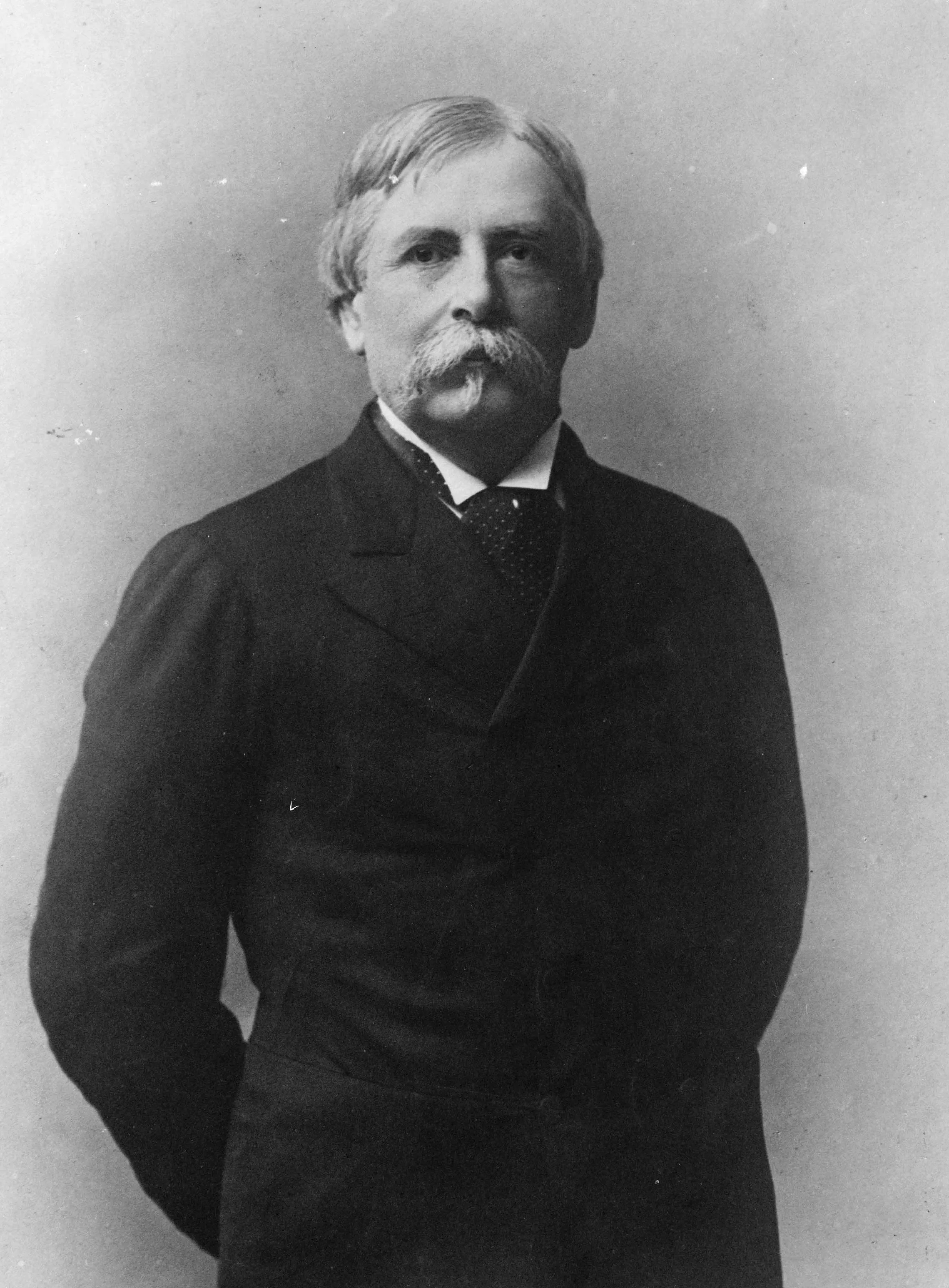
William Crowninshield Endicott
William Crowninshield Endicott
Birth: November 19, 1826.
Death: May 6, 1900.
Parents:
- Father: William Putnam Endicott.
- Mother: Mary Crowninshield Endicott.
Burial Location: Harmony Grove Cemetery Highland Avenue, Lot 1554, Grave #6.
William Crowninshield Endicott, a descendant of Governor John Endicott, went to school in Salem and then graduated from Harvard College in 1847 and then studied law at Harvard Law School 1849-1850. He also studied law with Nathaniel J. Lord, and was admitted to the Massachusetts Bar in 1850. He then formed a law firm (Perry & Endicott) with Jairus W. Perry. He was a member of the Salem Common Council 1852-53 and in 1847. He became City Solicitor in 1857. He was President of the Salem Bank from 1857 until 1873.
In 1859, he married Mary Crowninshield Peabody, daughter of Joseph Peabody. The couple had two children: William Crowninshield Endicott, Jr. born in 1860, and Mary Crowninshield Endicott Chamberlain Carnegie, born in 1864.
In 1873, Endicott was appointed as a judge on the Massachusetts Supreme Judicial Court, where he served until 1882. In 1885, he was appointed by President Grover Cleveland as the 36th US Secretary of War. In this position, he oversaw changes in the US Army. He recommended that the powers of the War and Treasury Departments be defined by a legislative act to prevent conflicts over disbursements. After leaving the cabinet, he served as an overseer at Harvard College (1875-1885), president of the Harvard Alumni Association (1888-1890) and president of the Peabody Academy of Science until his death at age 73.
Never elected to public office, he was a loyal Democrat from his youth until his death. It was said of him that he seemed to be born a judge. His knowledge of men and of their business affairs rendered the transaction of business in his court both smooth and expeditious. His reputation was that of a successful and sound lawyer, of a dignified and efficient judge, of a wise and faithful public servant and of a refined and courteous gentleman.
Photo: Wikipedia.
Sources Consulted:
- Find a Grave.
- Mass.gov
- Wikipedia.
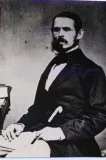
Manuel Fenollosa
Manuel Fenollosa
Burial Location: Amaranth Path Lot # 225/226 Grave #15.
Born in Malaga, Spain to parents Manuel Fenollosa and Isabel Del Pino Fenollosa December 24, 1822, Manuel Fenollosa was a member of a band which came to the United States in 1838 on a US Navy frigate, the United States. His brother in law Manuel Emilio was on the same vessel and was a member of the same band. Once they settled in Salem, they formed another band and started a music school.
Their first concert was held at the home of John P. Jewett. He later published their sheet music and taught them English. This man also published Harriet Beecher Stowe’s book, Uncle Tom’s Cabin.
On November 20, 1851, Manuel Fenollosa married Mary Silsbee. They had two sons: Ernest Francisco Fenollosa born in 1853 and William Silsbee Fenollosa born in 1855. Mary died and Manuel married Annie Elizabeth Kinsman on July 26, 1869. This couple had three more sons: Clarence, born in 1870, Sydney, born in 1873 and Manuel Emilio born in 1875.
Manuel Fenollosa was active in fundraising. In 1863, he helped to raise funds for “the monument for the citizens of Salem who were killed in battle or who may die of wounds or disease received while in battle.” This monument, in the Soldiers Lot of Harmony Grove Cemetery is located on the corner of Halidon and Greenwood Avenues and is dedicated to those who gave their lives in defense of the Union. That same year, Fenollosa composed “The Emancipation Hymn, which was dedicated to the Salem Union League.
He had contributed funds for the establishment of the Massachusetts 54th Regiment. Manuel Fenollosa died on January 15, 1878. He is buried at Harmony Grove Cemetery, Amaranth Path, Lot # 225/226 Grave #15.
Sources Consulted:
- Book: A Brave Black Regiment: The History of the 54th Massachusetts, 1863-1865. Luis F. Emilio, Da Capo Press, NY: 1995.
- Internet:
- Ancestry.com/ genealogy/records/ Manuel Fenollosa (1822-1878).
- Cemteryfind.com/Burial/Search Burial/Manuel Fenollosa.
- Genealogywise.com Manuel Fenollosa, Spanish Immigrant to Salem Massachusetts 1838. Heather Wilkinson Royo, Blog, March 13, 2011.
- The Antiquarian Booksellers' Association of America
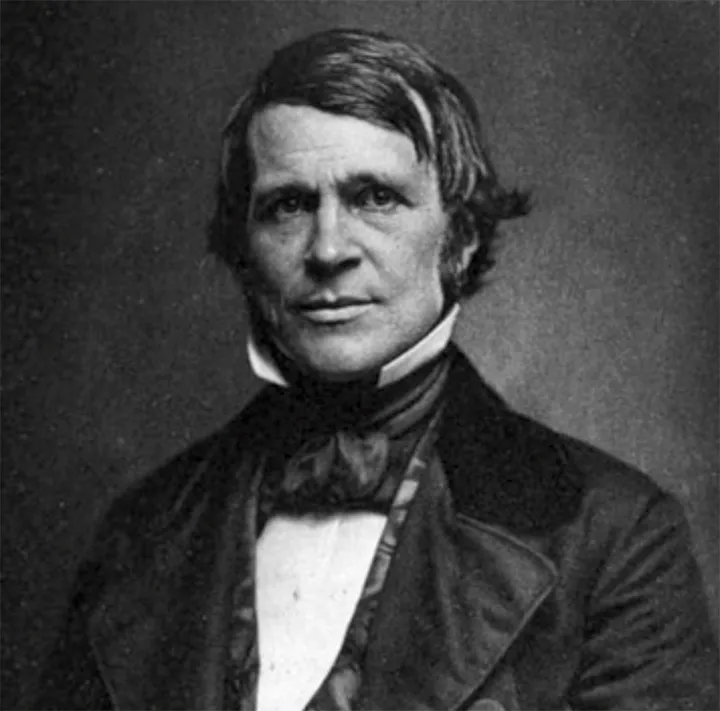
Caleb Horton Foote
Caleb Horton Foote
Burial Location: Chapel Ave. Lot 212, Grave 14.
Caleb Horton Foote was the third member of his family to have that name. He was born in Salem, Massachusetts, on January 28, 1803, to parents Caleb Horton Foote II and Martha (Patty) West Foote. His father died of yellow fever while away at sea. This was a common bond with Nathaniel Hawthorne, with whom Caleb later became friends. As a little boy, Caleb attended dame school at a house on Salem’s Church Street. Later, he was taught by a Master Dodge in North Salem. However, by the age of 10 he was taken out of school to work in order to help his family.
This began his long life of self-education. He worked in a bookstore and read the books whenever he had the opportunity. Then, he worked for printer William Ives and continued reading as well as studying French. Finally, he was an apprentice at the Salem Gazette, where he would work in a variety of capacities all the way to owner and publisher. His association with the newspaper would last for seventy-one years!
In 1829, he became Master of the Essex Lodge of Freemasons, the youngest person ever chosen for that office in that lodge at that time. He served briefly in the Massachusetts House of Representatives from 1832-1833., but could not afford to continue. He lectured for meetings at the Salem Lyceum on the subject of printing. He met with friends to discuss all the subjects in which he was interested and attended the North Church. He married Mary Wilder White there on October 21, 1835. The couple lived on Liberty Street at first and then moved to Brown Street also in Salem.
Foote retired on October 1, 1888. He had kept going after the early death of his wife and several of his children. He wanted to retire not for reasons of bad health or dislike of the work, but wanted to leave the business in good hands.
Caleb Horton Foote III died on June 17, 1894, in Mattapan, Massachusetts, at the age of 91. He is buried at Harmony Grove Cemetery, Chapel Ave, Lot 212 Grave 14.
Photo: Family Search.
Sources Consulted:
- Moore, Margaret B. The Salem World of Nathaniel Hawthorne. Columbia and London: University of Missouri Press, 1998.
- Tileston, Mary Wilder (ed.). Caleb and Mary Wilder Foote, Reminiscences and Letters. Boston, MA: Houghton Mifflin Company, 1918.
- Family Search: The Church of Jesus Christ of Latter Day Saints, Caleb Horton Foote, 1803-1894.
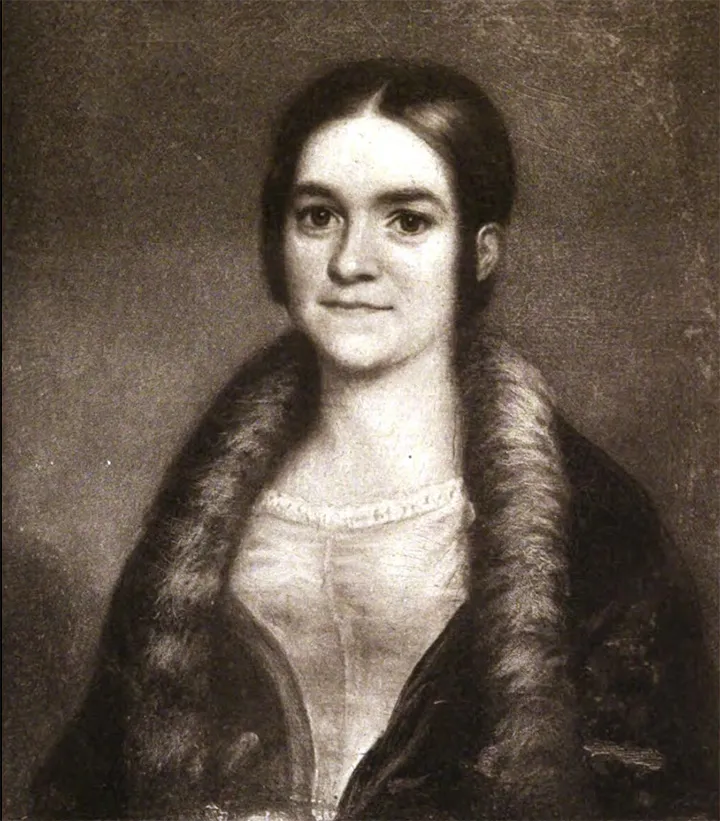
Mary Wilder White Foote
Mary Wilder White Foote
Burial Location: Chapel Ave. Lot #212, Grave 9
Mary Wilder White was born on December 12, 1810. Her parents were Judge Daniel Appleton White and Mary Wilder White. They lived in Newburyport, Massachusetts. Mary was only six months old when her mother died. In spite of this early tragedy, she learned the alphabet by the age of two and began writing early. She and her sister Elizabeth, known as Eliza, went to Miss Buckminster’s school in Brookline, Massachusetts. Mary was known not only for her intelligence, but also for her kind and friendly personality. She had a talent for acting and for public speaking.
When the White family moved to Salem, Massachusetts, Mary became a close friend of all the Peabody sisters, especially Sophia Peabody. She was a prolific letter writer, especially after her sister married and moved to Springfield, Massachusetts. Mary’s letters were mostly about events in the daily lives of herself and her friends, lectures and social activities attended, and her deep religious faith. Later, she would write about the births and deaths of her children, her interest in the Brook Farm experiment, abolitionist activities, and the books she read.
She married Caleb Horton Foote III on October 21, 1835. The couple had six children, only three lived to adulthood. As owner and publisher of The Salem Gazette, Caleb Foote was a prominent citizen of Salem. The couple had an active social life. Both were friendly with Nathaniel Hawthorne and their home was one of the few he visited. Mary Foote was very happy to learn of the engagement of her friend Sophia Peabody to Nathaniel Hawthorne. The friends went often to the home of their mutual friend Susan Burley to attend her salon.
Tragically, Mary Wilder White Foote died suddenly on December 24, 1857, at the age of 47. She was buried at Harmony Grove Cemetery on Chapel Avenue Lot 212 Grave 9.
Photo: Wikimedia Commons.
Sources Consulted:
- Find a Grave.
- Moore, Margaret B. The Salem World of Nathaniel Hawthorne. Colombia and London: University of Missouri Press, 1998.
- Tileston, Mary Wilder (ed.). Caleb and Mary Wilder Foote, Reminiscences and Letters. Boston, MA: Houghton Mifflin Company, 1918.
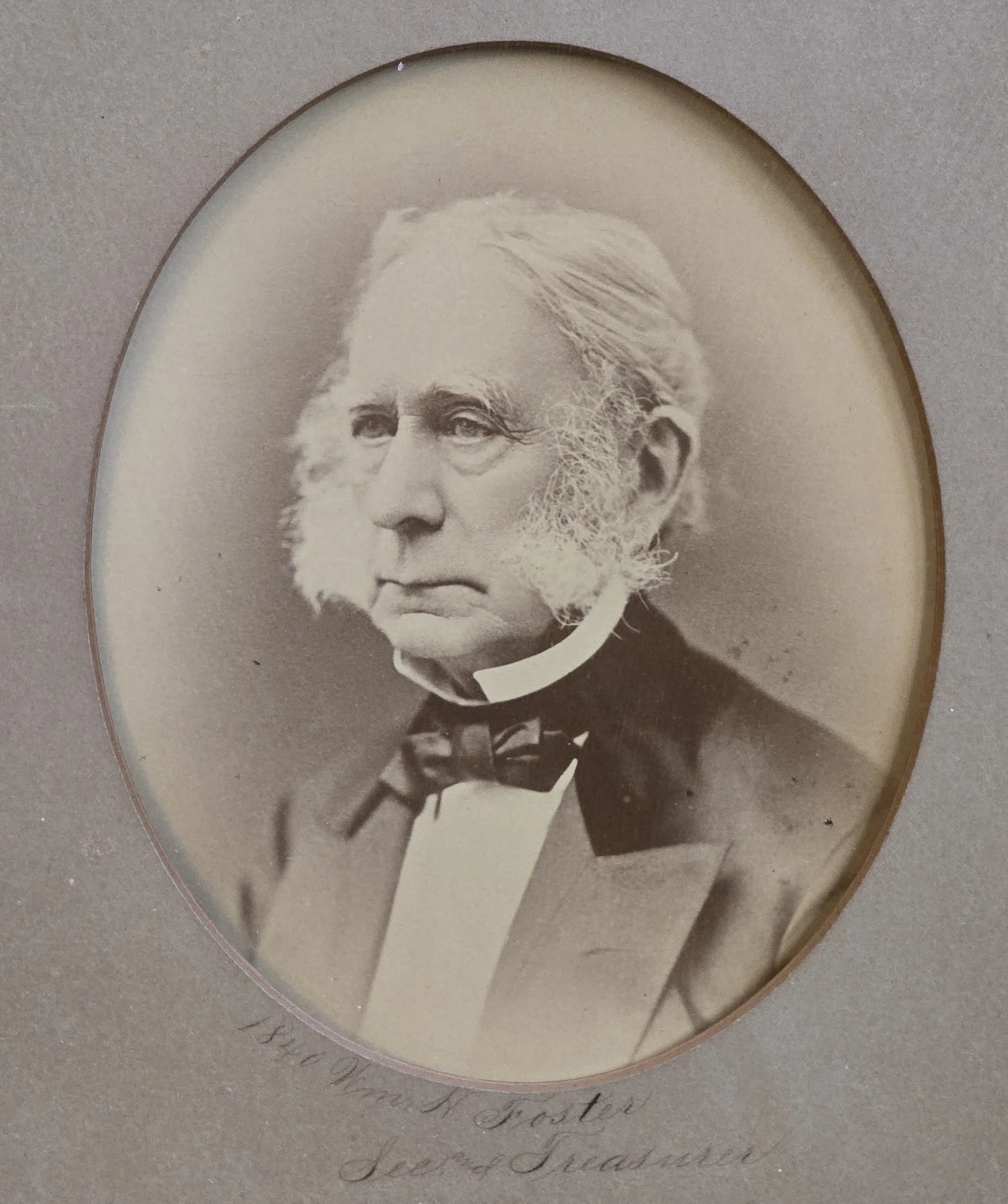
William H. Foster
William H. Foster
Birth: December 23, 1797
Death: November 30, 1888
Burial Location: Greenwood Ave. Lot 1291, Grave 2
No information is known about William H. Foster’s childhood or early education. It is known that he worked at the Asiatic Bank in Salem from the time of its opening in 1824; first as a bookkeeper, after several years, he was promoted to the position of cashier. He held that position until 1884. He was elected as a Director of the bank. His connected to Salem Savings Bank began in 1837, and he was elected as a trustee of that bank in 1857 and as a member of its Finance Committee in 1858. He became its Vice President in 1874.
In addition to his financial interests, he was also one of the men who established the Eastern Railroad in 1836. He helped to run the banquet which was held to celebrate the first train to run through Salem. He was the President of the board of the Salem Gaslight Company. He served as President of the board of the Old Ladies Home, a member of the board of the Old Men’s Home, Secretary and Treasurer of the Board of the Harmony Grove Cemetery as well as one of the founding trustees, clerk of the Eastern Stage Company, one of the founders of Barton Square Church, a member of the Second Corps of Cadets from 1815 and eventually the oldest living member of that organization.
He married Laura A. Ward on May 1, 1822. The couple had two children: Joseph C. Foster and William J. Foster.
Sources Consulted:
- Ancestry.com/genealogy/records/William-h.-foster-24-2/qwp3m
- Illustrated History of the Salem Evening News Compiled by G. B. Gillespie, Published By the Salem Evening News, 1897
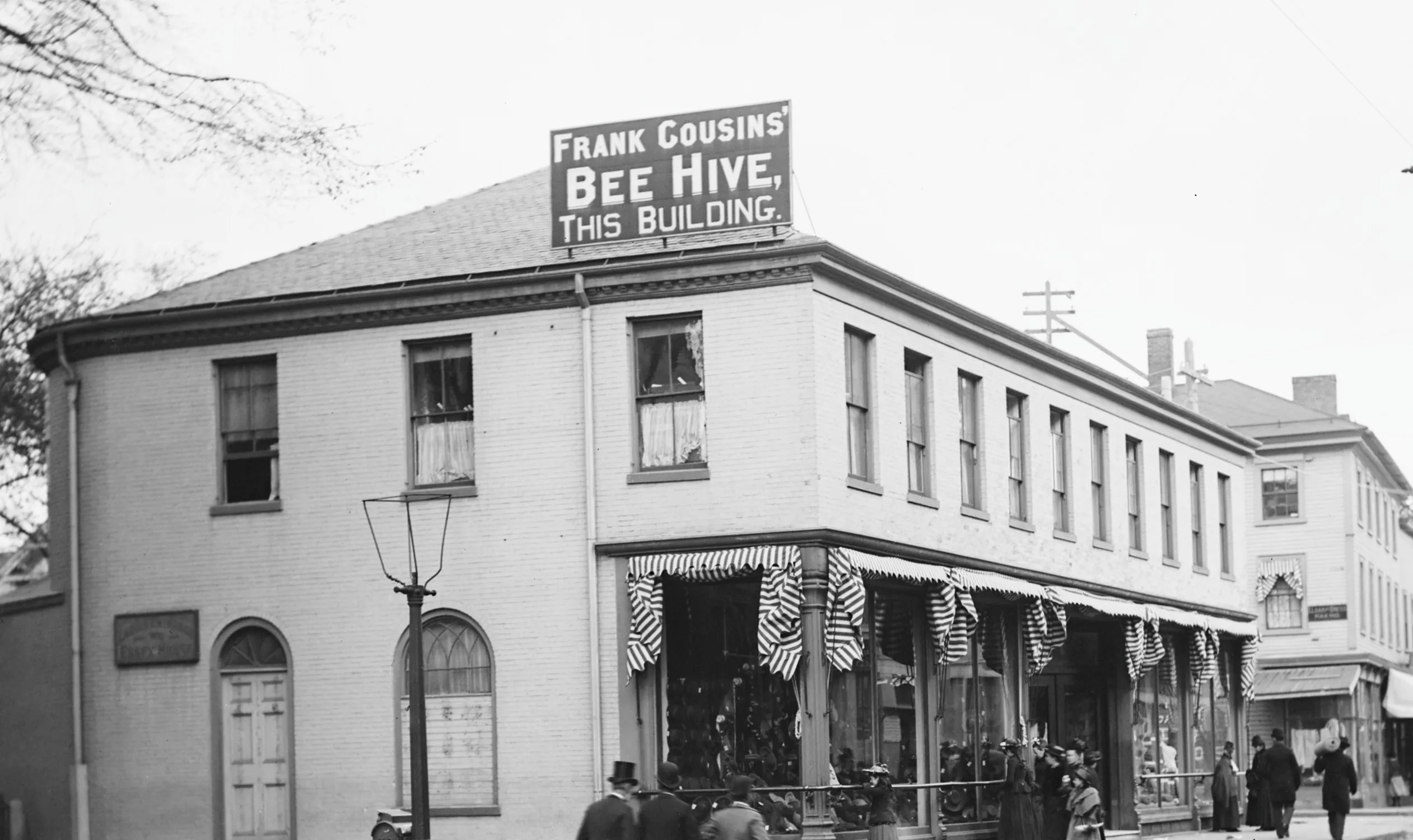
Frank Cousins
Frank Cousins
Born: June 30, 1851, Salem, MA
Died: June 6, 1925, Salem, MA
Burial Location: Lilac Path Lot 1175, Grave 10
Frank Cousins’ parents were Mary Oldson Cousins and Thomas Cousins. He was educated in the Salem public schools and graduated from the Phillips School on April 17, 1866. The next day he went to work as a cash boy at JB and SD Dry Goods Store in Salem 170-174 Essex St. His brothers also worked there. Eventually it became the Cousins Brothers Store and then Frank Cousins Bee-Hive.
Frank Cousins was most famous for his thousands of photographs of houses, museums and landmarks, their architectural features both indoors and outdoors in Salem, Danvers, Peabody and Marblehead as well as in Waltham and further away in Baltimore, Philadelphia and New York City. He was also very interested in notable Salem author Nathaniel Hawthorne, and photographed the houses where Hawthorne had lived.
His talent for photography led to several collaborations with author Phil M. Riley. First they collaborated on the book The Wood Carver of Salem: Samuel McIntire His Life and Work. Little Brown and Company, Boston: (1916).This led to a second book: The Colonial Architecture of Salem. Little, Brown and Company, Boston; (1919) and then a third, The Colonial Architecture of Philadelphia (1920).
In 1899, Frank Cousins was appointed money clerk for the Boston, MA Post Office. He was a Presidential Elector for Benjamin Harrison and was a member of the Electoral College until his retirement in 1907. Never married, he was also a member of the Salem Athenaeum and of the First Baptist Church of Salem.
Arthur Lord Huntington
Arthur Lord Huntington
Arthur Lord Huntington was born and educated in Salem before attending Harvard (Class of 1870). He then attended law school, studied at the law office of Perry & Endicott, and was admitted to the Essex Bar in 1874. Throughout his lifelong legal career, he was a managing partner in the firms where he worked.
Huntington’s notable political roles included serving as the 24th Mayor of Salem, a position his father, Asahel Huntington, had also held (8th Mayor, buried in Topsfield, MA). He also served on the Common Council from 1875 to 1878 and was its president for the final two years. He was also on the Park Commission, appointed by Mayor Rantoul, and led it until ill health forced his resignation.
His civic roles included director of the Salem National Bank, trustee of the Salem Five Cents Savings Bank, trustee of the Bertram Home for Aged Men, and president of Harmony Grove Cemetery. Huntington died on October 19, 1902, in Norwalk, Connecticut, at age 54. He was unmarried and survived by his sister, Sarah Louisa Huntington.
He is buried on Halidon Avenue, Lot #1597.
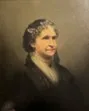
Lucy Gardner Ives
Lucy Gardner Ives
Burial Location: Magnolia Path, Lot # 202 Grave # 8
Lucy Gardner was born in Hingham, Massachusetts to parents Perez Gardner and Silence Gardner. She was one of nine children. Her siblings were: Perez, Thomas, Sybil, Hosea, Silence, Alexander, Ruth and Aaron. Nothing is known of her early life or education.
She married William Ives of Salem Massachusetts on May 12, 1824. The location of the marriage is not known. The couple had seven children: Mary Bradshaw (1825), Lucy Gardner (1826), William Hale (1829) Susan Shillaber (1831), Franklin Gardner (1834), Benjamin Franklin (1837), Helen May (1843).
Lucy became a member of the North Church in Salem on April 2, 1825. Both she and her husband William were active abolitionists. The Salem Female Anti-Slavery Society was first organized in 1832. At that time all the members were women of Color. It was the first society of its kind in the United States. Its initial purpose was to found secular and Sabbath schools for free Black men and women, and also to assist newly freed or enslaved people who had escaped. The women wanted to voice their opposition to racial segregation or discrimination in the northern states. They were not allowed to be members of the same organizations as men. Many members were self-supporting members of the working class.
By 1834, members also included white women. In 1835, Lucy Ives was elected vice president of the organization and held this office from 1835 until 1841. In 1843, she was elected president, although she was reluctant at first to serve in this position, she held it until 1865, when the Salem Female Antislavery Society disbanded at the end of the Civil War. Meetings were held in members’ houses. Fundraising was done through bazaars, and supported local Black churches as well as the continuing issues faced by Black families and individuals. Lecture series helped to educate members and to inspire them in the continuation of their work.
After the death in 1875 of William Ives, Lucy moved to Chicago Illinois, where she lived with one of her daughters until her own death on October 24, 1882.
Sources Consulted:
- New York Public Library Members of the North Church, Salem Massachusetts, 1827 edition
- Phillips Library of the Peabody Essex Museum. Salem Massachusetts. Phillips Library Finding Aids. William S. Ives Papers 1814-1854. Collection Identifier Mss. 272
- Wikipedia: Salem Observer Wikipedia.org/w/index.php?title=Salem_Observer&oldid 1010704782.
- Wiki tree:
- Lucy Gardner Ives (1800-1882)
- William Ives (1794-1875)
- Book: Julie Roy Jeffrey. Ordinary Women in the Antislavery Movement: The Great Silent Army of Abolitionists. University of North Carolina Press, Chapel Hill and London: 1998.
Harlan Page Kelsey
Harlan Page Kelsey
Born: July 9, 1872
Died: July 28, 1958
Burial Location: Sylvan Avenue, Lot 1766, Grave 4
Harlan Page Kelsey was born a twin in Pomona, Kansas. His brother was Harry. They had one sister, Edith Kelsey Hodge. When he was three, the family moved to Highlands, North Carolina.
From a very young age Harlan Kelsey was interested in and also active in his father’s plant nursery business. He was said to have begun to sell flowers at the age of twelve. During the 1870’s he worked on cultivating previously uncultivated plant species. As a young man, he moved to Boston, and set up a nursery and landscape architecture business. He was hired to work for famous Salem business man Daniel Low to work on the landscape of his home, and met Low’s daughter Florence. On November 25, 1902, the couple was married. They lived at 285 Essex St. in Salem. They had four children: Harlan, Jr. Seth, Katherine Sawyer and Jane Hart.
Harlan Kelsey was very active in Salem. He was a member of the first Board of The House of the Seven Gables. He was a landscape architect for Pioneer Village. In 1912, he wrote a plan for the City of Salem. He oversaw the development of Derby Wharf and was instrumental in the establishment of the Salem Maritime Historical Site. He was elected President of the Civic League and was a Park Commissioner as well as a member of the Planning Board.
His activities also took him far from Salem. He served as a member of the National Park Commission, working on the forests of the White Mountains in New Hampshire, the Everglades in Florida, The Shenandoah Mountains and the Great Smoky Mountains. He was President of the American Association of Nurserymen. His business was based in Boxford Massachusetts and was called Kelsey Highland Nursery.
Harlan Kelsey also wrote about the plants and flowers he loved. He wrote a book called Standardized Plant Names. He also wrote a booklet which was called “Beautifying and Improving Greenville South Carolina: Report to the Municipal League, Greenville, South Carolina” and “The Great Smoke Nuisance” co-authored with Frederick Law Olmsted.
He was honored by the American Horticultural Society for his work in conserving the nation’s forests. The University of Massachusetts awarded him an honorary degree for his work in conservation.
Harlan Page Kelsey died in Salem Hospital.
Sources Consulted:
- Book: Beautiful Land of the Sky: John Muir’s Forgotten Eastern Counterpart, Pioneering Our Native Plants and Eastern National Parks, Loren M. Wood IUniverse, Bloomington Indiana: 2013
- Internet:
- https: Wikipedia.org/w/index.php?=title=Harlan-Kelsey=213306757
- www.findagrave.com/memorial/151691878/harlan-page-kelsey, memorial page for Harlan Page Kelsey (9 Jul.1872-28 Jul 1958) , Find a Grave Memorial ID 151691878, citing Harmony Grove Cemetery, Salem, Essex County, Massachusetts, USA; Maintained by Four Leaf Clover (contributor 14084634) “www.Noblenet.org/salem/wiki/index,php/Kelsey,_Harlan_P.”
- Salem Evening News: July 29, 1958 Harlan Page Kelsey Obituary
- Wicked Local Salem: Leave A Legacy: Conservationist Harlan Page Kelsey, John Goff/Preservation Perspective, August 17, 2007
.png)
David Mason Little
David Mason Little
David Mason Little was born into a prominent Swampscott family, studied naval architecture at MIT, and later settled in Salem (like his artist brother Philip Little), where he opened a boat-building business. His true passion, however, combined photography and sailing, exemplified by his 1883 photo book Instantaneous Marine Studies, now considered an early classic of its kind.
Civil service was important to Little: he served on the Salem School Committee and Board of Aldermen, and in 1899, he ran successfully for the city’s mayoral seat. His sole term as mayor has been described as “clean if not inspiring.” Little managed to significantly reduce the city’s bonded debt and tax rate and oversaw extensive street paving.
However, Little lost his bid for reelection to John “Silk Hat” Hurley, who mobilized Salem’s growing working-class population, marking the end of upper-class dominance in the mayor’s office.
David Little did not stay idle for long. He remained active in public service, serving as the last Collector of Customs for Salem and Beverly (1903–1913) and at the Charlestown Navy Yard during World War I. He died in 1923.
He is buried on Violet Path, Lot #1612.
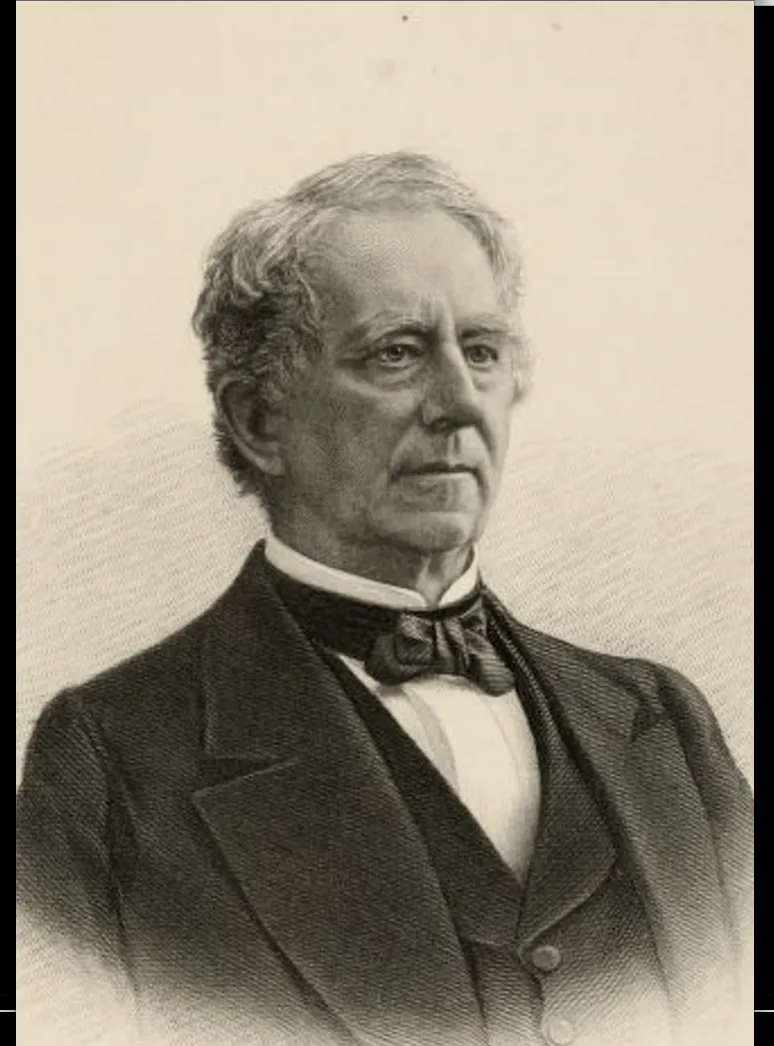
Judge Otis Phillips Lord
Judge Otis Phillips Lord
Born: July 11, 1812, Ipswich, MA.
Died: March 13, 1884, Salem, MA.
Burial Location: Greenwood Avenue, Lot 1430, Grave 2.
As a young boy, Otis Phillips Lord attended Dummer Academy (now Governors Academy), he went on to graduate from Amherst College in the class of 1832, and then graduated from Harvard Law School in 1835. He was admitted to the bar in the same year. He became a frequent guest of Edward Dickinson, the father of poet Emily Dickinson. Both men were active in alumni activities of Amherst College and became good friends.
Otis Lord married Elizabeth Farley in 1843; the couple lived in Salem, and had no children. Their home was 14 North Street; the house is no longer standing. The site was the location of the original North Church Meeting House. Much of the timber from the original building was contained in Lord’s house.
Otis Lord served in the Massachusetts General Court, in the House of Representatives for five terms, as Speaker of the House in 1854, and for one term in the State Senate. He was defeated for re-election in 1872. In 1875, he was appointed to the Supreme Judicial Court of Massachusetts and served there until he retired due to ill health in December of 1882. He was a noted orator, and a man of strong opinions which may have put an end to his political career.
Rumors persist about a relationship between Emily Dickinson and Otis Phillips Lord. They certainly knew each other. Otis Lord and his wife Elizabeth visited the Dickinson home in Amherst. After his wife’s death, Otis Lord was still a frequent guest and his visits continued after the death of Edward Dickinson. Scraps of letters in Emily Dickinson’s handwriting, written to “master” and “My lovely Salem” add fuel to the fire. However, there are no known letters from Otis Phillips Lord to Emily Dickinson and no proof that her letters reached him or indeed were addressed to him. He died two years before her death.
It is said that he only made one mistake on a law decision while he was a judge. This was on a law that had just been amended by the state legislature. When he found out about the change, he said "well, the good Lord only knows what the Massachusetts Legislature hasn’t done in the last six months. “
He was not well for two years before his death. Lord resigned from his judicial post in 1882. Otis Phillips Lord died at his home on North Street.
Photo: Find a Grave.
Sources Consulted:
- Books:
- Julie Dobrow: After Emily: Two Remarkable Women and the Legacy of America’s Greatest Poet. W. W. Norton and Company, NY: 2018.
- Susan Snively: The Heart Has Many Doors: A Novel of Emily Dickinson, White River Press, Amherst, MA: 2015.
- John Evangelist Walsh: Emily Dickinson in Love: The Case for Otis Lord. Rutgers University Press, New Brunswick, NJ: 2012.
- Brenda Wineapple: White Heat: The Friendship of Emily Dickinson and Thomas Wentworth Higginson Alfred A. Knopf Publishers, NY: 2008.
- Internet:
- Emily Dickinson Museum.
- Mass.gov
- Noblenet.org
- Salem News.
- Wikipedia.
Daniel Low
Daniel Low
Birth: February 13, 1842.
Death: February 3, 1911.
Burial Location: Sylvan Avenue, Lot 1766, Grave 1.
Daniel Low was born in Salem. He was the son of Richard and Margaret Brown Low. Educated in Salem public schools, he was a member of the last class to graduate from Salem English High School. He then worked as a jeweler’s apprentice. Daniel married Elizabeth Jane Stevens in 1866. They lived at 365 Essex St. The couple had two children, Seth born in 1865 and Florence born in 1875. After the Civil War ended, Daniel Low opened his first store, on the corner of Essex and Central Street.
This was a success; seven years later he moved his store to a larger space on Washington Street, the site of the former First Church. Daniel Low and Company quickly became nationally and internationally known due to its very successful mail order business; the store’s catalog was called the Daniel Low Yearbook. Adding to the company’s success was the purchase of colonial reproduction collections of Nevins Company and R. Harris Company of Washington DC. The company produced the first souvenir witch spoons and also became famous for this Salem item, popular with tourists and today with collectors.
Daniel Low died in his store of a heart attack on February 3, 1911. His son Seth took over the management of the company. After Seth died in 1939, Florence Low Kelsey managed the company until her own death in 1969.
Sources Consulted:
- AmericanSilversmiths.org
- Find a Grave.
- HistoricIpswich.net
- Salem Links and Lore.
- “Sudden Death of Daniel Low in His Store Yesterday” Salem Evening News –February 3, 1911
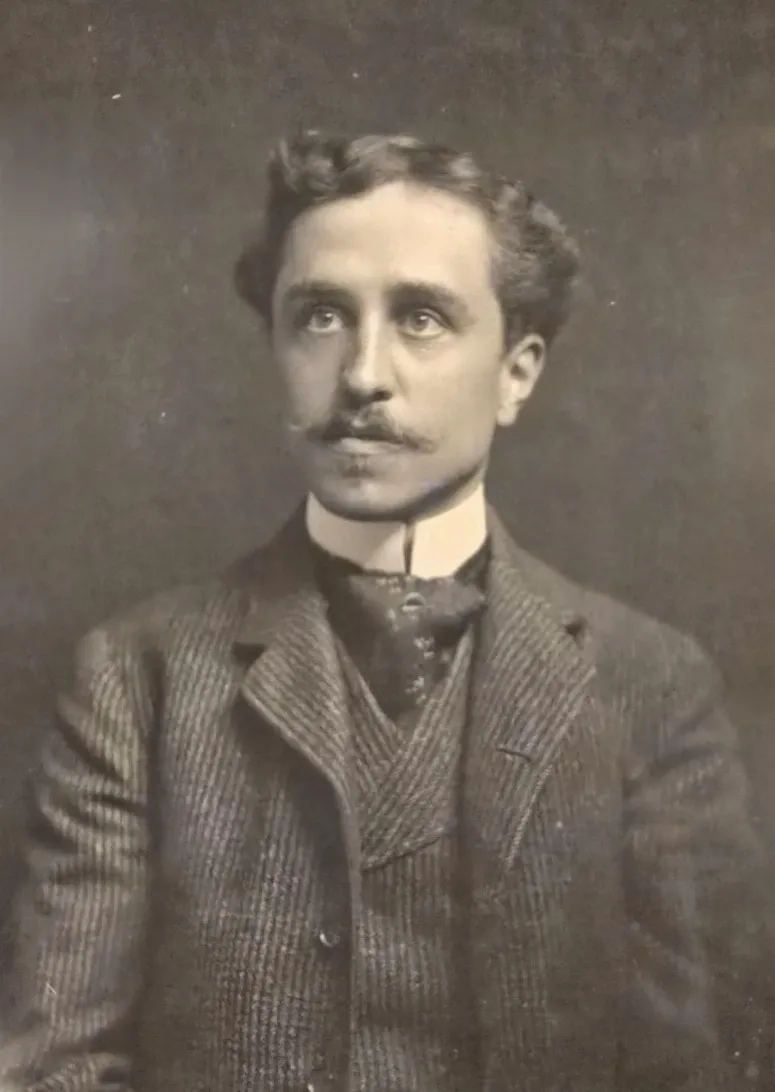
Ernest M. A. Machado
Ernest M. A. Machado
Birth: June 30, 1868 Manchester by the Sea, Massachusetts
Death: September 30, 1907 Ossipee, New Hampshire
Burial Location: Olive Path
Ernest Machado accomplished a great deal in his life which was cut short far too soon. His father was Juan Francisco Machado, a native of Cuba. His mother was Elizabeth Frances Jones Machado, related to the Webster and Bradford families of Massachusetts.
Ernest Machado was educated in the Salem schools and then went to the Massachusetts Institute of Technology to study architecture. He graduated in 1890 and won prizes in both design and drawing. Some of his work was displayed at the Paris World’s Fair in 1889. Machado trained in several architects’ offices in Boston, and then joined the firm of Shepley, Ruttan and Coolidge, successors to H.H. Richardson. While working there, he designed buildings at Stanford University in California, the main branch of the Chicago Public Library.
He formed his own firm with Ambrose Walker, who later became Machado’s brother in law. The firm had offices in both Boston and Salem. He went on to design private houses such as the one belonging to Harlan Kelsey, renowned landscape architect. Machado also designed public buildings in Salem, most notably the chapel at Harmony Grove Cemetery. He also worked on buildings in the North Shore of Massachusetts, New Haven, Connecticut, and Portland, Maine, and in Ottawa, Canada.
Ernest drowned in a boating accident at the age of thirty nine. He was wearing heavy clothing and was recovering from a broken bone in his arm at the time. Both factors likely contributed to his death. His nephew survived the accident. He was buried in the family plot where he had designed the borders for the flat gravestones.
Sources Consulted:
- Internet
- Biographical Dictionary of Architects in Canada: 1800-1950.
- Machado, Ernest Miguel Antonio 1868-1907
- Dictionaryofarchitectsincanada.org, machado-Ernest-Miguel-Antonio
- Find-a-grave.com/memorial/60336723/Ernesto-miguel-antonio-machado
- Noblenet.org/salem/wiki/index.php?title=Machado-Ernest&oldid=10492
- Ernest M.A. Machado, Salem Architect(//streetsofsalem./2016/04/08/ernest-m.-a.- machado-salem-architect)Streets of Salem Blog
Alfred Searles McKenzie
Alfred Searles McKenzie
Birth: February 24, 1820, Topsfield, MA
Death: April 25, 1899, Peabody, MA
Spouse(s):
- Mary Ann Lamson
- Ruth J. Coffin
Child: Walter L. Mc Kenzie
Burial Location: Caleb Coffin Plot, Privet Path, Lot 1270, Grave 3.
Alfred Searles McKenzie was born in Topsfield, Ma on February 24, 1820, to parents John and Betsey Searles Mc Kenzie.
Alfred McKenzie began his work in the shoe industry as a shoe cutter, working for Francis Dane. Later he became the foreman of his factory in Upton’s Block. Later he owned a factory in Danvers, where he worked with a partner until his retirement.
He was active in the affairs of his town as well as being a speaker and agitator in the anti-slavery movement. He was a member of the Peabody School Committee in 1862-63 and also served on the Lyceum and Library Committee of the Peabody Institute from 1863-1866. He was known for his interest in literature. He was married first to Mary Ann Lamson and then to Ruth J. Coffin. He had one son from his first marriage: Walter L. McKenzie. Alfred Searles McKenzie died in Peabody on April 25, 1899.
Sources Consulted:
- CemeteryFind.Com, Powered by Docufree
- Find a Grave, memorial ID 229153501, Alfred S. McKenzie, citing Harmony Grove Cemetery, Salem, Essex County Massachusetts
- Salem Evening News, obituaries, April 25, 1899.

William Sluman Messervy
William Sluman Messervy
William S. Messervy left his native Salem in 1834 for St. Louis, Missouri, to pursue commercial ventures before becoming a trader in Chihuahua and Santa Fe, then part of the Mexican territory of Santa Fe de Nuevo México. While there, he fought in the Mexican-American War and was incarcerated in a Mexican prison until American forces released him. By 1850, he co-founded Messervy & Webb, a Santa Fe store that wholesaled goods transported along the Santa Fe Trail.
With the creation of the U.S. Territory of New Mexico, Messervy was elected to the 31st Congress. However, the House of Representatives refused to seat him because the territory was not yet a state. He later served as Secretary of the New Mexico Territory and as Acting Governor.
He returned to Salem in 1854, became a director of several corporations, and served as mayor from 1856 to 1857. Originally a Democrat, he became a Republican during the Civil War in support of the Union. His obituary noted he “was instrumental in building up the southerly section of the borough.” He also supported literary and scientific pursuits as an active member of the Essex Institute and the Salem Athenaeum.
He is buried on Greenwood Avenue, Lot #883.
Alice Lee West Movius
Alice Lee West Movius
Alice Lee West was born on October 26, 1885. She was the daughter of George West and Rose Saltonstall. Rose was the daughter of Leverett Saltonstall, US Representative from Massachusetts. Alice was raised in Brookline, Massachusetts. She was interested in philanthropy at an early age. On December 11, 1906, Alice, who was described as "tall, willowy and beautiful" married landscape architect and Harvard graduate Hallam Leonard Movius of Buffalo, New York.
As a member of the Vincent Club, she helped to raise funds for women's health care. In 1916, she attended the Chicago Convention which marked the founding of the National Women's Party as head of the Massachusetts Women's Suffrage Delegation. At the end of World War I, she became the first woman in Boston to "bob" or have her hair cut short. She sold her hair to raise funds for the suffrage movement and made other donations to the cause.
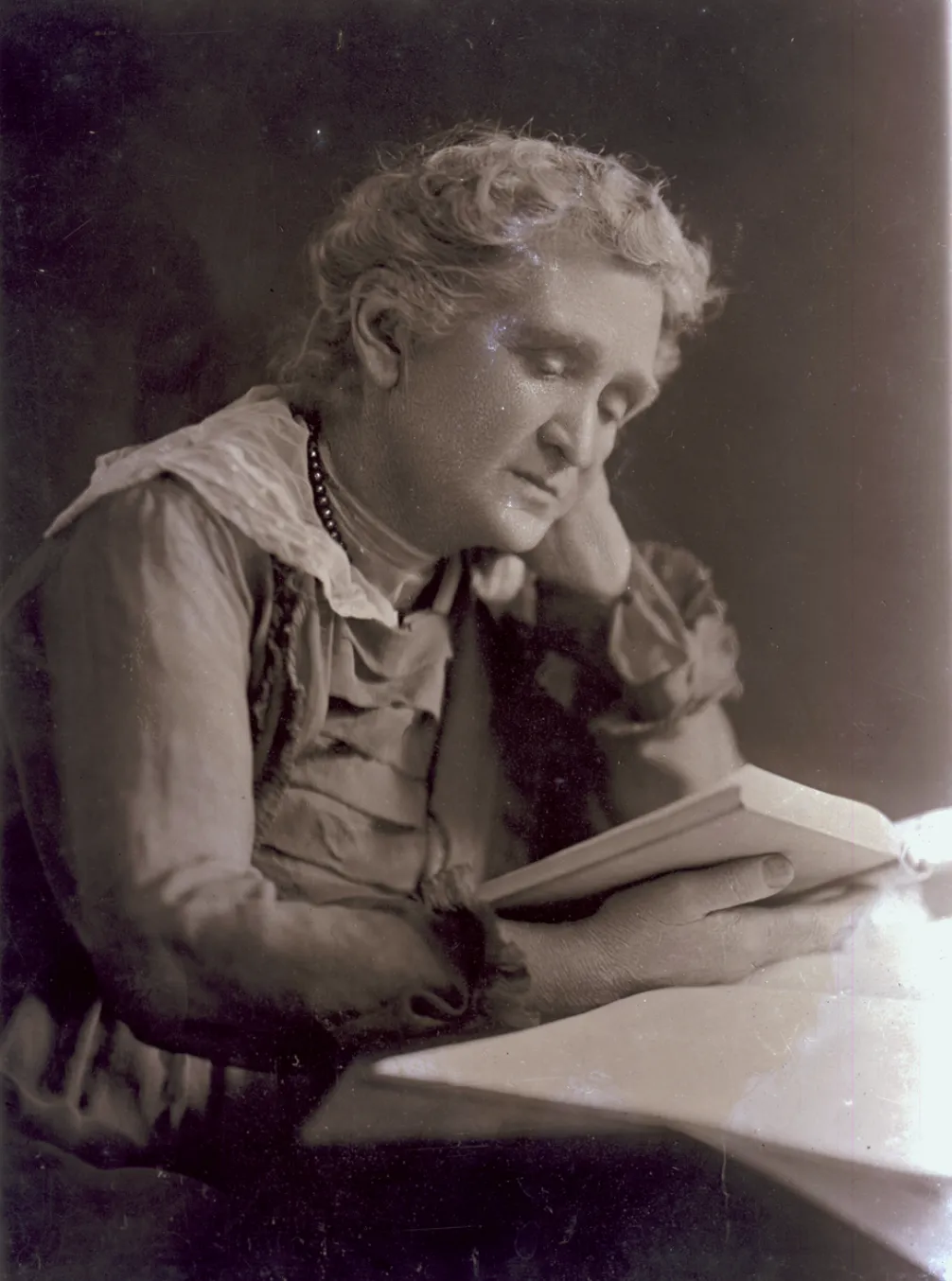
Mary Harrod Northend
Mary Harrod Northend
Born: May 10, 1850, Salem, MA.
Died: December 17, 1926, Salem, MA.
Parents:
- Father: William Dummer Northend.
- Mother: Susan Stedman Harrod Northend.
Burial Location: Grove Ave., Lot 378, Grave 5.
Mary Harrod Northend was a writer who specialized in telling the stories of historic houses, their architecture and furnishings. As a young girl she was often ill and missed a great deal of school.
By the early 1900’s she had published articles or short historical sketches. At first, she took the photographs that accompanied the stories, but was not satisfied with these, and hired a professional photographer. She was in her fifties when her career began. She was very interested in the preservation of historic homes in Salem.
By 1910, she had over 14,000 photographs to her credit; in addition to using these to illustrate her articles and books she also ran a successful business selling the photographs to editors, architects, decorators and historians. By 1915, she had published articles in 37 periodicals, including the Boston Herald, Ladies Home Journal, Century Magazine and the Mentor as well as two books. She focused at first on colonial cookery, furniture and decorating, later adding landscape and architecture.
Her research for her works took her all over New England. She was known for spending hours arranging a room for a photo shoot. Her collection of interior and exterior photographs of homes had increased to over 30,000 images by the time of her death in December 1926.
Photo: Find a Grave.
Sources consulted:
- Historic New England: Historical/Biographical Note: Sources Gamble, Jeanne M. Surroundings of Inspiration: The Progressive Era through the Lens of Mary H. Northend, 1904-1926, 2008; Guide to the Library and Archives, 11 and Boston Globe, December 17, 1926, p. A8.
- Mysticbooks.org
- Wikipedia.
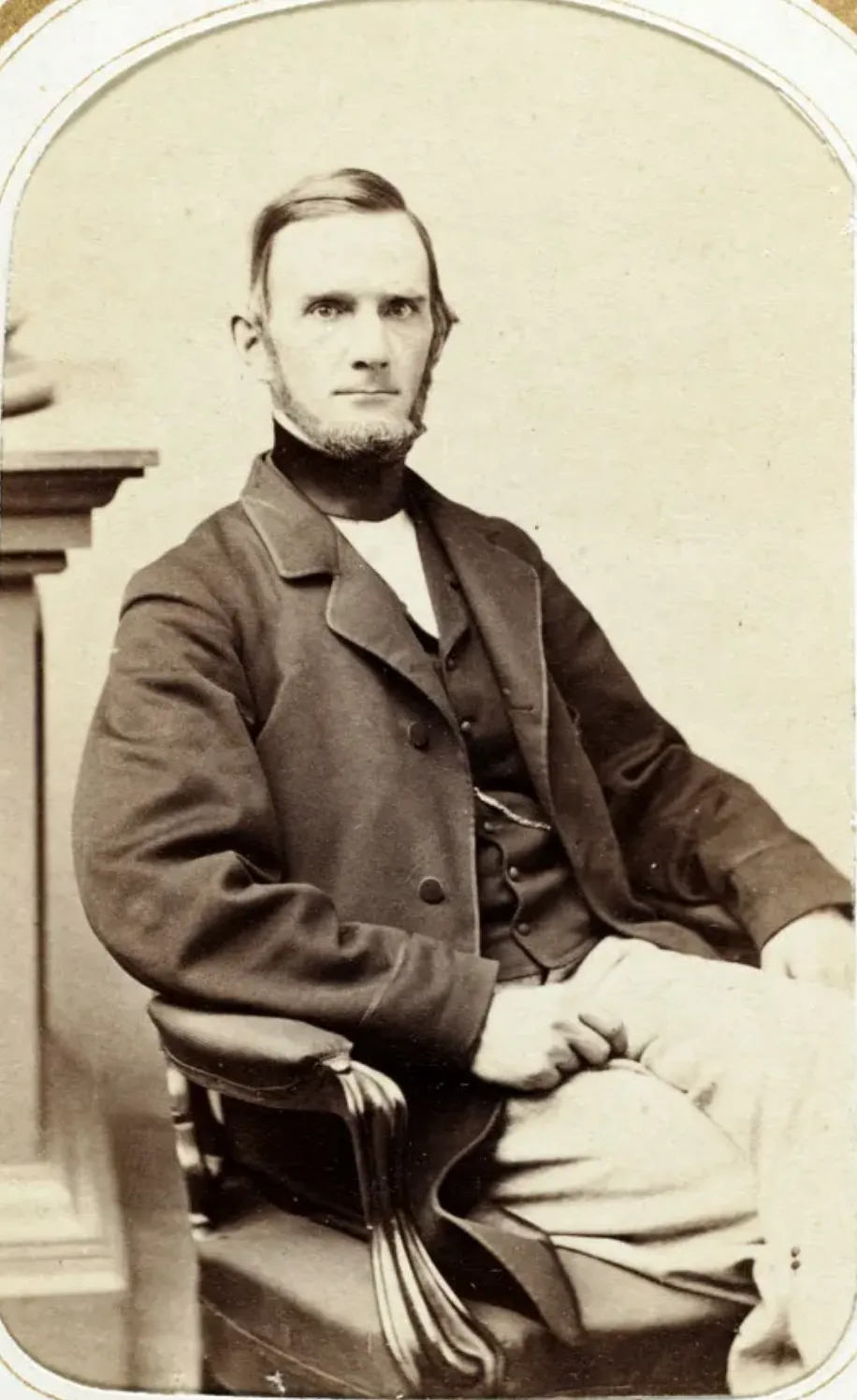
William Dummer Northend
William Dummer Northend
Parents:
- Father: John Northend.
- Mother: Anna Titcomb Northend.
Burial location: Grove Ave. Lot #378, Grave #2.
William D. Northend was descended from two of the earliest families to arrive in Massachusetts from England, the Sewells and the Longfellows. Born in Byfield, Massachusetts on February 26, 1823, he received his early education at Dummer Academy in Byfield, Massachusetts, and then graduated in 1843 from Bowdoin College in Brunswick, Maine. He studied law under Ashael Huntington in Salem and was admitted to the Essex County Massachusetts Bar in 1845.
On November 2, 1846 he married Susan Stedman. The couple had four children: Louisa Huntington, Mary Harrod, Susan Stedman and William Wheelwright. William practiced law in Salem; this led to his becoming involved in state and local politics. He served in the Massachusetts State Senate in 1861 and 1862. During the Civil War he was one of a group called Copperheads who argued in favor of protecting minority rights over the tyranny of the majority.
In 1869 he published a book which contained his speeches, as well as a series of essays. It was called Speeches and Essays Upon Political Subjects 1860-1869. After the war, he continued to practice law. He served as President of the Essex County Bar Association in the 1880’s, as well as serving as an Overseer of Bowdoin College and as a trustee of Dummer Academy. He collected autographs of well-known late nineteenth century political, literary, publishing, education and military figures. He also kept a scrapbook of letters regarding Civil war and Reconstruction politics from prominent northern Democrats as well as from southern leaders, including Jefferson Davis, and Alexander Stephens. The letters focus on the political activities of Radical Republicans.
William Dummer Northend died on October 29, 1902.
Photo: State Library of Massachusetts
Sources Consulted:
- Emory University, Stuart A. Rose Manuscript Archives and Rare Book Library. Northend, William Dummer , 1823-1902. William Dummer Northend Family Papers, 1673-1965. Manuscript collection no. 338.
- snaccopperative.org/history/65323368/9549918 Northend, William Dummer 1823-1902.
.png)
Joseph B. F. Osgood
Joseph B. F. Osgood
Joseph Barlow Felt Osgood governed Salem during a municipal government crisis, amid the closing months of the Civil War. Cutter’s Genealogical and Personal Memoirs (1908) praised his “high sense of duty and moral responsibility” and described his administration as “a model of unselfish devotion to the general welfare.” His independence, tempered judgment, and willingness to act on conviction enabled effective leadership and an admirable record in office.
Born in Salem on July 1, 1823, he graduated from Harvard College in 1846, studied law, and was admitted to the Massachusetts bar that same year.
Osgood was active in state politics, serving in the Massachusetts House of Representatives (1850–1859) and in the State Senate (elected 1859, reelected 1860). After his service as mayor, he returned to legal practice and was appointed justice of the First District Court of Essex County, where he served until his resignation in 1888 to resume private practice.
In his later years, he suffered from dementia and died on January 8, 1913.
He is buried on Halidon Avenue, Lot #931.
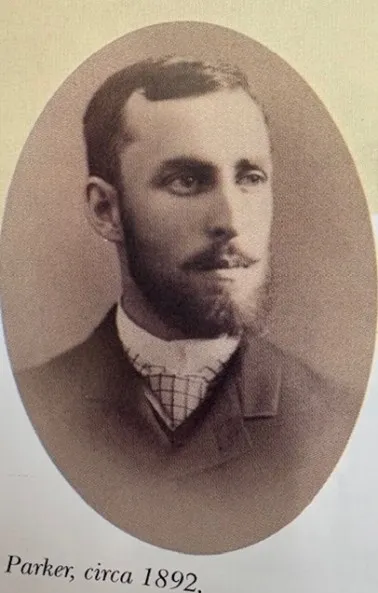
Charles Hanford Parker
Charles Hanford Parker
Charles Hanford Parker was born in 1860 and died in 1936. He is buried in the Parker Plot on Yew Avenue at Harmony Grove Cemetery. His parents were George Augustus Parker and Sarah Hegeman (Parker). He had two siblings, both brothers, Edward and George. He was married to Abigail Streeter.
In the spring of 1888, Charles joined with his brother George to form Parker Brothers, a game manufacturing company. Charles was responsible for bookkeeping, account collecting, purchase of inventory and shipping. Their brother, Edward, joined ten years later. Charles was known for his attention to his employees. It is said he walked the floor of the factory every day.
Charles and his wife, Abigail, had three children. The first, Lois, born in 1891, lived for only a few months. Their second child was Mary, born in 1892, she was the only child who survived. Her younger brother, Bradford, died just after birth in 1894.
In 1901, Charles became vice-president of Parker Brothers, when the company incorporated. His younger brother, George, was president and Edward was the treasurer.
In about 1912, Charles and his family moved to London to oversee sales abroad. He split his time between London and Paris until World War 1 broke out and he was summoned home in 1914. In 1932, Charles was forced to retire because of ill health and, in 1936, he died.
Sources:
- The Game Makers: The Story of Parker Brothers from Tiddlywinks to Trivial Pursuit, Philip E. Orbanes, author Harvard Business School Press Boston, MA 2004
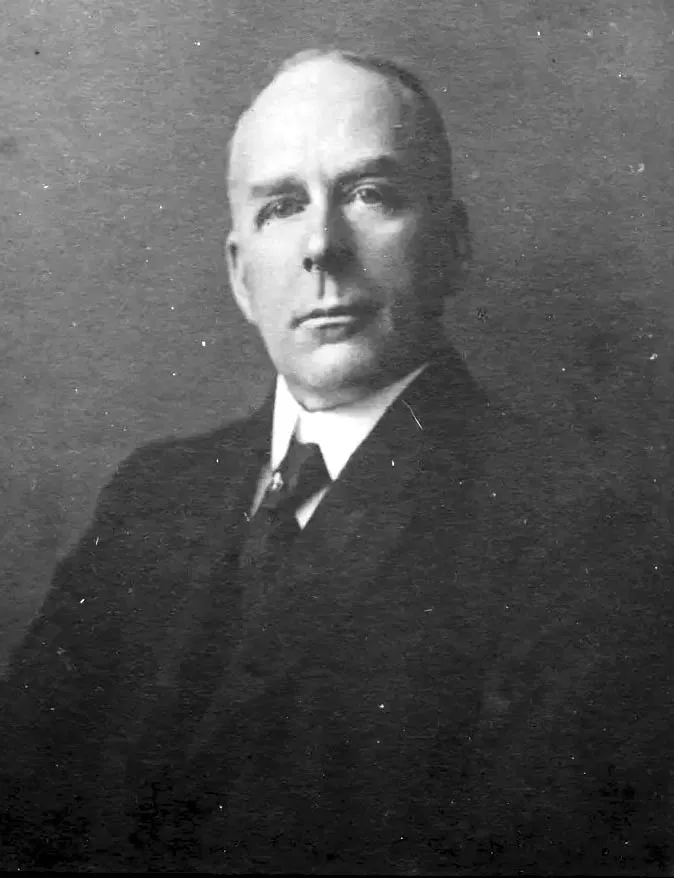
George Swinnerton Parker
George Swinnerton Parker
George Parker was born December 12 1866, the youngest of three brothers. He had first wanted to be a journalist, but was fascinated by board games as well as having a talent for inventing them in addition to an editor’s eye for detail. By the time he was 16, he had invented the first of more than one hundred games. This early game was called “Banking.” It had one hundred sixty cards with which the players borrowed and speculated. George had a game playing club with his friends. He wanted to publish the game, but was turned down by several establishments. Not easily discouraged, George paid forty dollars to have five hundred games printed and was able to sell all but twelve of them. He made a profit of one hundred dollars.
He established the George S. Parker Company in Medford, Massachusetts. In 1888, he convinced his brother Charles to go into business with him. In 1898, their oldest brother Edward joined them and Parker Brothers was born. George Parker had what he called 12 principles of business:
- Know your goal and reach for it.
- Find “winning moves.”
- Play by the rules and capitalize on them.
- Learn from failure; build on success
- When faced with a choice, make the move with the most potential benefit versus risk.
- When luck runs against you, hold emotion in check and set up for your next advance.
- Never hesitate and give your opponents a second chance.
- Seek help if the game threatens to overwhelm you.
- Bet heavily when the odds are long in your favor.
- If opportunity narrows, focus on your strengths.
- Be a gracious winner or loser. Don’t be petty. Share what you learn.
- Ignore principles 1 to 11 at your peril.
George Parker married Grace Mann on June 15, 1896. The couple had three children: Bradstreet (1897-1918), Richard Perkins (1900-1921) Sally Parker Barton (1907-2000).
He died September 26, 1952 and was buried in Harmony Grove Cemetery. Lot 1786, Grave 8, Yew Ave.
Photo: Wikipedia.
Sources Consulted:
- Find a Grave.
- Wikipedia.
Edward Hegeman Parker
Edward Hegeman Parker
Edward Hegeman Parker, Treasurer, Parker Brothers
Burial Location: Yew Ave., #1786, Grave 1
Edward Hegeman Parker was born in 1855 and died in 1915. He is buried in the Parker plot on Ewe Avenue at Harmony Grove Cemetery. His parents were George Augustus Parker and Sarah Hegeman (Parker). He had two siblings, both brothers, George and Charles. He was married to Laura Foster.
Although the oldest of the three Parker Brothers, Edward was the last to join the family business. In 1898, he left his successful career as a newspaper editor in Boston to join his brothers. Like Charles, it is said he knew his employees well and walked the floor daily to greet them.
Edward and Laura had one son, Foster, born in 1888. Foster himself would become treasurer of the company for some time.
In 1901, Edward became the treasurer of Parker Brothers, when the company was incorporated. His youngest brother, George, was president and Charles was vice-president.
Edward fell ill suddenly with a respiratory illness in 1915 and died at age 60. He remained Treasurer until his untimely death.
Text: Emily Bacall
Sources Consulted:
Orbanes, Philip E. The Game Makers: The Story of Parker Brothers from Tiddlywinks to Trivial Pursuit. Boston, MA: Harvard Business School Press, 2004.
Edward Holden Payson
Edward Holden Payson
Burial Location: Magnolia Path, Lot 42, Grave 6
Edward Holden Payson was born in Roxbury, Massachusetts on December 5, 1803 to parents Lemuel and Joanna Newhall Payson. The family moved to Salem when Edward was a young boy. Edward began his business career in Mr. Fenno’s brokerage office at the age of twelve when his father died. He read widely and was active in the antislavery movement. He was a descendant of Thomas Newhall who arrived in Massachusetts in 1630 with Governor John Winthrop and settled in Lynn Massachusetts.
At the age of 23, Edward Payson accepted a position as a cashier in the First National Bank and worked in banking for the rest of his career until his retirement.
He married Amelia Mellius; their home is known today as the Amelia Payson House.
After he retired, he was a familiar figure on the streets of Salem. He was active in the early anti slavery movement. He was a friend of Caleb Foote and Thomas Stone. He contributed to the building of the North Church in 1834. Payson died on October 26, 1895; his funeral was held at the North Church. This was attended by a large number of his business associates and friends.
Sources Consulted:
- Cemetery Find.com Powered by Docufree
- Find a Grave: findagrave.com/memorial 116585995/ Edward_ Holden_ Payson / citing harmony grove cemetery/Salem, Essex County, Massachusetts
- Salem Evening News Obituaries, October 26 and October 29 1895.
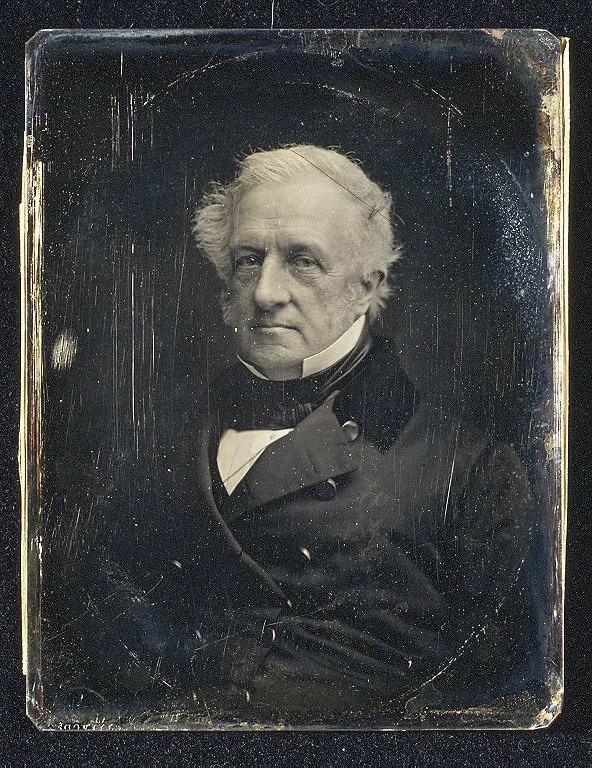
George Peabody
George Peabody
Birth: February 18, 1795.
Death: November 4, 1869.
Burial Location: Locust Path, Lot 67, Grave 4.
George Peabody was born in South Danvers (now Peabody) Massachusetts. He was one of seven children and was born in poverty, but died as one of wealthiest men of his time. Peabody began his career in the dry goods business. Later he went into banking and early was successful. In 1816 he moved to Baltimore and lived there for there 20 years. In 1837 moved to London, which was then the capital of the financial world. He worked on loan defaults, concentrating on getting payments made. He never married and had no children.
He became partners with Junius Spencer Morgan in 1854. J.S Morgan was the father of the better known J.P. Morgan. George Peabody retired in 1864.
During his lifetime, Peabody contributed to many nonprofit organizations in England and America. He did not answer individual requests, but always made his own decisions about funding. He concentrated on educational initiatives in the United States: libraries, museums and school programs in the United States and affordable housing in Great Britain. He was awarded the United States Congressional Gold medal and was made a Freeman of the City of London. However, he turned down an offer of a British title, requesting instead a portrait of Queen Victoria and a letter from her. This request was granted.
George Peabody was known for his grand celebrations of the Fourth of July. He lived simply, renting an apartment in London. He had many friends there but always retained his love for his native country, which he visited twice while living in London. At his death in 1869, at the age of 74, it was discovered that he wished to be buried in the city of his birth He was temporarily buried in Westminster Abbey and then his body was shipped to the United States. He is known as the Father of Philanthropy.
Photo: The Metropolitan Museum of Art, New York City, NY.
Sources Consulted:
- Book:
- The Life of George Peabody: Containing A Record of Those Princely Acts of Benevolence Which Entitle Him to the Esteem and gratitude of all friends of Education and the destitute, both in America, the land of his birth and in England, the place of his death. Phebe A. Hanaford, B.B. Russell, Publisher: Boston, Massachusetts, 1870.
- Internet:
- Maryland State Archives.
- Peabody Historical Society & Museum, Peabody, MA.
- Philanthropy Hall of Fame: George Peabody by Kari Barbic.
- Wikipedia.
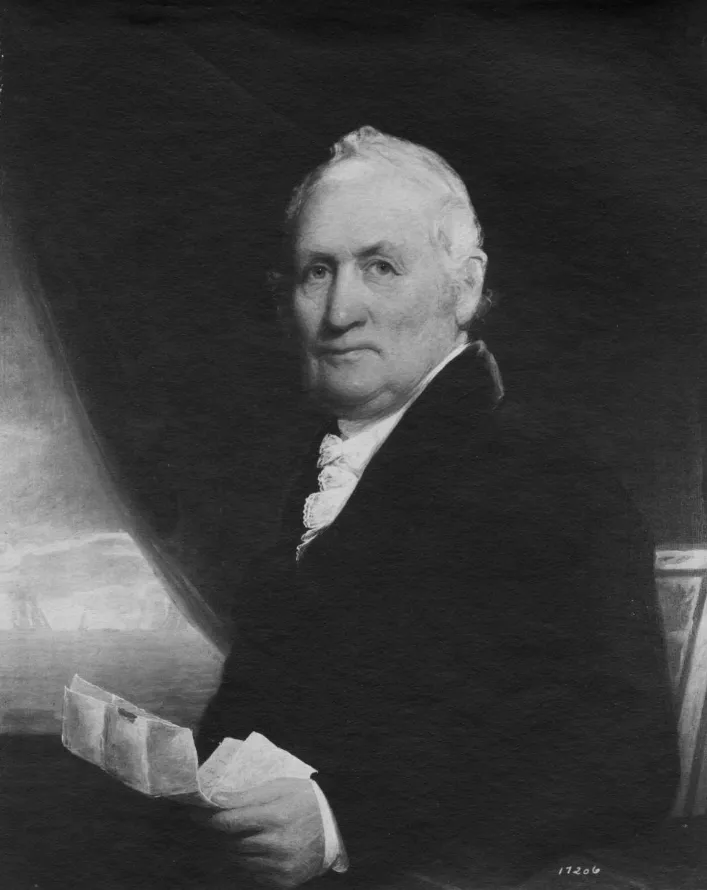
Joseph Peabody
Joseph Peabody
Joseph Peabody was born in Middleton, Massachusetts, on December 9, 1757. He was the ninth of twelve children. His parents were Francis Peabody and Margaret Knight Peabody. At the age of 8, he was sent to his sister’s farm in Boxford, Massachusetts. There he worked with his sister Ruth and her husband Joseph Curtis, staying with them for nearly a dozen years. At the age of twenty, he made a decision that would change the direction his life had seemed to be taking. He went to Salem and signed on to Elias Hasket Derby’s privateer Bunker Hill. This opened up the sea as his lifetime career. During the Revolutionary War, Peabody made eight voyages on privateers. He and other crew members of the vessel Fish Hawk were captured and imprisoned on board a ship which was anchored of the coast of Newfoundland. While he was imprisoned, Peabody attended an informal school led by another prisoner. In between two later voyages, he was tutored by Rev. Elias Smith of Middleton for a year in the reading, writing and the art of polite conversation. This was the entirety of his formal education.
In 1791, Joseph Peabody married Katharine Smith, the minister’s daughter. By this time, he had been promoted to first mate following his defense of the ship Ranger against pirates of the coast of Virginia, and after two more voyages, being given command of a vessel owned by Jonathan Gardner Jr. of Salem. He retired from the sea in 1793, entering into successful partnerships as a merchant with Thomas Parker and Gideon Tucker. Katharine died in 1793. A little more than two years later, Joseph married her sister Elizabeth. This couple had children: Joseph Augustus, Charles, Francis, Francis, George, Charles Frederick and Catherine.
Joseph built and owned eighty three ships in his lifetime. He engaged in the China trade and continued the pepper trade between Salem and Sumatra. He used his wealth for philanthropy and was the wealthiest sea merchant in Salem between the Embargo of 1807 and his death in 1844.
The Peabody family lived at 136 Essex Street in Salem during three seasons of the year. In the summer months, they moved to Danvers and lived on a farm known now as Glen Magna. Joseph Peabody also owned a wharf and a counting house near the intersection of present day Derby Street and Hawthorne Boulevard.
Joseph Peabody was noted for his prudence and strong will, as well as his foresight. There is an account of an election campaign by one of his descendants where a bit of a different picture was painted. The candidate was asked: “Be you Augustus Peabody Gardner?” “Yes sir.” “Be you the grandson of Joseph Peabody of Salem?’ “No, sir. I am his great grandson.” “Be you as mean as he was?” Unfortunately, we don’t have the answer to this question!
Joseph Peabody died on January 5, 1844, at the age of 86. He was buried at Harmony Grove Cemetery, Chapel Ave, Lot 49, Grave 7.
Photo: AmericanAristocracy.com
Sources Consulted:
- Crowninshield, William. Captain Joseph Peabody: East India Merchant of Salem (1757-1844): A Record of His Ships and of His Family. Edited and compiled by Walter Muir Whitehill. Salem: Peabody Museum, 1962.
- McAllister, Jim. "Joseph Peabody: One of Salem’s Wealthiest Men." Salem News, March 11, 2013.
- Wikipedia.
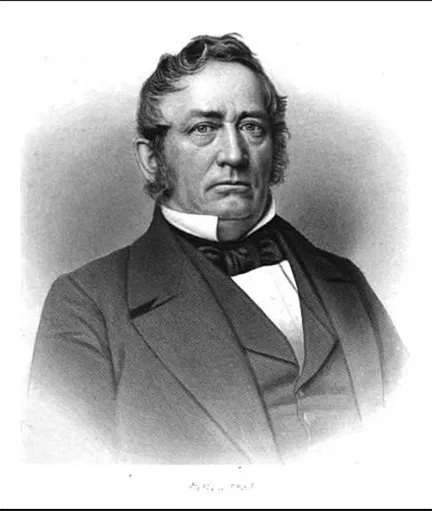
Stephen Clarendon Phillips
Stephen Clarendon Phillips
Burial Location: Amaranth Path, Lot #150, Grave #8
Stephen Clarendon Phillips was born on November 4, 1801 in Salem. His parents were Stephen Phillips and Dorcas Woodbridge Phillips.
Stephen C. Phillips graduated from Harvard College in 1819. He immediately went into business as a merchant in Salem Massachusetts, but also spent much of his life in elective offices. He was a member of the Massachusetts House of Representatives from 1824- 1829, and then was elected to the State Senate in 1830. He was then elected to the 23rd (1833-1835), 24th (1835-1837) and 25th (1837-1839) sessions of the US Congress. He resigned in 1838 and was elected the second mayor of Salem in which office he served until 1842. He was defeated in his bids for the office of Governor in 1848 and 1849.
He married Jane Appleton on November 6, 1822. She died December 19, 1837. On September 3, 1838, he married his first wife’s sister, Margaret Mason Peele. Eight children were born during his first marriage and four more during his second marriage.
During his later years, Stephen C, Phillips was active in the lumber business in Canada, He is said to have had a hopeful spirit and undaunted courage. After visiting the site of his business, he booked passage on a steamboat called Montreal going from Quebec City to the city of Montreal. Fire broke out. Of the 400 passengers on board only 150 were saved. Stephen C. Phillips was not one of these. He died in the St. Lawrence River on June 26, 1857 His body was recovered and a funeral service was held at the Barton Square Church in Salem on June 30, 1857. In his obituary it was said that; “He was one of nature’s noblemen and as an able, honest, sincere Christian man, added worth to the human race by belonging to it.”
Sources Consulted:
- Find a Grave: findagrave.com /memorial/166382736/stephen-clarendon-phillips
- History/house.gov/People/Detail/19660
- Wikipedia.org/w/index.php?title=Stephen_C_Phillips&oldid1119265873
- Wikitree: Stephen Clarendon Phillips (1801-1857)
David Pingree
David Pingree
David Pingree was born in Rowley, Massachusetts, to Asa Pingree and Anna Perkins, and raised in Bridgton, Maine. After high school, Pingree moved to Salem, where he lived with his uncle, Thomas Perkins, and began working in a shipping merchant’s counting room. He learned the ropes of the shipping and mercantile businesses, later acting as an agent in his uncle’s shipping firm, Peabody & Perkins.
After his uncle’s death in 1830, Pingree inherited substantial business interests and became one of Salem’s most successful merchants, focusing on trade with East and West India. In 1831, Pingree became president of Naumkeag Bank, and in 1845, president of the Naumkeag Cotton Company, a position he held until he died in 1863. In March 1851, he became the sixth mayor of Salem, a position he would hold for one year. Incidentally, Stephen G. Wheatland, his son-in-law, served as Salem’s thirteenth mayor.
Pingree married Ann Maria Kimball in 1824. They had four children who survived to adulthood. Pingree’s main residence was at 128 Essex Street, known today as the Gardner-Pingree House, now one of Peabody Essex Museum’s historic houses.
He is buried on Greenwood Avenue, Lot #953.
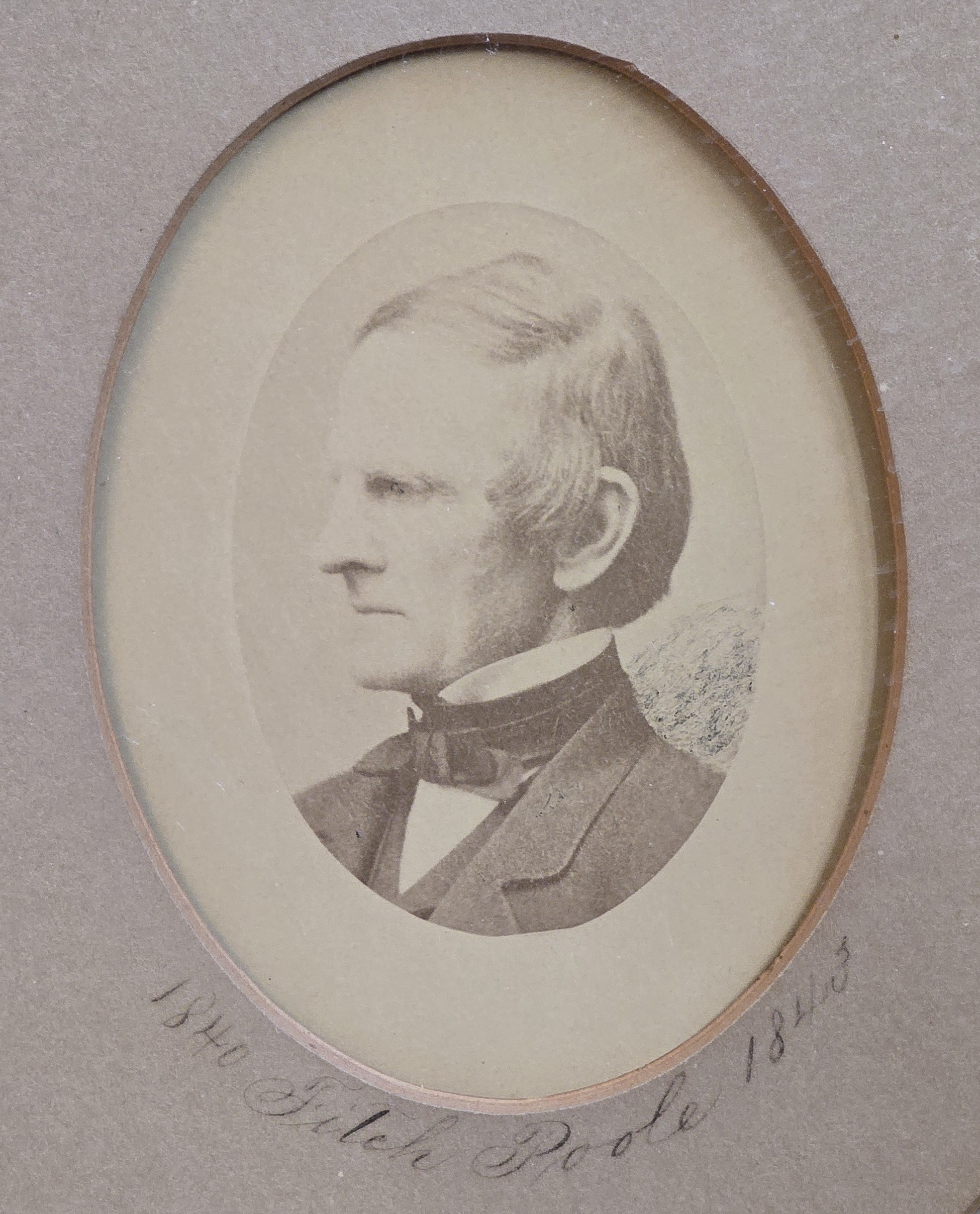
Fitch Poole
Fitch Poole
Birth: June 13, 1803, South Danvers, MA (called Peabody after 1868)
Death: August 19, 1873, Peabody, MA
Burial Location: Sylvan Ave. Lot 59, Grave 16
Fitch Poole was the son of Fitch Poole, Senior and Elizabeth (Cutler) Poole. He lived and died in the house in which he was born. He was taught in the local public school and then studied for six months at Bradford Academy where he was taught by Benjamin Greenleaf. After leaving school, he followed in his father’s footsteps, working with Morocco bindings.
He changed careers and became the editor of The South Danvers Wizard. He held this position for many years. From 1844 to 1853 he was the president of the Danvers Mechanics Institute, which was part lyceum and part library. Poole was the founder of its library which became the Peabody Institute Library. He held the first position there as its librarian. He served as Post Master during the Lincoln administration, but this was the only political appointment he ever received.
He married Mary Ann Poor; the couple had nine children.
In his spare time, he modeled heads in plaster as well as commemorative medals. He made up games for children.
He was a friend of the philanthropist George Peabody. When Peabody returned from London for a visit to his home in 1853, Fitch Poole was one for the managers of his reception.
Fitch Poole was the author of several satirical ballads; The Old Bell Tavern, The Librarian’s Epitaph, and the most famous of these which was Giles Corey’s Dream. This and his other works gave him his reputation as a humorist. As a member of a committee of the Essex Agricultural Society he wrote reports in 1844 and 1849 concerning swine which were widely quoted. He wrote anniversary hymns, reminiscences of elected officials and addresses for carriers of newspapers.
He was a cousin of Henry Ward Poole, a surveyor, civil engineer and educator. Another cousin was William Frederick Poole, a bibliographer and librarian, who was also buried at Harmony Grove Cemetery. Fitch Poole, Junior was a founding trustee at Harmony Grove.
Poole was a member of the Masons Fraternity and attained a high rank in the organization. His artistry would be carried on in different ways in the future by his grandsons Frank Weston Benson and John Prentiss Benson.
Sources Consulted:
- Famousamericans.net/fitch_poole
- lifefromtherootsblogspot.com/2015/11
- Prabook: World Biographical Encyclopedia, Inc. Version 2.048. 1.1248 2021
- Tombstone-of-author-of-librarians.html
- Wikipedia.org/w/index.php?title=Fitch_Poole&oldid1160135032
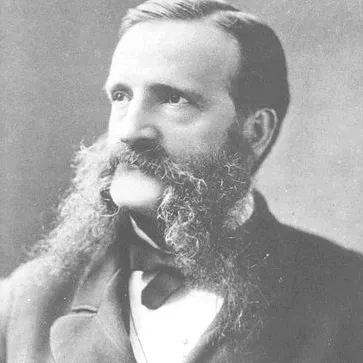
William Frederick Poole
William Frederick Poole
Birth: December 21, 1821, Salem, MA
Death: March 1, 1894 Evanston, Cook County, IL
Burial Location: Highland Ave. Lot 785, Grave 20
William Frederick Poole was born to parents Ward Poole and Eliza Wilder Poole. During his time at Yale, he produced the first Poole’s Guide to Periodical Literature (1848.) This was a 154 page index to periodical literature, the first of its kind. A 524 page edition would be published in 1853 and a 1,469 page edition in 1882.He also assisted John Edmands, who was a student at the Brothers in Unity Library.
After his graduation, Poole became an assistant librarian at the Boston Athenaeum in 1851. In 1852, he became head librarian at the Boston Mercantile Library. From 156 to 1859 he was the head librarian at the Boston Athenaeum where he inspired and guided the careers of other librarians. From 1869 to 1873 he was the first librarian of the Cincinnati Public Library. While there he succeeded in introducing the idea of opening the library on Sundays. From 1873 to 1887 he was the head of the Chicago Public Library. He convinced his friends in the academic community to donate books to the collection. He suggested to them that many books had been burnt in the great Chicago fire of 1871. Actually the fire had occurred two years before the campaign to build the library had begun! His efforts were successful, however. He ended his career as head librarian of the Newberry Library, a private research institution, where he worked from 1887 to 1894. He designed the building in which the library was to be housed.
Poole felt that each collection was unique and that the design and catalog system should be made to fit the library’s particular collection. He served as president of the American Library Association, president of the American Historical Association, and was elected a member of the American Antiquarian Society in 1877.
He married Frances Maria Gleason Poole in 1854. The couple had seven children.
Sources Consulted:
- Findagrave.com/memorial/10954946/William_ Frederick Poole
- Snaccooperative.org/details43700781/6384735 William Frederick Poole 1821-1894
- Wikipedia.org/w/index.php?title=William _Frederick Poole&oldid=1083302695
.png)
Robert Samuel Rantoul
Robert Samuel Rantoul
Robert S. Rantoul was born in Beverly, Massachusetts, the son of Robert Rantoul Jr. (1805–1852). Two years after graduating from Harvard Law School in 1856, he represented Beverly in the Massachusetts House of Representatives. In 1865, President Abraham Lincoln appointed him collector of the port of Salem, a post he held until 1869.
Rantoul later served as Salem’s representative in the Massachusetts House (1884–1885) and on the Board of Aldermen (1880–1888). After earlier defeats, he was elected mayor in 1890 and served four successive years. During his tenure, he addressed local issues including transportation expansion, water management, and fire and crime prevention. As a lawyer, he notably helped secure a community water supply for Salem.
A lifelong student of local history, he published the Woodbury Family Genealogy and wrote on Salem, its ports, and the first U.S. cotton mill. During this time, he also served as vice president and, later, president of the Essex Institute until 1904, a role that furthered his research.
He is buried on Halidon Avenue, Lot #1706.
.JPG)
John Marshall Raymond
John Marshall Raymond
John Marshall Raymond was born in Salem on June 16, 1852, to Alfred Augustus Raymond (1817–1904), a blacksmith, and his wife, Sarah Slade (Buffum) Raymond, both Quakers. He was educated in the Salem Public Schools, The Friends School in Providence, R.I., and graduated from Boston University’s Law School in 1878. Following his law education, he opened a practice in Salem.
Raymond served as Salem’s twenty-fifth mayor from 1886 to 1889. The Salem Public Library was established during his term. He served as a member of Massachusetts Governor Long’s Council in 1880, and as a member and President of the Salem Council in 1881 and 1882. Raymond’s civic and business positions included serving as President of the Salem Mutual Benefit Association, President of the Salem Cooperative Bank, and Director of the Mercantile National Bank of Salem.
In 1879, he married Anna Belle Jackson, and in 1893, he married Jennie Abbot Ward. Raymond died March 7, 1920, at his Lafayette Street home, “Overlook”. His home no longer stands, but Raymond Road is named in his honor.
He is buried on Catalpa Avenue, Lot #1819.
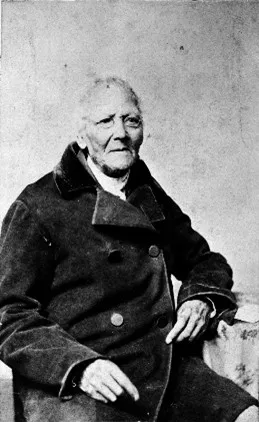
John Remond
John Remond
Birth: not known
Death: March 6, 1874
Burial Location: Ridge Avenue, Lot 666, Grave 6
John Remond was born in Curacao and sailed from there to Salem at the age of 10. All he brought with him was a bottle of gin given to him by his mother. He was listed as John von Reman. Once he arrived in Salem, he became a delivery boy for a local bakery. He moved to Boston where he was able to learn barbering and hairdressing as well as catering. By 1805 he was once again living in Salem, as a resident in Hamilton Hall. He was able to use all he had learned and became very popular, as he was quickly known for his kind and pleasant personality.
On October 29, 1807, John Remond married Nancy Lenox of Watertown. The couple was married at the African Baptist Church of Boston by Rev. Thomas Paul. The new bride was known for her talent in baking cakes, as well as hairdressing. Both were hard workers and their services were in great demand. On May 2 1811 John Remond became an American citizen. Eventually the couple would have eight children. Education was a priority and when the Salem schools would not accept the children because of the city’s segregation policies, the family moved to Newport Rhode Island. Eventually, when the policies changed, they moved back to Salem. The catering business was known for its elaborate meals and some of these became famous, such as the dinner given for the Marquis de Lafayette on August 31, 1824, during his last visit to America. Nancy and John Remond developed a collection of fancy wines to add to the meals they presented. John also held a monopoly on oysters. He had stores in Derby Square and Higginson Square. By 1848, he was ready to retire. He turned his businesses over to his son in law, James Shearman, husband of the oldest child, Nancy.
John Remond was also an active abolitionist. In 1835, he became a member for life in the American Antislavery Society. His children would follow in his footsteps both in their careers and in their causes. John Remond died at the age of 88, in 1874.
Photo: Hamilton Hall, Salem, MA.
Sources Consulted:
- Article: The Remonds of Salem Massachusetts: A Nineteenth Century Family Revisited. Dorothy Burnett Porter, For the Proceedings of the American Antiquarian Society: Worcester, Massachusetts 1985.
- Internet:
- Cemeteryfind.com: Remond Burial Records, Harmony Grove Cemetery, Salem Massachusetts.
- FindaGrave.com /memorial/59843636/john_remond
- HowOld.com Caroline Remond Putnam Biography
- Noblenet.org/salem/wiki/index.php? title=Remond John& oldid=10688
- Phillips Library Finding Aids: Remond Family Papers: 1823-1869, undated, pem.org/visit/library.
- Wikipedia.org/w/index php? title=Caroline_Remond_Putnam &oldid.1047994427
- Wikipedia.org/w/index php? title=Charles_Lenox_Remond &oldid. 1071128971
- Wikipedia.org/w/index php? title=Sarah Parker Remond &oldid. 1068399573.
Remond Sisters
Nancy, Cecelia, Maritcha, Sarah and Caroline Remond were all active abolitionists and were members of the Salem Women’s Anti Slavery Society and the Massachusetts Women’s Antislavery Society. When the two youngest sisters were in high school, they were expelled. Salem schools were going to be segregated. The family moved to Newport Rhode Island so that Sarah and Caroline could continue their educations. Sarah went on to be a lecturer, like her brother Charles. Eventually she moved to London and studied medicine there. Moving to Italy, she married and practiced medicine. She died in 1894 and was buried in Rome. The other sisters followed in their parents’ footsteps and pursued catering and hairdressing as well as wig making Susan and Cecilia both appear in the listings for the gravesite of their parents.
Sources Consulted:
- Article: The Remonds of Salem Massachusetts: A Nineteenth Century Family Revisited. Dorothy Burnett Porter, For the Proceedings of the American Antiquarian Society: Worcester, Massachusetts 1985.
- Internet:
- Cemeteryfind.com: Remond Burial Records, Harmony Grove Cemetery, Salem Massachusetts.
- FindaGrave.com /memorial/59843636/john_remond
- HowOld.com Caroline Remond Putnam Biography
- Noblenet.org/salem/wiki/index.php? title=Remond John& oldid=10688
- Phillips Library Finding Aids: Remond Family Papers: 1823-1869, undated, pem.org/visit/library.
- Wikipedia.org/w/index php? title=Caroline_Remond_Putnam &oldid.1047994427
- Wikipedia.org/w/index php? title=Charles_Lenox_Remond &oldid. 1071128971
- Wikipedia.org/w/index php? title=Sarah Parker Remond &oldid. 1068399573.
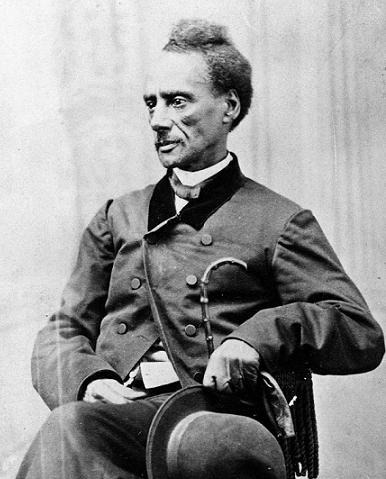
Charles Lenox Remond
Charles Lenox Remond
Birth: February 1, 1810
Death: December 26, 1873
Burial Location: Cypress Ave. Lot 1503, Grave 4
Charles was educated in the Salem schools. As a very young man, he was committed to the abolition of slavery. By 1834, he was a member of the Massachusetts Antislavery Society and also became a life member of the American Antislavery Society. One of his first speeches which took place before the Rhode Island Antislavery Society was so persuasive that the Rhode Island Legislature voted to aid black men in getting jobs as clerks, for which they had previously been ineligible. Charles Remond traveled all over New England giving speeches, most lasting more than 1½ hours. Positive action was often taken after he spoke.
When he was 30, Charles Remond was selected to serve as a delegate from the American Antislavery Society to the World Antislavery Convention in London. He received financial assistance from the Massachusetts Women’s Antislavery Society, where his mother and sisters were members. He had to travel in steerage; one of his fellow delegates accompanied him. When they arrived in London, they discovered that the women delegates could not take their seats on the floor but had to sit in the balcony. Charles Remond and his fellow delegate sat in the balcony with the women from the United States, including Lucretia Mott. For 18 months, Remond travelled around Great Britain, giving lectures and was welcomed by his audiences. When he arrived home, he was forced to ride in the “Jim Crow” car from Boston to Salem.
On February 22, 1842, Charles Remond addressed the Massachusetts legislature, the first Black man to do so. He protested the “Jim Crow” laws and called himself “a member of humanity at large, objecting to the word “colored.”
After the Emancipation Proclamation was signed in January 1863, Remond served as a recruiter for the 54th Massachusetts Infantry Regiment. He was successful in this endeavor and recruited men from Massachusetts and from other states as well. After the war, he was a Boston street lamp inspector. He gave his final lecture in 1867; his health was deteriorating due to tuberculosis. Charles Lenox Remond died at his home in Wakefield Massachusetts on December 22, 1873 and was buried at Harmony Grove on December 26, 1873.
Sources Consulted:
- Article: The Remonds of Salem Massachusetts: A Nineteenth Century Family Revisited. Dorothy Burnett Porter, For the Proceedings of the American Antiquarian Society: Worcester, Massachusetts 1985.
- Internet:
- Cemeteryfind.com: Remond Burial Records, Harmony Grove Cemetery, Salem Massachusetts.
- FindaGrave.com /memorial/59843636/john_remond
- HowOld.com Caroline Remond Putnam Biography
- Noblenet.org/salem/wiki/index.php? title=Remond John& oldid=10688
- Phillips Library Finding Aids: Remond Family Papers: 1823-1869, undated, pem.org/visit/library.
- Wikipedia.org/w/index php? title=Caroline_Remond_Putnam &oldid.1047994427
- Wikipedia.org/w/index php? title=Charles_Lenox_Remond &oldid. 1071128971
- Wikipedia.org/w/index php? title=Sarah Parker Remond &oldid. 1068399573.
Nancy Remond
Nancy Remond
Nancy, Cecelia, Maritcha, Sarah and Caroline Remond were all active abolitionists and were members of the Salem Women’s Anti Slavery Society and the Massachusetts Women’s Antislavery Society. When the two youngest sisters were in high school, they were expelled. Salem schools were going to be segregated. The family moved to Newport Rhode Island so that Sarah and Caroline could continue their educations. Sarah went on to be a lecturer, like her brother Charles. Eventually she moved to London and studied medicine there. Moving to Italy, she married and practiced medicine. She died in 1894 and was buried in Rome. The other sisters followed in their parents’ footsteps and pursued catering and hairdressing as well as wig making Susan and Cecilia both appear in the listings for the gravesite of their parents.
Sources Consulted:
- Article: The Remonds of Salem Massachusetts: A Nineteenth Century Family Revisited. Dorothy Burnett Porter, For the Proceedings of the American Antiquarian Society: Worcester, Massachusetts 1985.
- Internet:
- Cemeteryfind.com: Remond Burial Records, Harmony Grove Cemetery, Salem Massachusetts.
- FindaGrave.com /memorial/59843636/john_remond
- HowOld.com Caroline Remond Putnam Biography
- Noblenet.org/salem/wiki/index.php? title=Remond John& oldid=10688
- Phillips Library Finding Aids: Remond Family Papers: 1823-1869, undated, pem.org/visit/library.
- Wikipedia.org/w/index php? title=Caroline_Remond_Putnam &oldid.1047994427
- Wikipedia.org/w/index php? title=Charles_Lenox_Remond &oldid. 1071128971
- Wikipedia.org/w/index php? title=Sarah Parker Remond &oldid. 1068399573.
David Roberts
David Roberts
David Roberts was born in Hamilton, Massachusetts, and later lived on Winter Street in Salem. A Harvard-educated attorney, he read law with Leverett Saltonstall (Salem’s first mayor) and wrote a notable book on admiralty law.
He was an active Freemason; founder and later president of the Salem Fire Club; a member of the Essex Institute’s Library Committee; and a lecturer at the Salem Lyceum. He served as a state representative before being elected Salem’s fifteenth mayor, during which he helped the city transition to peacetime after the Civil War. He resigned during his second term in 1867 after conflicts with the board of aldermen, leaving him with a lasting distaste for politics.
A close friend of Nathaniel Hawthorne, who called him “my pillow,” Roberts often played cards at the home of Hawthorne’s cousin, Susan Ingersoll (now the House of the Seven Gables). According to one account, Roberts suggested the title The House of the Seven Gables to Hawthorne for his 1851 Gothic novel.
He is buried on Grove Avenue, Lot #272.
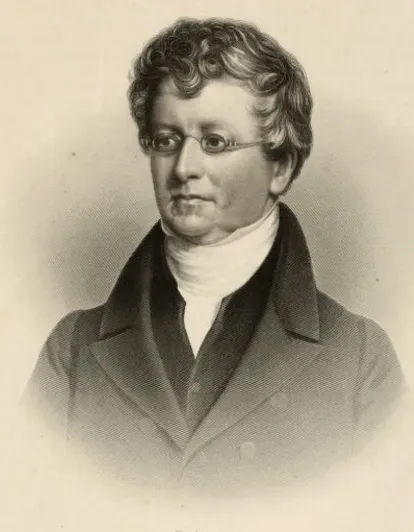
Leverett Saltonstall
Leverett Saltonstall
Leverett Saltonstall was born on June 13, 1783 in Haverhill, Massachusetts. His parents were Dr. Nathaniel Saltonstall and Ann (White) Saltonstall. He was educated at Phillips Exeter Academy and then went to Harvard College, graduating in 1802 with a law degree. In 1803, he was elected to Phi Beta Kappa. Moving to Salem, he entered the law office of William Prescott, under whose influence and encouragement; Saltonstall became active in the causes and activities of Essex County Federalists.
He met Mary Elizabeth Sanders and the couple married on March 11, 1811. They had four children: Anne (1812), Caroline (1815), Lucy (1822) and Leverett (1825).
His political career began with his election to the Massachusetts House of Representatives in 1813. He was elected to the House again in 1815, 1822, 1827, 1834 and 1844. He served in the Massachusetts Senate in 1817-1820 and as its President in 1831. In March of 1836, Saltonstall was elected to office as the first mayor of Salem. He won office as mayor again in 1837 and 1838. During his term, Salem City Hall was built. When the cornerstone was laid on September 6, 1837, copies of newspapers, the mayor’s speech on the organization of city government, and the new city charter were buried underneath it.
Leverett Saltonstall was popular and his years as a resident and holder of state and city office contributed to his being a founder and vice president of the Essex Historical Society. He also served on the Board of the Harvard Overseers.
In 1838, Saltonstall was elected as a member of the Whig party as a representative from Essex County to the United States Congress from District Two. One of the issues that he considered during his term included the tariff of 1841. Describing himself as a “gloomy politician”, he did not run for a second term.
On his return to Salem, he was semi-retired, seeing a few legal clients, but did accept nomination to the Massachusetts House of Representatives in 1844. On May 8, 1845, Leverett Saltonstall died of complications from gout and asthma at his home, with his wife and children surrounding him. He is buried at Harmony Grove Cemetery, Aspen Path Lot. 724, Grave 2.
Photo: Find a Grave.
Sources Consulted:
- Massachusetts Historical Society: Highlights from the Saltonstall Family Collection at the Massachusetts Historical Society. Saltonstall Family Correspondence. Massachusetts Historical Society, Boston, MA.
- Phillips Library at the Peabody Essex Museum. Mss.243 Papers of Leverett Saltonstall 1783-1845, Biographical Sketch.
- Wikipedia.
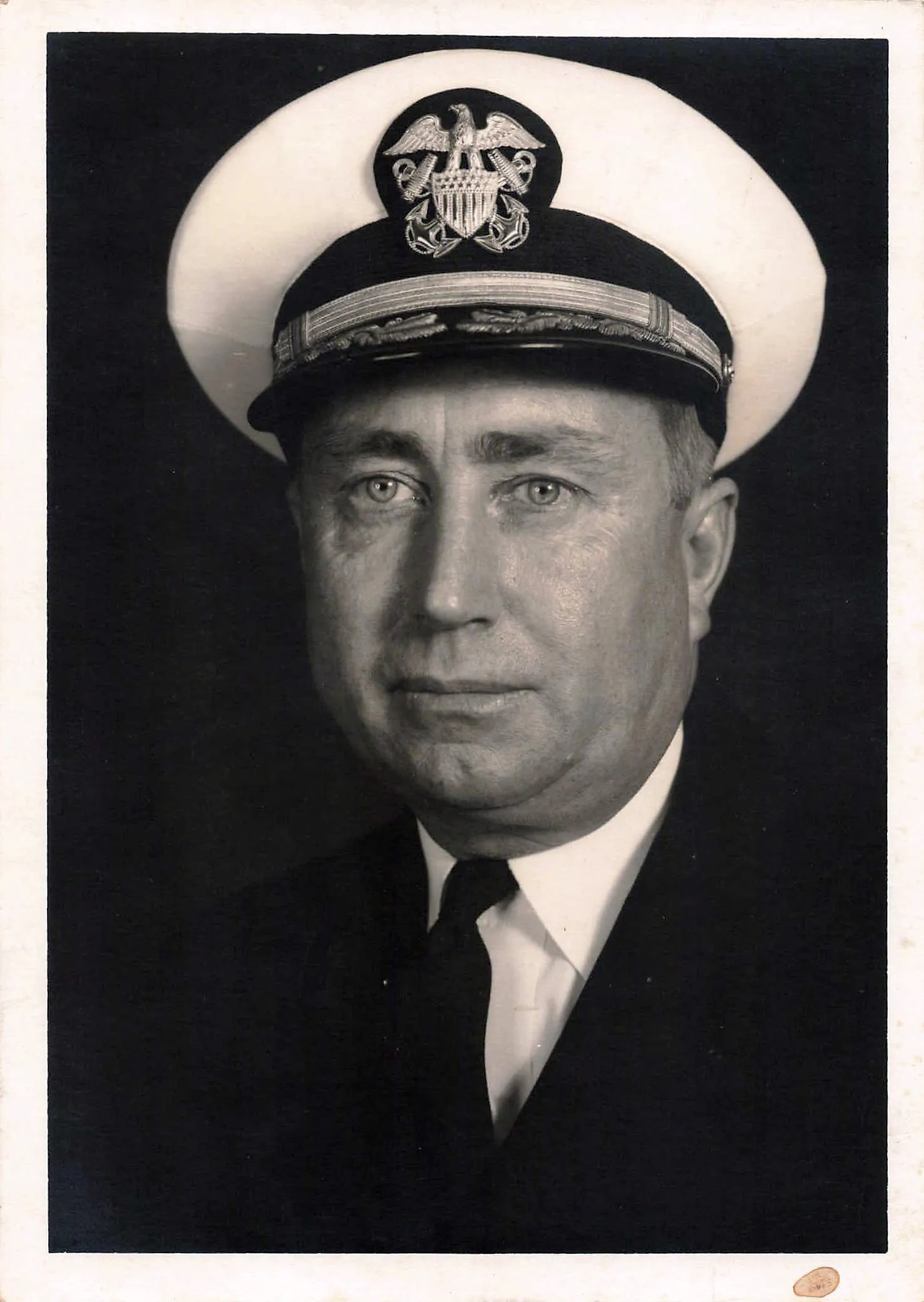
Charles "Spike" Sanders
Charles "Spike" Sanders
Charles Sanders, Commander, US Navy and Bronze Star Recipient
May 14, 1915 – November 18, 1990
Burial Locations: Halidon Ave., #1615, Grave 13
Charles “Spike” Sanders, son of Richard Downing Sanders and Anna Devereux Hathaway Sanders, was born May 14, 1915, at 43 Chestnut St. in Salem. Charles had an older sister Helen, and younger brothers Robert and Richard. Richard, known as “Dickie,” was tragically killed in 1943 in a plane crash during a training flight at Pensacola Naval Air Training Center in Florida. He was 21 years old.[1]
Spike was born into a family with a strong heritage of military service. His grandfather Charles Sanders served in the Civil War. Uncle William Huntington Sanders was a Rough Rider under Lt. Teddy Roosevelt and died in Cuba during the brief Spanish American War. Uncle Thomas Sanders joined the Pancho Villa Expedition, and served in France in WWI with honors, receiving the Silver Star and Croix de Guerre for bravery and gallantry in battle.[2]
From early on, Spike had an inclination toward adventure. In 1935, at age 20, he and his cousin Nathaniel Sanders set out on bicycles to ride from Salem to Miami, Florida, and achieved this feat in 19 days, 12 of which rained, according to Spike when interviewed after the adventure. The young men slept outside every night, and for food hunted small game such as birds, squirrels, and rabbits, which they’d roast over campfires. Their intention was not only to ride their bikes to Florida, but to see how little they could spend doing it. The answer? $10.[3]
An avid and skilled small boat sailor, in 1939, Spike joined a group of six young men in their 20’s who were serving as part of a crew in bringing a 160’ steel-hulled schooner formerly owned by Kaiser Wilhem II from the Panama Canal to Boston. The captain of the vessel was Sterling Hayden, already a remarkably able sailor at the young age of 23, having just captained a large wooden schooner in its voyage from Gloucester, MA to Tahiti. Hayden went on to have a career as one of Hollywood’s leading men in the 1950s. In Hayden’s autobiography “Wanderer”, he recollected of that voyage: “I thought of a night southeast of Cape Hatteras back in ’39 –Christmas Eve… with a Gulf Stream sea gone mad in a northerly gale. With some sails blown out and her deck awash and five feet of water in the bilge. Oh, it was a mess all right.”[4] They lost use of their engine, and for 12 hours battled enormous waves. In a letter to his parents, Spike recounted “because of full gale we encountered 170 miles SSE of Hatteras, the bow and stern and amidships were awash all at the same time. The waves were a good 50-60 feet high. We had no pumps that would work so we formed a bucket brigade to the engine room bilge. Oil and water, what a mess. The galley was awash. All we could get to eat for 36 hours was crackers and jam.”[5]
Undeterred by this experience, Spike enlisted in the Navy in 1940 as a quartermaster. Five years later, after a rise through the ranks in the U.S. Navy described in later years by the Salem Evening News as “something akin to meteoric,” Spike was commanding the U.S.S. PCE 849, a small warship, in the South Pacific. After delivering much needed signal equipment to Leyte Gulf in Manila Bay through treacherous waters with floating mines and sunken ships, all while shooting down three enemy planes, Spike was awarded the Bronze Star for “his exceptional daring, initiative, and outstanding devotion to duty in entering a dangerous mined harbor.”[6]
Spike went on to have an illustrious Naval career. In the 24 years from his commission in gas quartermaster in 1940 to his retirement in 1964, Spike commanded six battleships. In 1953, he served as Director of Secretariat at Headquarters Supreme Commanders Atlantic, under William Henry Draper, the first US Ambassador to NATO. In addition to the Bronze Star, Spike was awarded the American Defense Medal, Pacific Area Medal, World War II Medal, the European Occupation Medal, the Korean Emergency Medal, The Philippines Liberation Medal, the American Defense Service Medal, and the National Defense Medal.[7]
In 1950, Spike married Jane Cameron Cook, and they enjoyed 40 years of marriage until his death on November 18, 1990.
Text and photo: Martha Baldwin Sanders.
Sources Consulted:
[1] Newspaper article, Sanders family papers.
[2] See bios of Charles Sanders, William Huntington Sanders, and Thomas Sanders.
[3] Boston Globe article, December 1935.
[4] “Wanderer,” by Sterling Hayden, page 33, published 1963.
[5] Salem Evening News article.
[6] Letter from General Headquarters, United States Army Forces, Pacific, August 19, 1945.
[7] Charles Sanders, retired naval commander, Salem Evening News, November 1990.
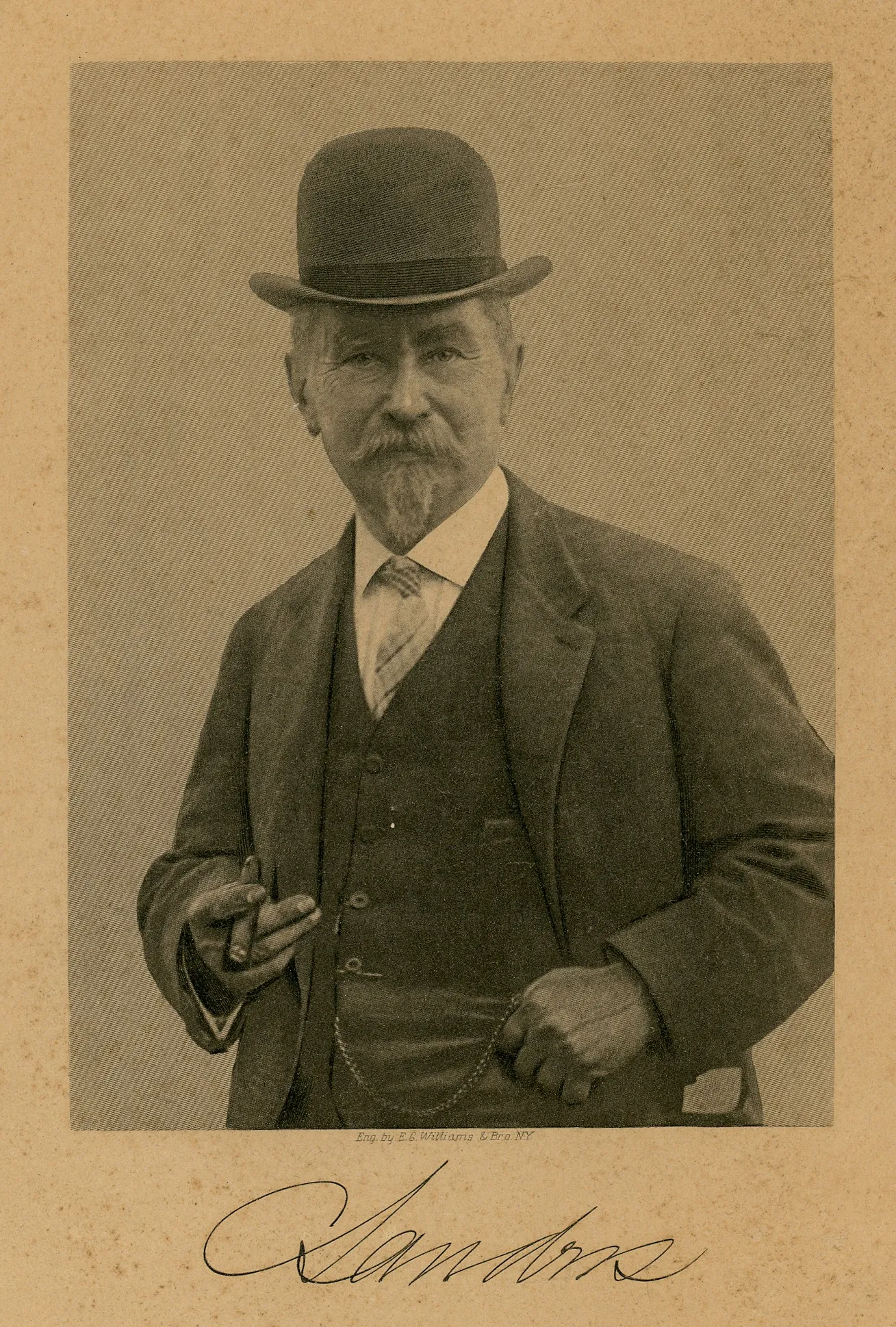
Charles Sanders
Charles Sanders
Charles Sanders
October 15, 1842 - November 12, 1918
Burial lot 1615, Grave 5, Halidon Ave.
Civil war veteran, helped launch Alexander Graham Bell’s new invention, owner of World Record setting trotter Uhlan.
Charles Sanders was born in Salem on October 15th in 1842, the son of George Thomas Sanders and Mary Anne Brown. He had one sibling, an older brother Thomas, who was born in 1839. Charles served in the Civil War at a 1st lieutenant with Company E of the 48th Massachusetts Infantry. After the war in 1870, he married Helen Augusta Lord, with whom he had 5 children: Arthur, William, Katharine, Thomas, and Richard.
Charles’ brother, Thomas, married in 1866, and a year later had a son named George Thomas, who was born deaf. When “Georgie,” as he was known, was 5 years old and unable to speak, Thomas learned of a Boston professor of vocal physiology who had established a school after developing a technique forteaching speech to deaf children, and brought Georgie to him for private lessons. The lessons proved so successful that Thomas convinced Georgie’s instructor to move to Salem in order to continue working on a daily basis with Georgie, and arranged to have him live with him and his young family at his parents’ house on Essex St. This living arrangement also included allowing the young professor to use the enormous 3rd floor attic for his “electrical” experiments. The professor was Alexander Graham Bell.[1]
Thomas and Charles saw great potential in Bell’s experiments involving single wire transmission of several telegraph messages with a device known as a harmonic telegraph. Thomas, by then a successful leather merchant, offered to finance the experiments and the creation of any devices and share in the profits, if any. “Alec” Bell lived with the family for three years while instructing Georgie and worked on his inventions. Finally, after being awakened several times in the wee hours of the night by Bell shouting “Come up! I’ve got it 100% better,” Thomas Sanders finally relocated Bell’s laboratory from his parents’ home on Essex St. to a room on 109 Court St. in Boston.[2] It was there on June 2, 1875 that Alexander Graham Bell and his assistant Thomas Watson were first able to transmit sounds. After months spent refining the process and filing a patent, the following March 10th the first telephone successfully transmitted Bell’s request “Mr. Watson, come here, I want you.”[3]
Four years later, firmly believing in the telephone’s future role as an indispensable device for many applications, Charles worked diligently to obtain subscribers for a telephone exchange in Salem. This was a surprisingly difficult task. There were no telephone poles, so transmission wires were attached to roofs and the sides of buildings. Many people were opposed to the idea of wires on their houses, for fear of fires due to electrical storms. Of the original 79 subscribers, many of whom had to be convinced that the telephone would be useful to them and was worth having, only 21 were private residences. The rest comprised of Salem Hospital and most of the physicians, the courthouse, almshouse, all the hotels, and all six firehouses. Meat markets, grocers and coal men subscribed, but only two lawyers and one bank. The telephone subscription at a cost of $40 annually was considered a foolhardy investment by many.[4]
Finally, with 79 subscribers secured, Charles felt he had enough customers to warrant installation of a switchboard. An advertisement was published in the Salem Gazette on March 15, 1880 that read: “The Salem District Telephone Exchange is now open for business and will solicit subscribers for connection in all parts of the city. Apply at Room 4, Northey Building, Corner of Essex and Washington Street. C. Sanders, Manager”[5]
Charles Sanders and his brother Thomas were heavily invested in the new Bell Telephone Company. Thomas was invested financially, and Charles had staked his reputation on the success of this new device and was devoted to promoting it. Thomas asked Charles to buy some stock in the new company, and reassured him by saying “if you don’t make $100,000 on it, I’ll have the Salem Cadet Band come play in your garden. C. Bradley Sanders, Thomas’s 8 year old son, recalls looking out the window of Thomas Sanders’ mansion in Haverhill one day, to see a parade of wagons filled with musicians in uniform coming up the avenue toward the house. Thomas had won the bet, and courtesy of Charles, the Salem Cadet Band played late into the evening for the Sanders’ friends and neighbors.[6]
By the mid 1880s, Thomas and Charles, having reaped profits from their initial investments, chose to sell their interests in the fledgling American Bell Telephone Company. Whether they regretted this decision later in life is not known.
Long before becoming manager of the Salem Exchange of the fledgling American Telephone and Telegraph Company, Charles Sanders was known as a fearless and competitive horseman. Automobiles weren’t available until the early 1900s, and then were quite expensive. In Charles’ lifetime horses were the main mode of transportation, and as a result a subject of great public interest. Charles had a string of well bred horses that he would race on Lynn Shore Drive by carriage or sleigh, and he kept a diary in which he would note the time it took to travel from Salem to Haverhill to visit his brother, trying to beat his previous record.[7] After retiring from the Salem Telephone Exchange he devoted his time to acquiring and breeding trotting horses specifically for racing. One of these was Uhlan, a stunning black horse bought by Charles in 1907 for $2,500 when he was 3 years old. Uhlan was trained under Robert Proctor of the Readville Track. In 1909, he beat Hamburg Belle, the world record holder, and attracted the attend of C.K. Billings, a Chicago multi-millionaire, who purchased Uhlan for $35,000. A year later, Uhlan set a new world record of a mile in 1 minute, 58 seconds, capturing the nation’s attention with his exceptional good looks, easygoing nature, and lightning fast trot. His world record lasted for decades. Uhlan traveled to Europe and Russia, to be exhibited and admired by royalty and heads of state. He was retired in 1916.[8]
According to family lore and anecdotes, Charles had a fiery personality, a hot temper and a strong sense of competition, but was known to be fair in his treatment of others. He loved dogs, and when later in his professional career he was vice president of Salem Safe Deposit and Trust, two or three of his unruly dogs would accompany him to the Bank. Miss Helen LeDuc, an employee of the Bank in the early 1900s, said in the mornings you could tell when he was about to arrive by the sound of barking followed by women shrieking as they snatched their pet dogs out of danger. At the Bank, Charles’ ruffian dogs crouched under the table where people signed in to enter the Safe Deposit vault. When a depositor with a dog approached the table, there was more barking and shrieking followed by angry yells from Charles.[9]
Charles Sanders was a conspicuous figure around Salem driving his high bred carriage horses. When he wanted to exercise one of his green horses, he would often invite his son Dick’s wife, Anna, along for a somewhat scary ride through Harmony Grove Cemetery. “I used to pray we wouldn’t come upon a recent burial of any of his friends,” she said. “If we did, I had to sit in the buggy holding a twitchy colt while he got down and rearranged all the flowers to suit himself.”[10]
Charles Sanders died at age 76 on November 12, 1918, after two years of failing health.
Text and photo: Martha Baldwin Sanders, great granddaughter of Charles Sanders.
Sources Consulted:
[1] SalemNews, August 16, 2018, “Alexander Graham Bell and the North Shore.”
[2] Private collection, 1947, newspaper unknown, “He Remembers When Alexander Graham Bell Used His Attic for Telephone Experiments.”
[3] www.wired.com/2011/03/0310bell-invents-telephone-mr-watson-come-here/
[4] Private collection, undated, newspaper unknown, “1st Salem Telephone Exchange Opened on April Fool’s Day, 1880.”
[5] “Salem, One of the World’s First Telephone Exchanges,” published by New England Telephone and Telegraph Company, 1955.
[6] Private collection, “He Remembers When Alexander Graham Bell Used His Attic for Telephone Experiments.”
[7] Private collection, family papers.
[8] Brooklyn Eagle, Tuesday, September 13, 1910.
[9] Private collection, family anecdotes compiled by Barbara Brett Sanders “True Yanks.”
[10] Private collection, Anna H. Sanders, from “True Yanks.”
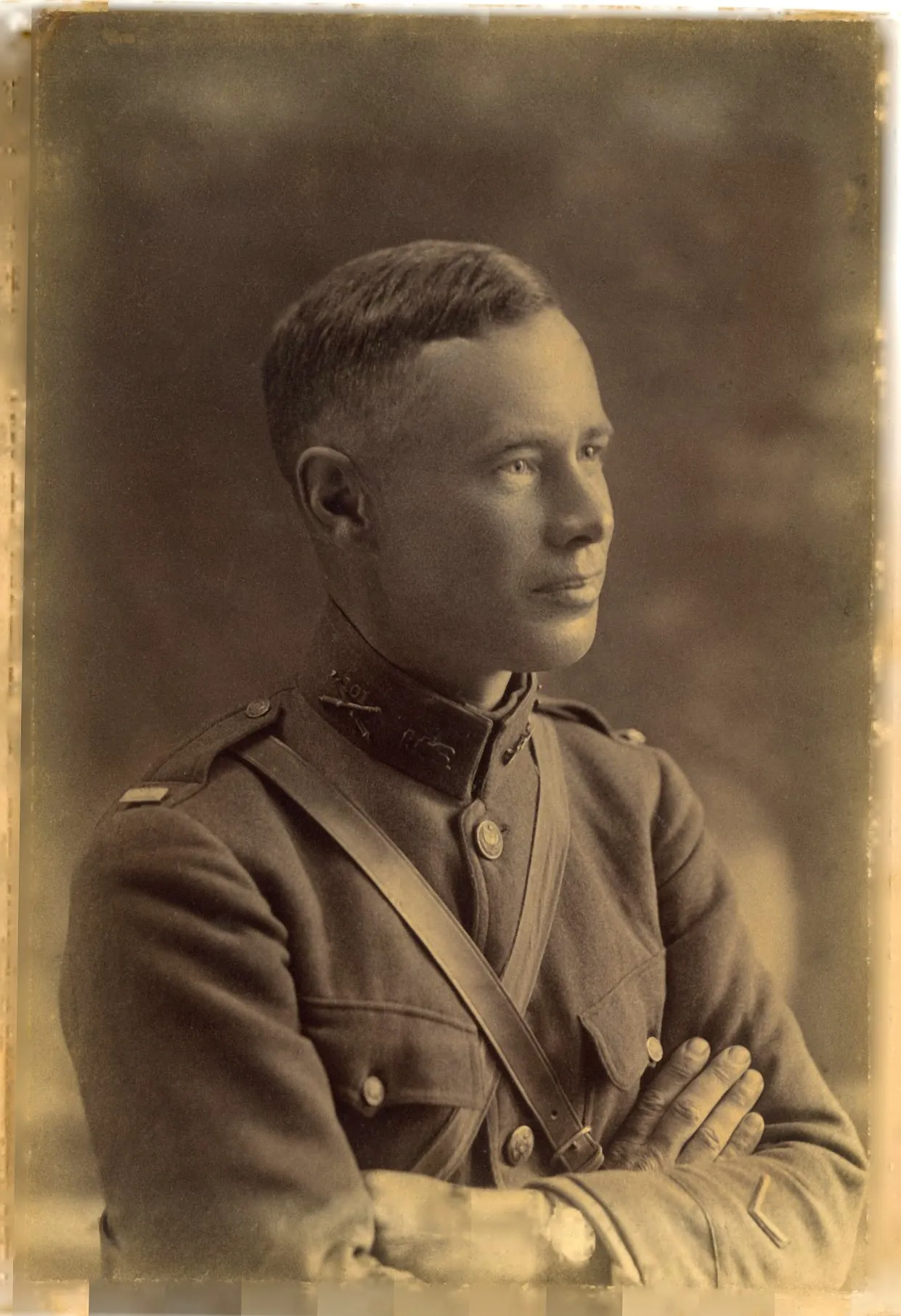
Thomas Sanders
Thomas Sanders
Thomas Sanders
December 29, 1881 - May 24, 1954
Burial lot #1615, Grave 9, Halidon Ave.
WW1 Silver Star and French Croix de Guerre Recipient for Gallantry and Bravery
Thomas Sanders was born in Salem on December 29, 1881, to Charles Sanders and Helen Lord Sanders, the second youngest of his siblings: Arthur, William, Katharine, and Richard. He grew up at 43 Chestnut St. in Salem, attended Milton Academy and graduated from Harvard College in 1905. On June 22, 1907, Thomas married Eleanor Colman Harris, with whom he had three children, Katharine, Elizabeth, and Thomas Jr.[1]
In 1916, after a raid in Columbus, New Mexico by Mexican revolutionary Pancho Villa in which 17 Americans were killed, President Woodrow Wilson called for troops to be sent to the border with Mexico to assist with the search for Villa, and to guard the US Mexico border to prevent future attacks by Villa and his followers.[2] In response, Tom, along with the Massachusetts Volunteer Militia, joined the 1stMassachusetts Field Artillery, Battery D, in El Paso, Texas in July, 2016. In El Paso, he spent several months in a tent camp with no enemy engagement, training and honing his artillery skills under General John J. Pershing.[3]
In November 1916, Tom returned to his wife and children in Salem for several months, then shortly after the start of WW1 on July 25, 1917, he enlisted in the US Army’s Expeditionary Forces as 1st Lieutenant, Battery D, 101st Field Artillery, the 26th Division, also known as the “Yankee Division.” On September 9, 1917, he sailed for France, bringing with him his horse, Chip. On March 29, 1918, he was promoted to captain, and commanded Battery E in the same division until his honorable discharge on April 10, 1919.[4]
During his service in France, Tom received three citations for bravery. According to a citation Thomas received from Headquarters, 26th Division, “on April 10, 1918, after telephone wires were cut, he stationed himself in the open at the rear of his battery. He directed its fire with great coolness and excellent judgment, encouraging the cannoneers and directing the care of the wounded.” Thomas was cited again for “marked gallantry and meritorious service…during the advance of this Division against the enemy from July 18th to 25th, 1918, in the second Battle of the Marne.” Thomas also received the French Croix de Guerre, with the citation, translated from French: “An officer of remarkable bravery, composure and decisiveness. Telephone communications being cut off by a violent enemy bombardment, he placed himself behind his battery and directed the fire himself, thus giving to all a fine example of contempt for danger.”[5] After returning home in 1919. Tom went to Washington, DC where he received the Silver Star medal for gallantry in action.[6]
When Tom was discharged from the Army, he was informed that the Army didn’t have the ability to transport his beloved horse Chip back home to Salem. He refused to accept this and demanded that Chip be provided transportation home. The Army agreed, and Chip returned to Salem with Tom.[7]
Tom was a man of integrity, loyalty, and like his father Charles, had a quick temper. He had many challenges in life. He had lost two older brothers, Arthur and William, as young adults, his father Charles died in November of 1918 while Tom was serving in France. Tom’s youngest child, Tommy, had been born six weeks prematurely on June 15th, 1917, and at only four pounds at birth at a time when there were few medical interventions available for premature babies, was not expected to survive. This was a source of great concern for Tom and especially Eleanor in the first few months of Tommy’s life, with Tom having left for France a few weeks after Tommy’s birth. Tommy gained little weight during his first months of life, and at seven months old weighed only eleven pounds. He survived though and was normal in every way but height; he was smaller than average for the rest of his life. In a final heartbreaking loss to Tom and his children, his beloved wife Eleanor died on July 14th, 1919, at age 38 of a ruptured appendix, three months after Tom’s return from France. In 1921, Tom married Katherine Fabens and became stepfather to her four children. They remained happily married until Tom died unexpectedly on May 24, 1954.[8]
Text and photo: Martha Baldwin Sanders.
Sources Consulted:
[1] Harvard College Class of 1905 directory
[2] Pancho Villa, Mexican revolutionary, Britannica.com
[3] Massnationalguard.org, family papers
[4] Harvard’s Military Record in the World War, copyright 1921, Harvard Alumni Association.
[5] Harvard’s Military Record in the World War, copyright 1921, Harvard Alumni Association.
[6] Newspaper articles, family papers.
[7] Family papers.
[8] Family papers.
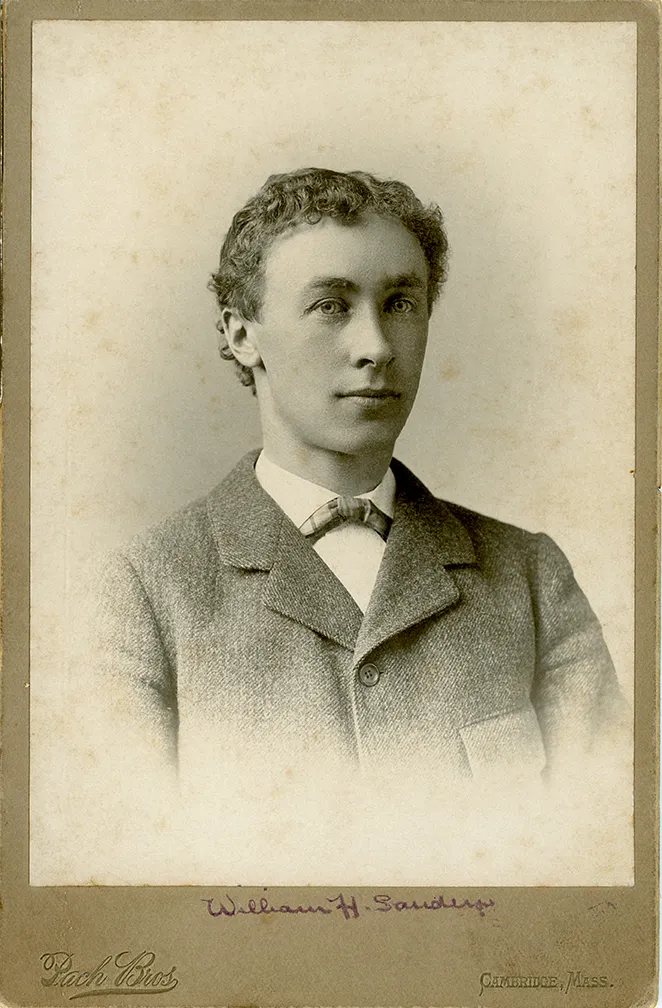
William Huntington Sanders
William Huntington Sanders
William Huntington Sanders
December 26, 1871 - August 12, 1898
Burial Lot 1615, #3, Halidon Ave.
One of Theodore Roosevelt’s Rough Riders, he fought in every conflict in the Spanish American War and served as Roosevelt’s orderly in the Battle for San Juan Hill.
William Huntington Sanders was born on December 26, 1871. The second of 5 children born to Charles Sanders and Helen Lord Sanders of Salem, “Bill” experienced a childhood of affluence and privilege in a grand home in Salem and on a farm in Peabody, where the family raised horses. He attended MIT, then Harvard’s Lawrence Scientific School, graduating in the class of 1897.
In spring of 1898, when the US declared war on Spain to gain independence for Spain’s colony Cuba, Theodore Roosevelt stepped down from his cabinet position as Assistant Secretary of the Navy to lead the First U.S. Volunteer Cavalry as Lt. Colonel. To fill the ranks of this new regiment, Roosevelt set out to assemble some of the finest men he knew. He sought recruits among the hardy western horsemen with whom he had lived for several years, and the east coast elite he had grown up with. He wrote to friends in New York and Boston, seeking fighting men from New York’s best clubs and New England’s best colleges. One such letter was to Guy Murchie of Cambridge, MA, an 1892 graduate of Roosevelt’s alma mater Harvard and afterward Harvard Law School, who remained on campus as an assistant football coach, and was well known by current students and recent graduates. Murchie gathered a group of 41 Harvard men who, because of the continued deluge of letters from allover the country from others wishing to serve, were sworn to secrecy about their intent. The Harvard men left Boston by train at midnight on May 2nd,with no one to see them off, and arrived in Washington D.C. the next afternoon. Among them was William Huntington Sanders, who had not told his parents what he planned to do.
On May 4th, 1898, after meeting with Lt. Colonel Roosevelt, Bill was selected to join the First United States Volunteer Cavalry Regiment, soon to be dubbed the “Rough Riders.”
In a letter home to his parents on that same day, Bill disclosed the purpose of his trip to D.C. “Dear Papa,…today I with 11 others joined the First Cavalry Volunteers. Just what my position will be I do not know yet. The others are all Cambridge (Harvard) men. I did not tell you what I expected todo because I knew you would all object, which would not have altered my plans. I thought the step over carefully before I took it and do not think that I will regret it. I have consulted good physicians and do not think that I will have any trouble with my health.”[1]
Bill went immediately to San Antonio Texas to begin training. There calvary troops A, B, C, and D were formed. On May 12th Bill writes: “troops A, B and C are made up of Arizona men, and D of Oklahoma. The men are tough but good hearted and we got a surprisingly cordial greeting from them when we arrived; surprising because Western cowboys are not as a rule partial to Easterners” In Roosevelt’s words: “I suppose every man tends to brag about his regiment; but it does seem to me that there never was a regiment better worth bragging about than ours…the rank and file were as fine natural fighting men a sever carried a rifle or rode a horse in any country or any age. We had a number of first class young fellows from Harvard, Yale, and Princeton; but the great majority of the men were South westerners, from the then territories of Oklahoma, Indian Territory, Arizona, and New Mexico.”[2]
In the letters to his parents that followed, Bill provided details about his experiences. The heat and mosquitos in San Antonio, bad food, the long hours of drilling with men with no previous military experience. In every letter he makes reference to his health, always positively. He writes on May 22nd: “things are pretty well straightened out here and the regiment is fast becoming a military organization, and not an armed mob which it was at first.” The Rough Riders, who by then had captured the nation’s imagination as a group of brave and adventurous men who represented every aspect of American life, traveled by train to Tampa, FL, and were greeted at every stop by people offering food, flowers, gifts and well wishes. On June 8th they boarded transport ships to Cuba, but due to lack of space only the officers were able to bring their horses, and some of the troops were left behind entirely. The ships landed on June 22nd roughly 10 miles east of Santiago. On June 25th, Bill writes: “Dear Mama, our regiment met a body of Spaniards in the hills near Santiago yesterday and forced them to retreat to their entrenchments although they had about 2500 to our 800….I expect we shall be in Santiago inside of 3 days….Health is A1.”
What followed 10 days later was to be the battle that turned the tide in favor of the Americans and eventually won the war - the Battle for San Juan Heights. Facing hills of open fields guarded at the top by barricades with heavily armed Spanish, the Rough Riders and fellow infantry men were at a distinct disadvantage. Disaster for the regiment was averted when Gatling guns were hauled into place, and provided the cover needed for the American soldiers to advance up the open hillside. The Gatlings were a new lethal weapon with multiple barrels that could continuously fire hundreds of rounds per minute. With the sound of the Gatlings’ rhythmic firing cheering them, Roosevelt and his men charged up the hill, overtaking the Spanish defenses.
On July 19th, Bill writes: “Dear Mama, On the afternoon of the (June) 30th, we broke camp and moved to a position about four miles from Santiago to support a battery of artillery on a small hill within range of the entrenchments and block houses outside Santiago. This was the left side of the line of attack commanded by General Wheeler, the right being under Lawton. At daylight the ball opened with the artillery. For some time our guns fired on the block houses and entrenchments without any response from the Spanish .But one or two guns finally retuned our fire and the gunners had our range down pretty fine for the very first shell exploded amongst our men…One was killed and several wounded…Had a good chance to see this as I was Col. Roosevelt’s orderly for the day and he was among the last to leave the hill. Our battery stuck to it notwithstanding the fact that our gun was dismounted and in about half an hour had silenced the enemies guns. We, the dismounted cavalry then moved up to assault the rifle pits and entrenchments, block house, etc. on the Spanish left. Here while deployed as skirmishes there was some misunderstanding of orders. We were ordered to stay in support of the infantry who were to do the assaulting but our regiment was laying exposed to such a heavy fire that we were ordered to take part in the assault. Col Roosevelt and others did not make this plain to all the troop commanders so less than half the regiment moved up. Teddy is brave as a lion but… In his rushing about on horseback he lost Willie, who was not speedy enough to keep up, so I was not in front when Teddy led the assault. Perhaps it was lucky I was not, but still I had to expose myself to a heavier fire in hunting for my colonel than if I had actually been with him. Luck was with me and I never got a scratch although I had some uncomfortable close shaves. The Spaniards deserted their strongholds just as they did before, just when they would have been most effective, had they stayed and fought. In the latter part of the afternoon I found Teddy, after I had traveled up and down our line about a dozen times. By this time the Spaniards had retired to their city strongholds and we held their positions outside. Towards evening they attempted to drive us back, but we showed them how to fight from a stronghold and drove them back without any trouble although we did not have many men on the fighting line. All that night we worked like beavers digging rifle pits, although we hadn’t had a bit of food since daylight, and in the morning we had entrenchments that all the Spaniards in Santiago could not have taken. Soon after daylight firing on both sides commenced. Almost the first shell fired by the enemy exploded just over the troops supporting the pits and killed two and wounded three…The firing was kept up nearly all day and late into the night when the Spanish made an unsuccessful attempt to breakthrough. On July 3rd at 12 o’clock, a flag of truce was raised and negotiations for a surrender (began).”
Letter dated July 25th, 1898: “I got two letters from you last evening, one dated July 1st and the other July 6th, also one from Dudley written July 6th. These are the first home letters I have received since landing on the island over a month ago. We are still camped in the hills several miles outside Santiago. What is to be done with us no one here seems to know. My theory is that we are to be held here to reinforce the Puerto Rico expedition if necessary. Malarial fever and dysentery seems to be about the only sickness among the soldiers. Don’t believe the yellow fever stories in the papers, for I have not heard of a single case among the soldiers. Col. Roosevelt tells me he received another telegram from you; they are quite unnecessary. My health all right. Love to all, Bill”
Postcard dated July 30th, 1898 “Dear Mama, No change in our affairs except that it was announced a few days ago that we were to betaken to the States as soon as possible for a much needed rest, which they have realized is impossible, situated as we are now. The announcement said that we were to be taken to Long Island. Sounds too good to believe. At any rate we are pretty sure to be moved somewhere very soon. I have written you 6 or 7 times since writing the postal on the 25th, but I know that there is or has been very no system or effort made to handle mail decently. The postal you got I gave to a sailor off one of our warships who was on shore leave. Got a letter from you mailed on the 15th, the quickest yet. How is Grandma. Give her and all the others my love, Bill Health good” (written sideways on the edge of the card)
Unfortunately, despite his reassurances about his health to his parents, Bill had already had two bouts of malaria after July 1, and his health had deteriorated so much that on July 30th, the same day he wrote the last card to his parents, an ambulance was called for him. The ambulance never arrived, so his comrade Dudley Dean took him on horseback to Santiago, where he left Bill in the care of a steward of the Marine Hospital, with the steward’s promise to have him transferred to a hospital ship in the Bay before sundown. This promise was not kept, and Bill lay for two days in the Piazza of the Hospital, while receiving no care. He was finally transferred to the ship Los Angeles, where on August 12th, 1898 he died. He was 26 years old.
In an account of the Battle for San Juan Heights in his book “The RoughRiders,” Colonel Roosevelt said of him: “My orderly was a brave young Harvard boy, Sanders, from the quaint old Massachusetts town of Salem. The work of an orderly on foot, under the blazing sun, through the hot and matted jungle, was very severe, and finally the heat overcame him. He dropped; nor did he ever recover fully, and later he died from fever.”[3]
Bill’s death must have seemed an avoidable and senseless tragedy for his family and many friends, who were undoubtedly haunted by the circumstances of his final days. He was not the only Rough Rider to end his life in this way. Disease claimed the lives of hundreds of members of his regiment, some after returning to the U.S., and others remained ill for months after the war ended.
Bill’s funeral, held in Salem on the afternoon of Sept. 15, 1898, at the North Church was conducted by Rev. George D. Latimer. “Bells tolled in Salem and business was suspended, while “Old Glory” hung at half-mast from every staff in the city. After the service, the body was placed in the hearse and under escort of the Salem Cadet Band, Second Corps Cadets, Post 34, G.A.R., the Salem Light Infantry Veteran Association, and representatives of the Eighth Mass Regiment then at home on furlough, the march was taken up for Harmony Grove, where after the customary three volleys and sounding of taps, the body was lowered into the grave.”[4]
Among the tributes to William Huntington Sanders was the remembrance of him in a Harvard 1897 alumni publication: “The characteristics which caused Sanders to gather about him devoted friends were his complete independence of thought and action, combined with his unfailing consideration for everyone with whom he came in contact. His was a normal and wholesome nature. He was sanguine, but even in temperament, and always ready to participate in any good activity. He was never ruffled at mishaps, and always insistent on doing his fair share of every kind of work. He had a strong inclination for a kind of out-of-door life, and spent a considerable part of his leisure in the woods; he possessed that magnetism which is born of good health and self-restrained enthusiasm. He was obstinately loyal and absolutely true - in short, his characteristics were such as make up a perfect friend.”[5]
Months after his death, Bill’s father Charles wrote to Theodore Roosevelt, now governor of New York, enclosing a letter from Bill. On January 3rd, 1899 Roosevelt answered: “I am only too glad to have this chance of saying what a fine gallant soldierly young fellow he was. There was no braver or more trustworthy man in all the regiment, and it is a great grief to feel that bright and gallant young life is closed. But he did his duty in every way, on the march, in camp, and in battle. He was one of the best men in a fighting regiment and he has left a name of honor behind him. With deep regret, believe me, Faithfully yours, Theodore Roosevelt.” Charles wrote again asking to meet Roosevelt, to which Roosevelt replied: “ My dear Mr. Sanders, it would give me particular pleasure to see you. I shall come next Saturday by the 1 p.m. fast train from New York, I shall expect to see you at Willimantic. Truly yours, Theodore Roosevelt.”[6]
No record remains of their meeting and conversation.
Text and photo: Martha Baldwin Sanders.
Sources Consulted:
[1] Excerpts of letters from William H. Sanders to his parents are from the Sanders Family collection.
[2] From “The Rough Riders,” Theodore Roosevelt
[3] From “The Rough Riders,” Theodore Roosevelt
[4] Greater Salem in the Spanish American War, by Harry E. Webber
[5] Harvard 1897 Alumni Second Report
[6] Letters from Theodore Roosevelt to Mr. and Mrs. Charles Sanders, Harvard Library Collection
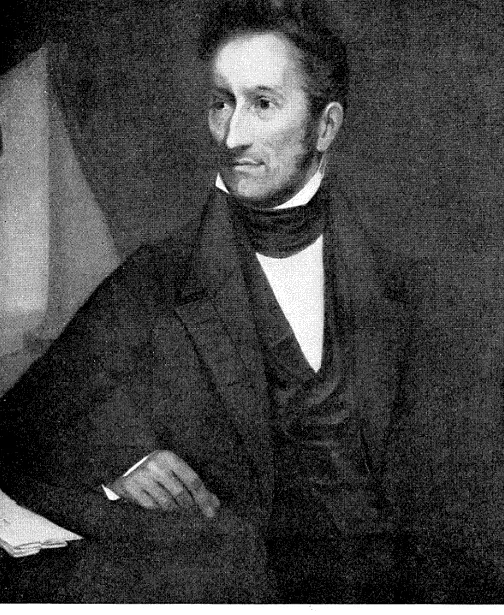
Nathaniel Silsbee
Nathaniel Silsbee
Burial Location: Amaranth Path: Lot 0129, Grave#2
Born on January 4, 1773, to parents Captain Nathaniel Silsbee and Sarah Becket Silsbee, Nathaniel Silsbee was the oldest child in his family. He attended private schools until his father took him out of school when the boy was only fourteen years old and sent him off to sea. It was said that the teenager was rebellious. His father was also having financial difficulties and needed more income for the family. Young Nathaniel earned navigation skills aboard the ships owned by Elias Hasket Derby and was apparently very successful at dealing with his fellow sailors. His pay was five dollars a month. Nathaniel added to this by his “adventures”, which were private speculations and sales of items in which he was able to make more than 100% profit.
By the age of nineteen, he was in command of Elias Hasket Derby’s sloop Sally. When he and his first mate Charles Derby went to pick up their papers at the Custom House in Salem, they were told that they were making history as the first two teenagers to handle a voyage. At 22, he was a part owner of the schooner Betsy. At age 28, Nathaniel Silsbee retired from the sea. He put his brothers William and Zachariah in charge of the vessels that he owned.
On December 12, 1802, Nathaniel Silsbee married Mary Crowninshield. Silsbee began to pursue a career in politics. He served two terms in the US House of Representatives, from March 4, 1817 to March 3, 1821. He was chair of the House Committee on Military Pensions. Returning home to Massachusetts, he served in the state Senate from 1821-1823 and was Senate President from 1823-1825. He was elected to the US Senate from 1826-1829 and was reelected, serving until 1835. He was the chair of the Senate Committee on Commerce.
His son Nathaniel was the mayor of Salem in 1849-1850 and again in 1858-1859.
Silsbee had a large house built next to the Salem Common. It rivaled other houses in the city in size and decoration. Later it became the headquarters for the Knights of Columbus. The Silsbee family entertained many well known politicians, including: John Adams, John Quincy Adams, James Madison, Daniel Webster, and Henry Clay. The Marquis de Lafayette visited in 1824.
Photo : Courtesy of Peabody Essex Museum, Salem, MA.
Sources Consulted:
- Salem Links and Lore.
- Vote View by UCLA.
- Wikipedia.
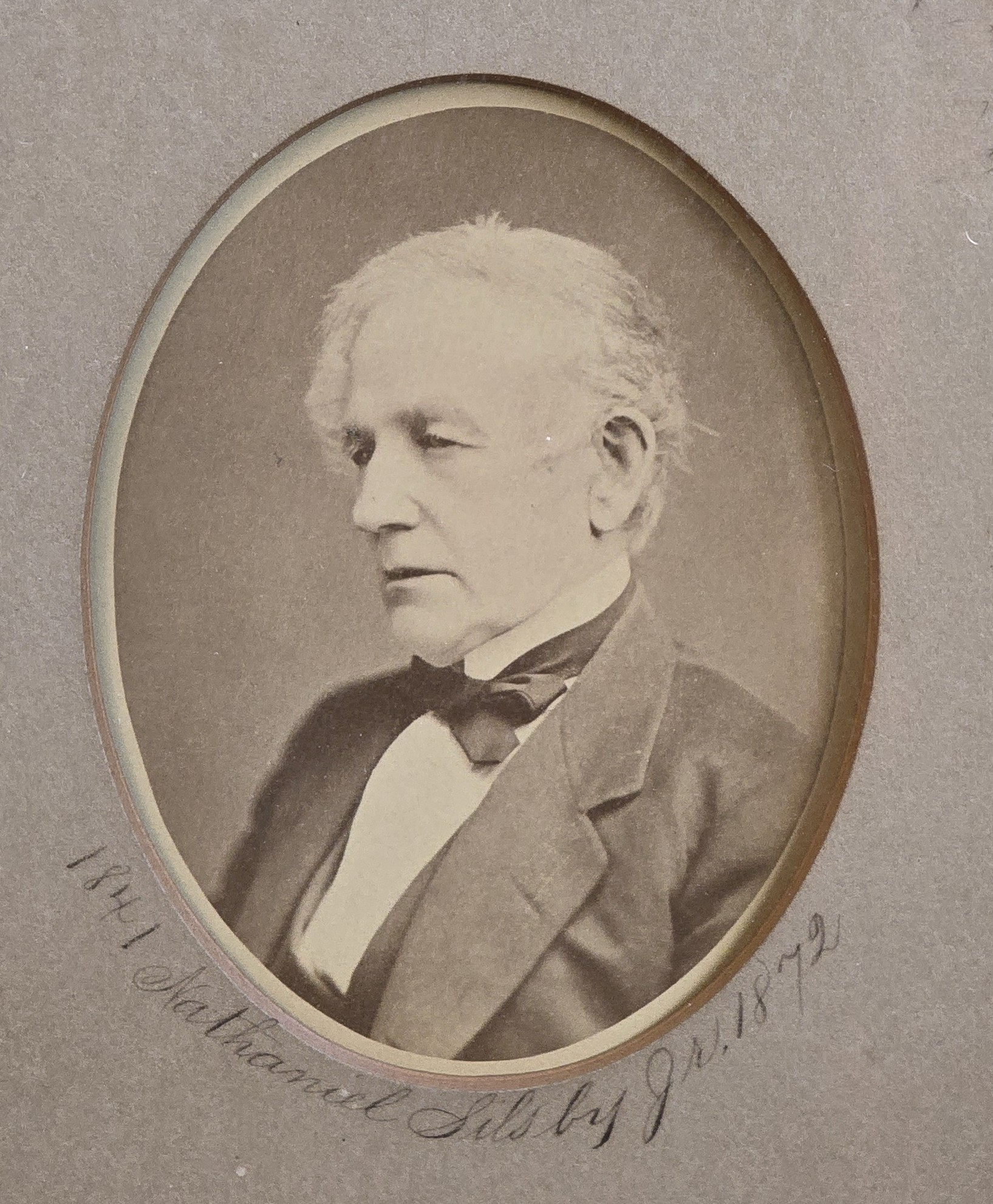
Nathaniel Silsbee Jr.
Nathaniel Silsbee Jr.
Nathaniel Silsbee Jr. was born on December 28, 1804, in Salem. He was the son of former U.S. Senator Nathaniel Silsbee and Mary (Crowninshield) Silsbee. He graduated from Harvard College in 1824.
On November 9, 1829, Silsbee married Mary Ann Cabot Devereux (1812–1889), a daughter of Humphrey Devereux and Eliza (Dodge) Devereux, in Salem.
Silsbee served as the 5th Mayor of Salem, Massachusetts, from 1849 to 1850, and again as the 11th Mayor of Salem from 1858 to 1859. From 1851 to 1852, he was also a member of the Salem Board of Aldermen.
He was a member of the MA House of Representatives from the Essex district in 1833, 1846, and in the extra special session called in 1848 to choose presidential electors. He was also treasurer of Harvard College from 1862 to 1876 and a trustee of Harmony Grove, serving from 1841 to 1872. Nathaniel Silsbee Jr. died in Milton, Massachusetts, on July 9, 1881.
He is buried on Amaranth Path, Lot #130.
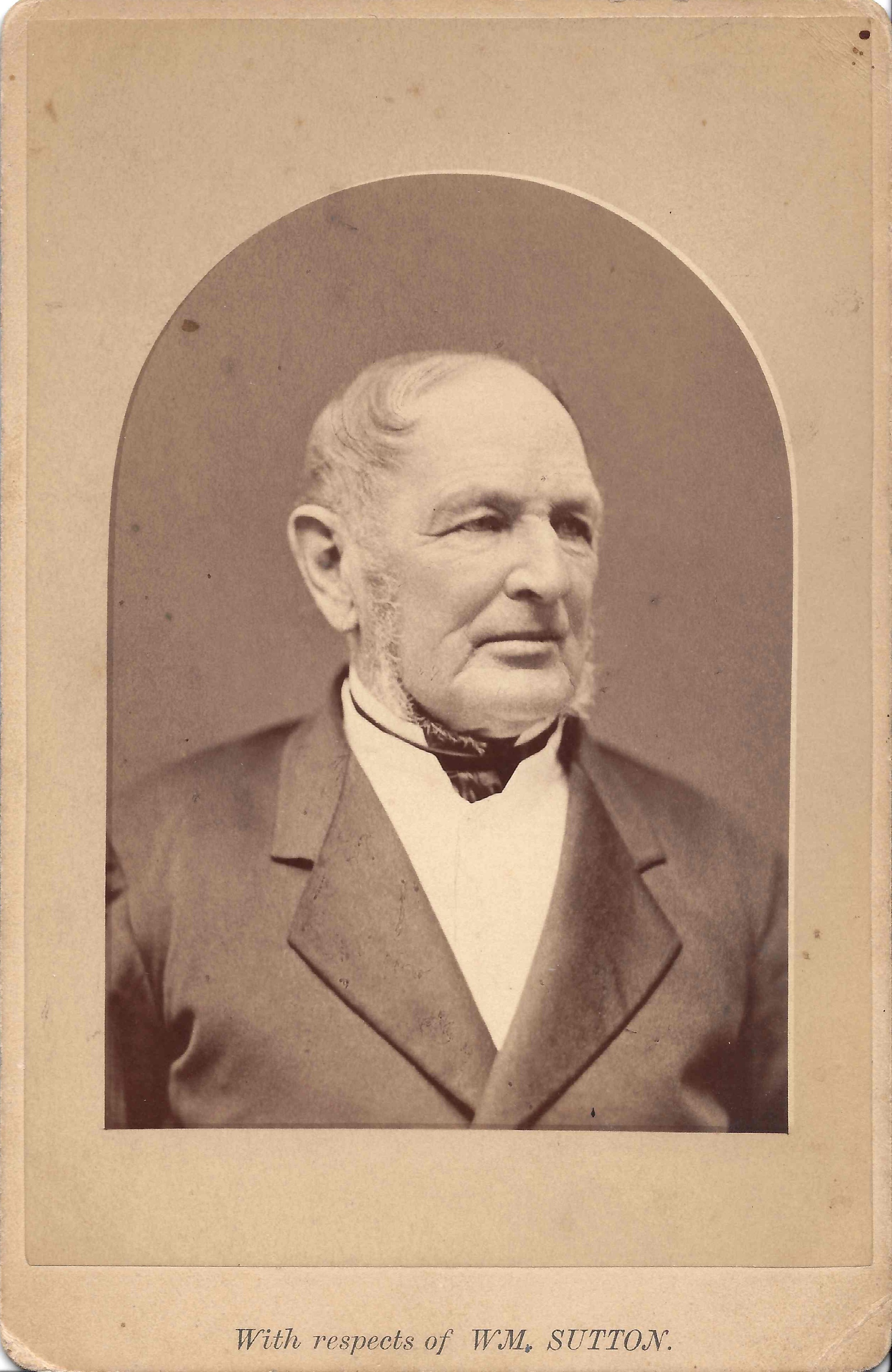
General William Sutton
General William Sutton
Parents:
- Father: the Honorable William Sutton
- Mother: Elisabeth Treadwell Sutton
Burial Location: Linden Ave, Lot 1083, Grave 14
General William Sutton was born in Salem on July 26, 1800. During most of his life he worked in the tanning business as well as in shipping. He was always active, especially in helping others. For forty-five years he served as President of the First National Bank, only declining the office when he turned eighty. He was a director of two insurance companies, and also was Treasurer of the Essex Agricultural Society for twenty five years. For thirty years he was head of the Salem Fire Department.
He bought and sold many properties in Essex County, North Shore of Massachusetts. Land purchase and sale was one of his major interests.
For five terms, he was a Representative to the General Court of Massachusetts, then a state Senator for two years, and was also a member of the Governor’s Council. He was very interested in military affairs and this resulted in appointment as a Major General during the Civil War. He was too old for active service; so he was assigned to the Medical Department and received honorable mention at the end of the war for his service.
Active in freemasonry for most of his adult life, he became a member of Jordan Lodge in Peabody at age twenty-two. In later years he became a member of Essex Lodge in Salem, and held membership in several other Masonic organizations. In 1866 he was Senior Grand Warden of the Grand Lodge of Masons in Massachusetts. He received the thirty-third degree in 1862.
In his will, he left his Masonic library to the Grand Lodge of Massachusetts. The Lodge of Perfection at Salem and Sutton Royal Arch Chapter in Lynn were both named for him as was the general William Sutton Lode in Saugus. General William Sutton died in Peabody Massachusetts on April 18, 1882. He was buried in Harmony Grove Cemetery.
Photo: Campbell Sutton
Sources Consulted:
- Internet Archive: Peabody Institute Library/local history resource center/William Sutton Deed Collection.
- MAGTLW Sutton Masonic Genealogy
- Massachusetts State Senator William Sutton (1800-1882) State Library of Massachusetts
James H. Turner
James H. Turner
James H. Turner was born in Salem, Massachusetts, on September 26, 1839, to James H. Turner (1802-1823) and his wife, Joanna Dodge (Upton) Turner (1810-1842). His mother died quite young, and Turner was raised by two of his aunts. Turner attended the Hacker and Epes private schools.
When the Civil War began, he enlisted as a private in the 14th Massachusetts Infantry under Capt. James Pope. Following the war, he was taught the art of leather measuring by his father. He was also a Fireman of the double-decker hand engine, Adams No. 10.
Turner’s notable political roles included his two tenures as Salem mayor (1894 to 1897 and 1899) and as a town Alderman (1891 to 1893, 1902, 1911 to 1912). He was also a member of the Grand Army of the Republic’s Philip H. Sheridan Post #34, and of three lodges in Salem.
In 1862, James H. Turner married Catherine Shean (1846-1931), daughter of Moris and Ann Shean of Nova Scotia, Canada. Catherine’s family emigrated to Massachusetts in 1850. The Turner’s lived at 67 Boston Street in Salem. Turner died in 1930 and was survived by his six children.
He is buried at Grove Avenue, Lot #178.
.png)
Charles Wentworth Upham
Charles Wentworth Upham
Charles W. Upham was Salem’s first foreign-born mayor, born May 4, 1802, in Saint John, New Brunswick (then the New Brunswick Colony of British Canada). A Harvard College graduate (1821), he continued at Harvard Divinity School and served as a colleague-pastor of Salem’s First Church from 1824 to 1844, resigning after a bout of bronchitis but remaining active there.
He held numerous public offices, serving in the Massachusetts House of Representatives (1849, 1859, 1860), the State Senate (1850, 1857, and 1858, the latter two years as president), and one term in the U.S. Congress as a Whig (1853–1855).
Upham’s career combined ministry, scholarship, and public service. He was a historian, best known for Salem Witchcraft, the first comprehensive study of the 1692 events. He remained active in civic and intellectual life until his death in Salem on June 15, 1875.
He is buried on Anemone Path, Lot #132.
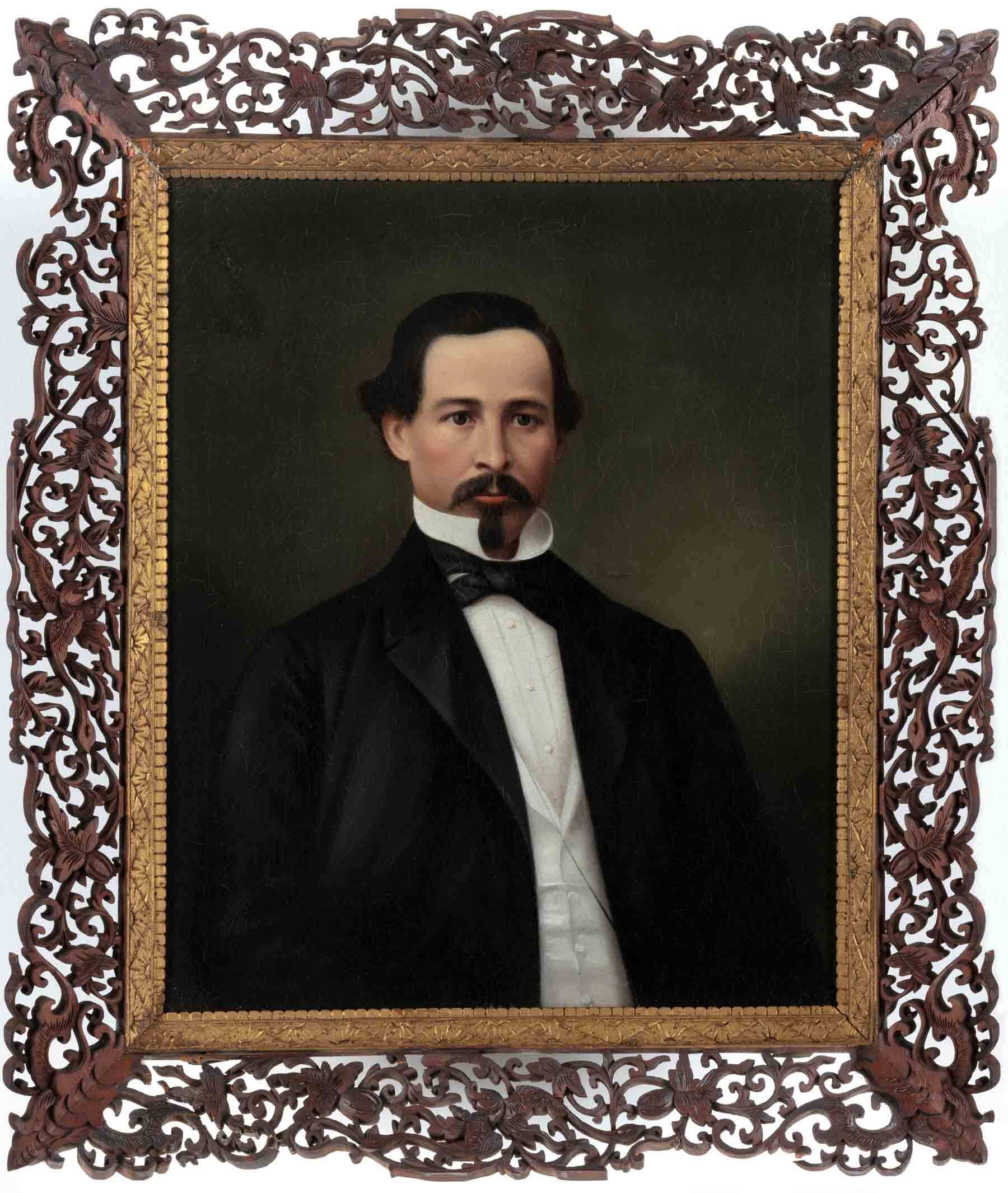
Frederick Townsend Ward
Frederick Townsend Ward
Born: November 29, 1831, Salem, MA.
Died: September 22, 1862, Ningbo, Zhejiang, China.
Memorial Plot: Cenotaph, Cypress Avenue
Parents: Frederick Gamaliel Ward
Ward was a rebellious teenager, so his father removed him from school and found him a position as second mate on the Hamilton, a clipper ship which was commanded by a friend of the family. Apparently, life at sea was no easier for the young man than it had been on land. There were complaints that he gave too many orders for a youth and there is a story that he was thrown overboard by members of the crew.
If this story is true, Ward somehow got back onboard ship. The captain, William Allen, said that he possessed traits of reckless daring but was a valuable officer. The voyage went from New York to Hong Kong, but the city was closed to foreigners at this time.
By 1849, Frederick Ward was back in the United States. He enrolled in the American Literary, Scientific and Military Academy in Northfield Vermont, now Norwich University. The curriculum included military tactics, strategy, drill and ceremonies. He attended for only a few months and, in 1850, he was shipped out as first mate on the clipper ship Hamilton with his father as captain. During the rest of the 1850’s, Ward served on several vessels sailing to Central America, San Francisco, Shanghai, and possibly Peru. In 1854, he was in Mexico, running a scrap metal business which failed. He then found work as a “Filibuster”, which meant that he raised private mercenary armies and led them to other countries. Ward worked for William Walker in Mexico where he learned how to recruit, train and command mercenary troops. He served as a lieutenant in the French Army during the Crimean War. However, he was “allowed” to resign after being insubordinate to a superior office. In 1859, he worked as a shipping agent alongside his brother Henry.
In 1860, the brothers arrived in Shanghai, China, perhaps with the intention of doing business for their father. Henry Ward set up a trading business in Shanghai. Frederick found work as the executive officer on the Confucius, which was an armed riverboat commanded by an American for the Shanghai Pirate Suppression Bureau, organized by two Chinese government officials, who did not want their association with Americans known, and funded by a prominent banker and merchant. A large rebellion, known as the Taiping Rebellion had broken out. Frederick Ward was enlisted to recruit every Westerner there who could handle firearms. They became the Shanghai Foreign Army Corps, whose goal was to protect the foreign community in Shanghai. Then Frederick Ward was recruited to train native troops. This group would become known as the Ever Victorious Army. Their adversaries regarded them as “devil soldiers.” Ward’s troops had nearly defeated the rebellion when he was mortally wounded in battle in 1862. He had married a Chinese woman and had become a Chinese citizen. A tomb was built over his grave at Sung-Chiang. A memorial stands in his honor at Harmony Grove Cemetery.
Photo: Artists in Shanghai, China, Frederick Townsend Ward, 1859-62. Courtesy of Peabody Essex Museum, Salem, MA.
Sources Consulted:
- Encyclopedia Britannica.
- Military Wiki, Fandom Lifestyle Community.
- Find a Grave.
- Wikipedia.
.jpg)
David Pingree Waters
David Pingree Waters
David Pingree Waters was first elected as an alderman in 1894, 1895, and 1896, before becoming the twenty-eighth mayor of Salem in 1898. He also served two years in the Massachusetts legislature.
He was born on March 16, 1838, in Salem and was educated at Phillips Academy in Andover. He later graduated from a Boston commercial college. As a young man, he went west and spent two years in Ohio before serving from 1863 to 1866 in the U.S. Treasury Department in Washington, D.C.
Upon returning to Salem, he joined the prominent hardware business Adams, Richardson & Co., then located at 215 Essex Street. He later partnered in the business of Richardson & Waters Hardware. He married Juliette T. Richardson, the daughter of his employer. They had one son, John G. Waters.
In addition to his civic leadership, he served as a trustee of Harmony Grove Cemetery. Mayor Waters “always took a deep interest in public affairs, and he always served his city with ability and honesty of purpose,” noted his obituary.
He is buried on Dell Avenue, Lot #44.
Stephen Goodhue Wheatland
Stephen Goodhue Wheatland
Stephen Goodhue Wheatland was born in Newton, Massachusetts. He attended Harvard College, class of 1844, and was a member of the Hasty Pudding Club. Following college, he entered the legal profession and was admitted to the Essex Bar in 1850.
Wheatland’s notable political roles included serving as Mayor of Salem (1863), Massachusetts House of Representatives (1862–1863), Salem Common Council (1852, 1853, 1859, 1861, and 1862), and President of the Council for the last two years. In addition, he served as President of the National Exchange Bank, and served in the Salem Light Infantry in 1852.
In June 1869, Stephen married Anna Maria Pingree (1846-1927), daughter of David Pingree (1795-1863) and Ann Maria Pingree (Kimball) (1804-1893) of Salem, Massachusetts. Her father had served as Salem’s 6th Mayor (1851-1852). The Wheatlands were members of The North Church, now known as the First Church. Stephen died March 2, 1892, in New York, leaving behind his wife and three children: Richard (1872-1944), David, and Anna Pingree Phillips (1870-1938).
He is buried on Highland Avenue, Lot #1646.
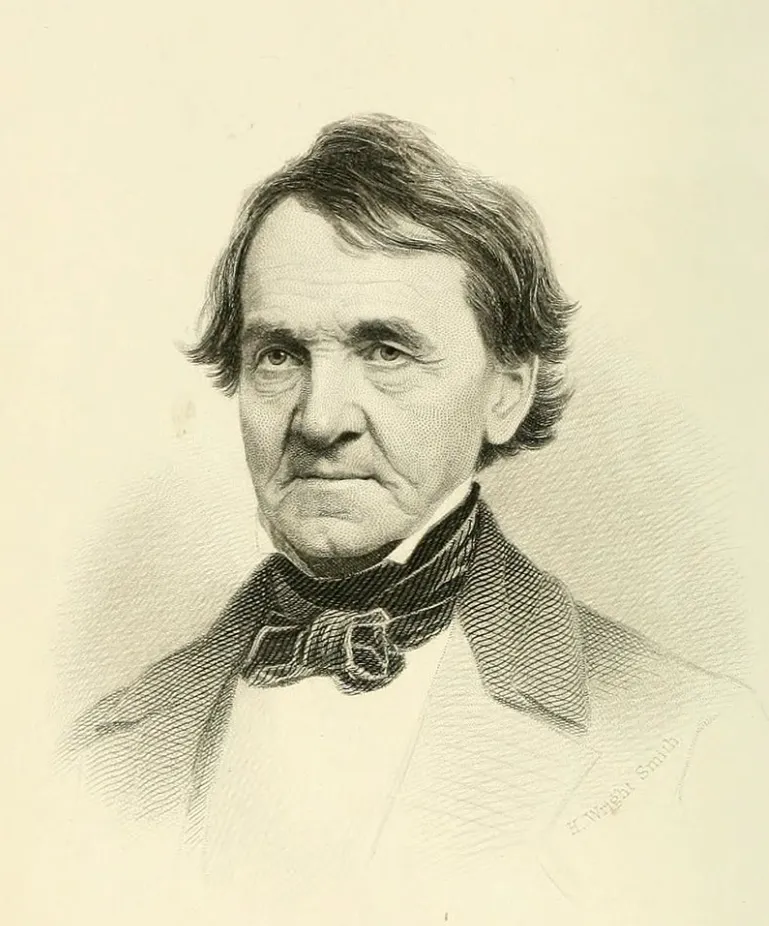
Daniel Appleton White
Daniel Appleton White
Daniel Appleton White was born on June 7, 1776 in what is now Lawrence, Massachusetts to John and Elizabeth (Haynes) White. The early part of his life took place on the family farm. In June 1792, he left the farm to study law with Silas Dinsmoor at Atkinson Academy in New Hampshire.
He was then admitted to Harvard College in July 1793.Graduating with highest honors from Harvard in 1797, he worked as a teacher in Medford Massachusetts at the town’s grammar school while also serving as a tutor in Latin at Harvard. In addition to this he continued to study law and was admitted to the Massachusetts Bar in 1804. He lived in Salem for a brief time from 1803 to 1804 and then moved to Newburyport.
He established a law practice there. In 1817, he returned to Salem. He served as a member of the Massachusetts State Senate from 1810 to 1815, when he was elected as an Essex County judge and resigned from the Senate, in spite of the protests from some of his friends. He held that office until 1853. He was also an active member of the Essex Institute and the Massachusetts Historical Society.
White was awarded an honorary Doctorate in Law from Harvard in 1837. He served on the Harvard Board of Overseers from 1842 to 1853. Married three times, first to Mary Wilder, then to Eliza Orne, and finally to Ruth Rogers. He had three children from the first two marriages: Mary and Eliza with his first wife and then Henry with his second.
He was a founding member of the Essex County Lyceum, and was also President of the Essex Institute from its founding in 1848 until his death He died on March 30, 1861. Daniel Appleton White was buried at Harmony Grove Cemetery, Chapel Ave, Lot 212, Grave 6.
Photo: Wikipedia
Sources Consulted:
- Appletons' Cyclopædia of American Biography.
- Collection Overview of the Papers of Daniel Appleton White, via Hollis, Harvard Library catalog.
- Wikipedia.

Henry Laurens Williams
Henry Laurens Williams
Henry Laurens Williams was born in Salem on July 23, 1815, to Captain Israel Williams and Lydia (Waite) Williams. His father was the first captain of Friendship, the flagship of the merchant partnership of Peirce and Waite. Following in this maritime tradition, young Henry began his career in the merchant house of Joseph Peabody and later became a partner with Henry Tucker Daland in the Boston firm of Daland & Williams.
In 1858, Williams retired from the shipping business and was elected a director of the Eastern Railroad. He served as the twentieth mayor of Salem during both the Nation’s Centennial and the completion of the City Hall Extension. At the dedication ceremony on May 8, 1876, Williams delivered an eloquent address reflecting on Salem's rich history while emphasizing the need to adapt to a growing and changing population. At the time of his death, he was serving as president of the Salem Five Cents Savings Bank and of the National Exchange Bank.
Williams married Elizabeth Tucker Daland, daughter of John Tucker Daland. In 1846, the architect Gridley J. F. Bryant designed their residence at 342 Essex Street. Henry Laurens Williams died on September 21, 1879.
He is buried on Highland Avenue, Lot #563.
Join the Community
Support Harmony Grove and be among the first to hear about our programs.