Blake Chapel
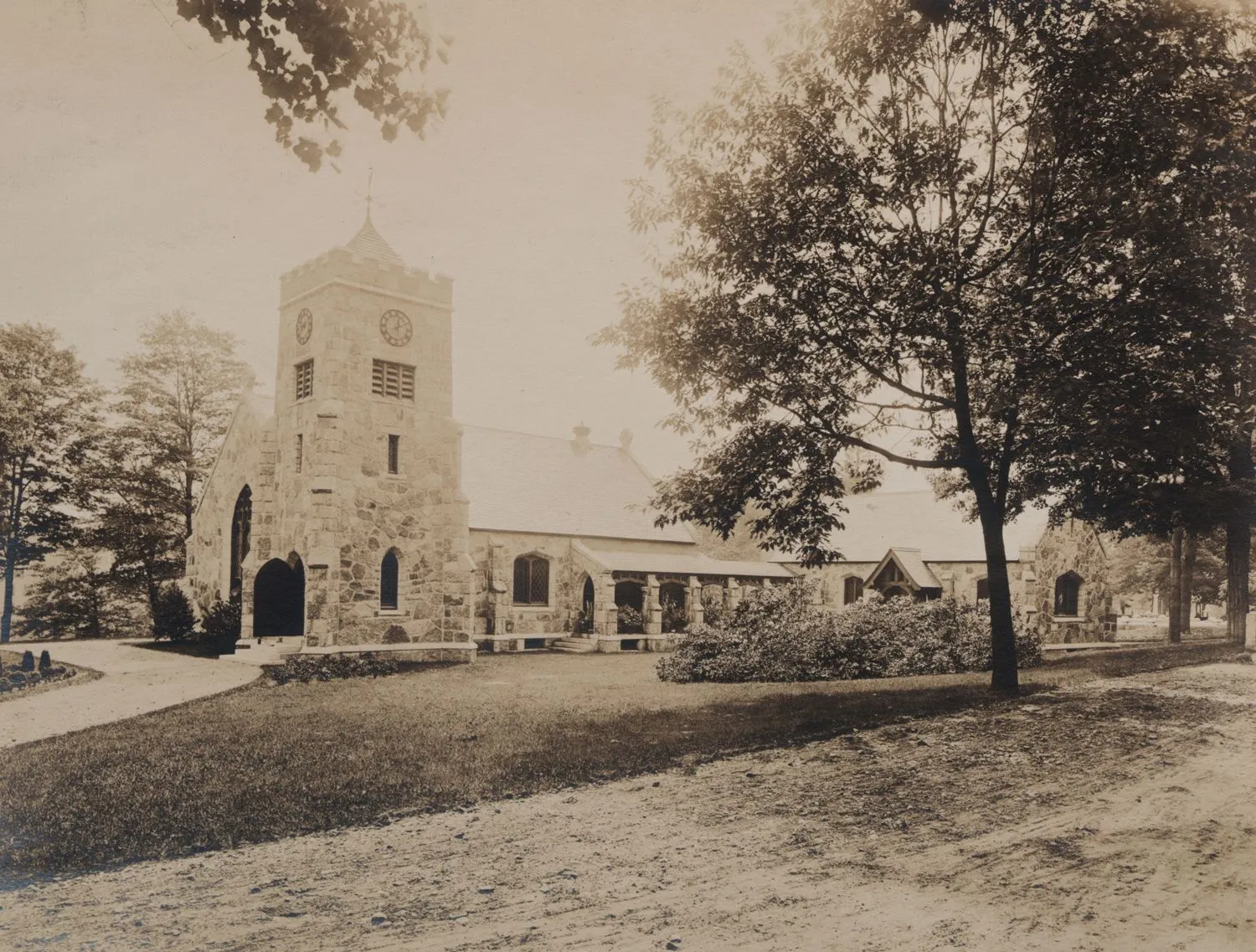
The Blake Memorial Chapel
In 1901, the cemetery received notice of the will of Nancy Cordwell Blake, who passed away on January 10. Her will directed that a chapel be built in memory of her son, George Harrison Blake, to be named The Blake Memorial Chapel, with a portrait of George permanently displayed inside.
The Board of Trustees chose the Late Gothic Revival style as the most fitting design and commissioned Boston architect Ernest Machado to create the plans. Construction was completed in 1904, and the chapel was dedicated in 1905.
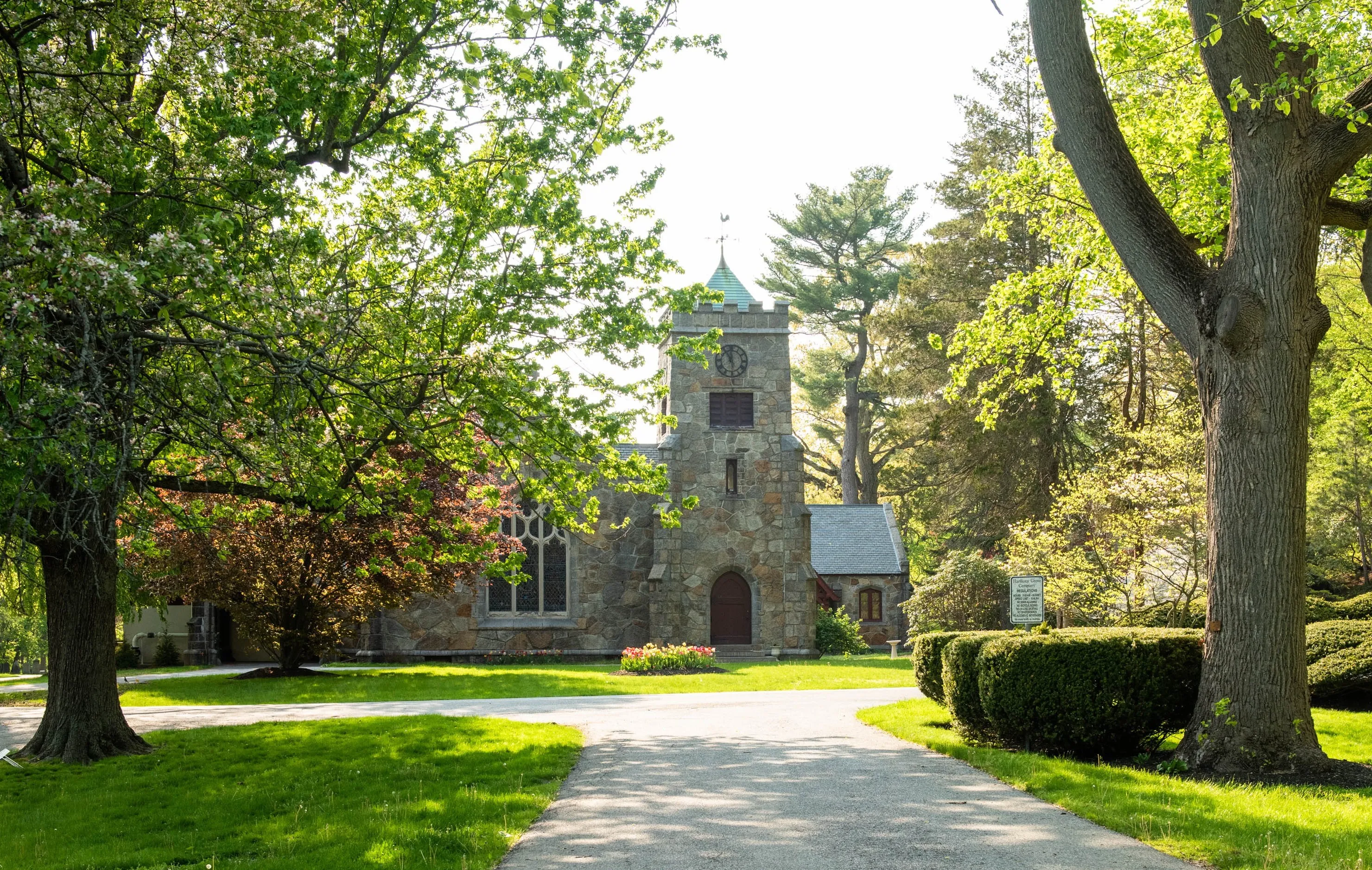
Built of Cape Ann granite, the chapel features stepped wall buttresses, pointed Tudor-arch door and window openings. The building measures 64 feet long by 34 feet wide, with a 65-foot-high off-center bell tower crowned by a weathervane reminiscent of old English missions. The tower bell, cast in 1862 by Henry N. Hooper & Co. of Boston, remains a distinctive feature.
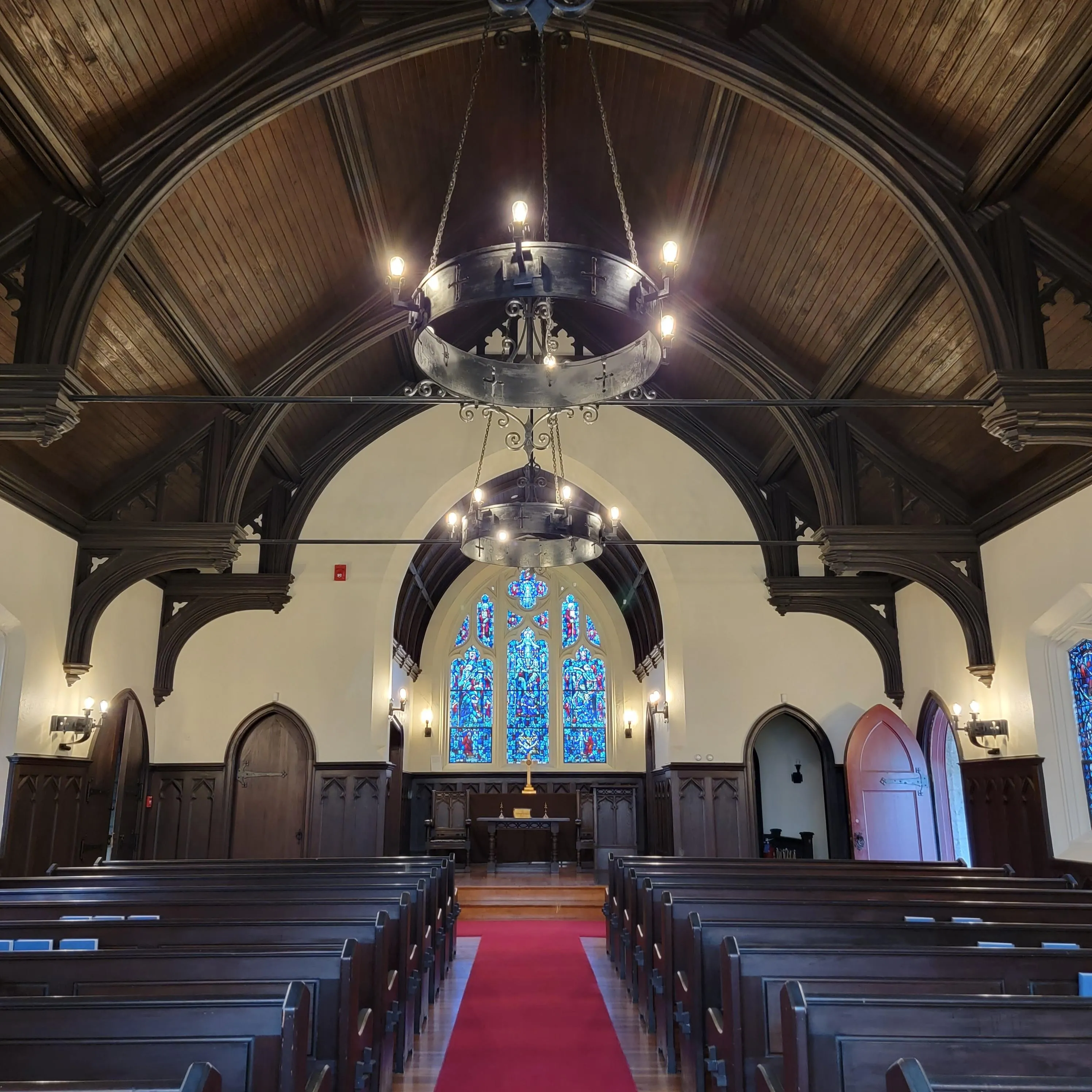
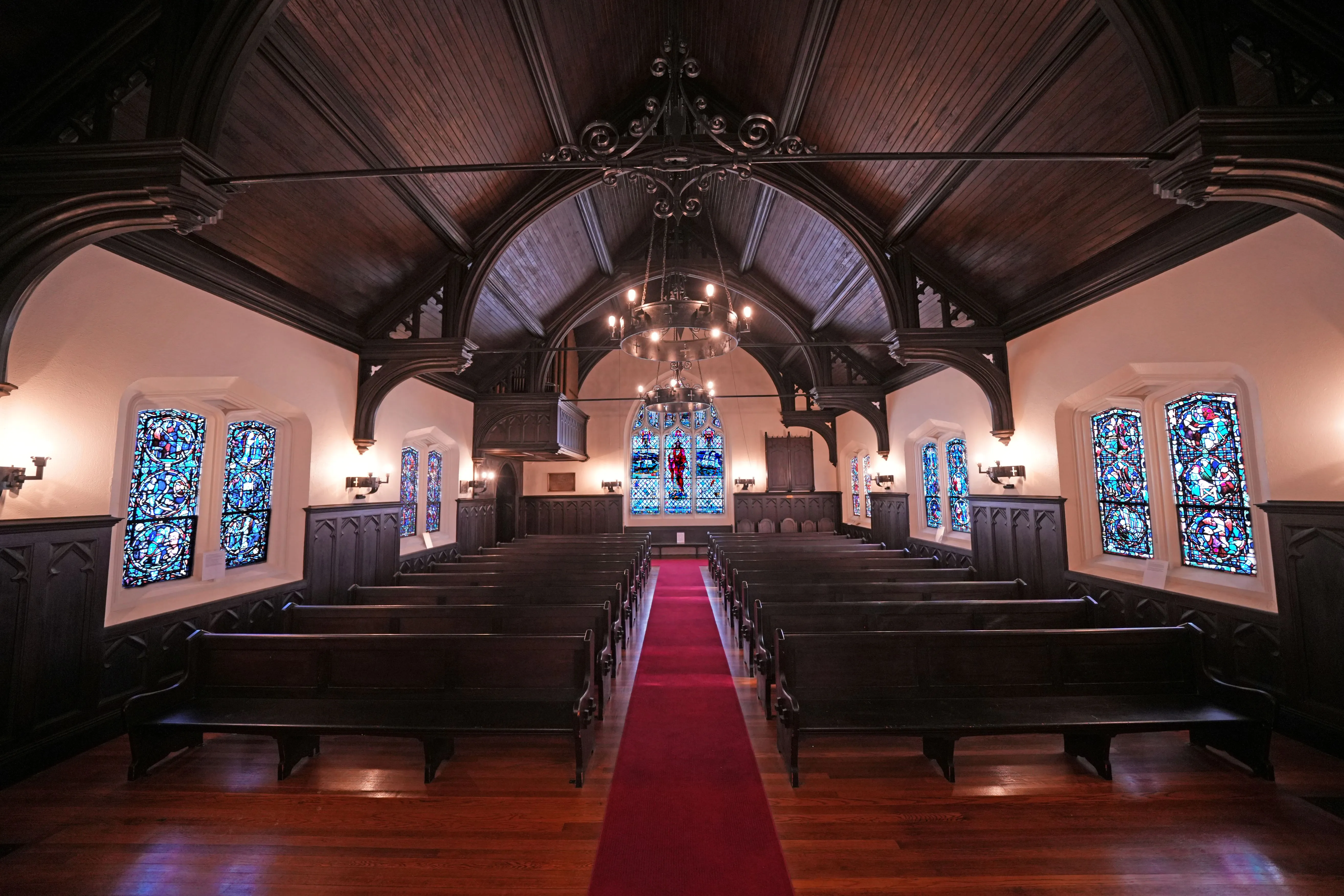
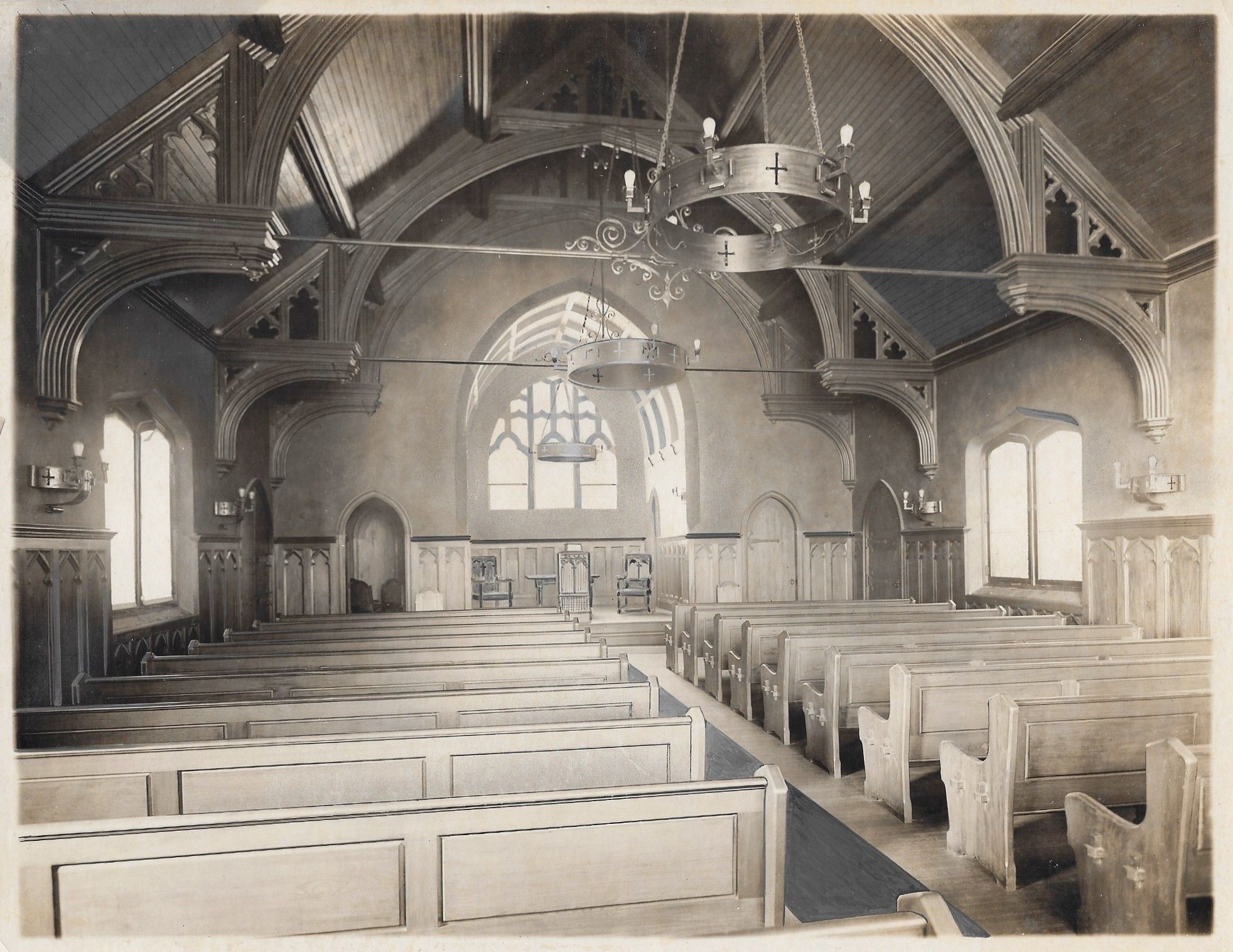
Visitors enter through the massive arched doorway at the base of the tower. Inside, the organ loft overlooks the main entrance, while the vaulted and recessed sanctuary is at the opposite end. The interior features Flemish oak, including the pews, and can accommodate up to 175 people.





Stained-Glass Windows
When the Blake Memorial Chapel was completed in 1904, its windows were filled with simple amber-stained glass that bathed the interior in warm, natural light. In the early 1920s, Cemetery Superintendent George Wells Creesy envisioned replacing them with memorial windows honoring Salem families whose roots remained deeply connected to the cemetery. At his encouragement, descendants of those prominent Salem families funded the memorial windows to honor their forebears and pay tribute to the city's rich history.
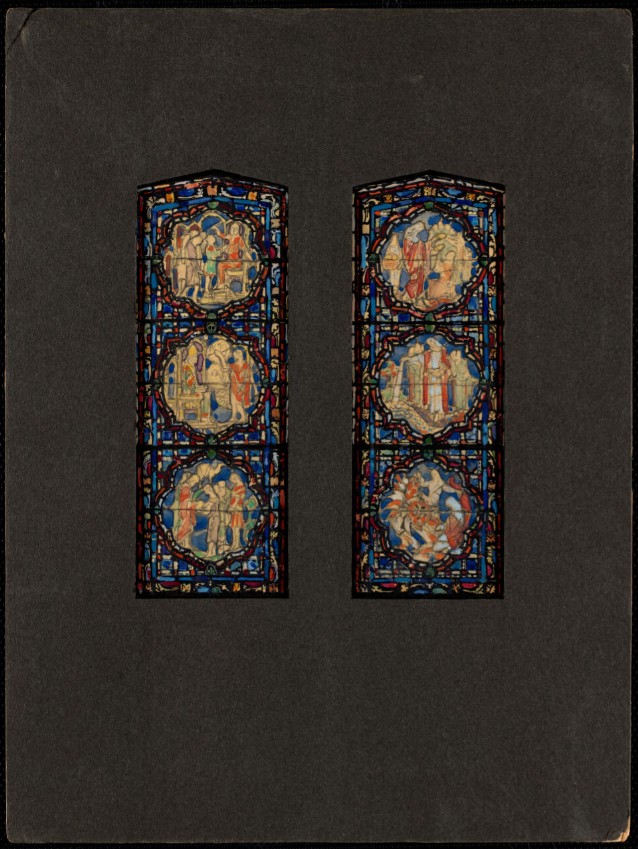
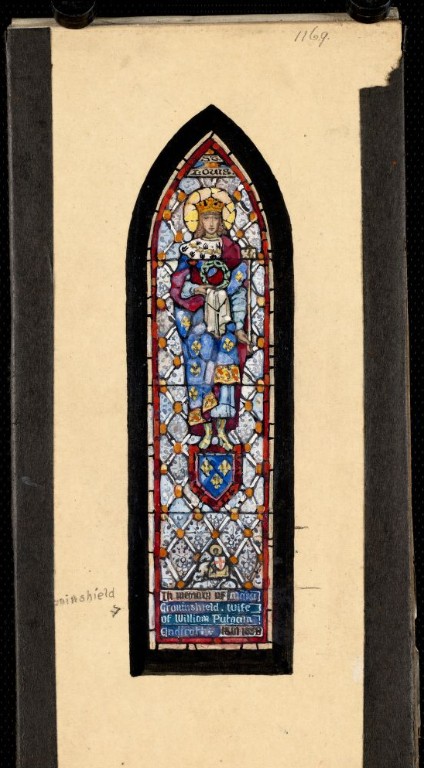
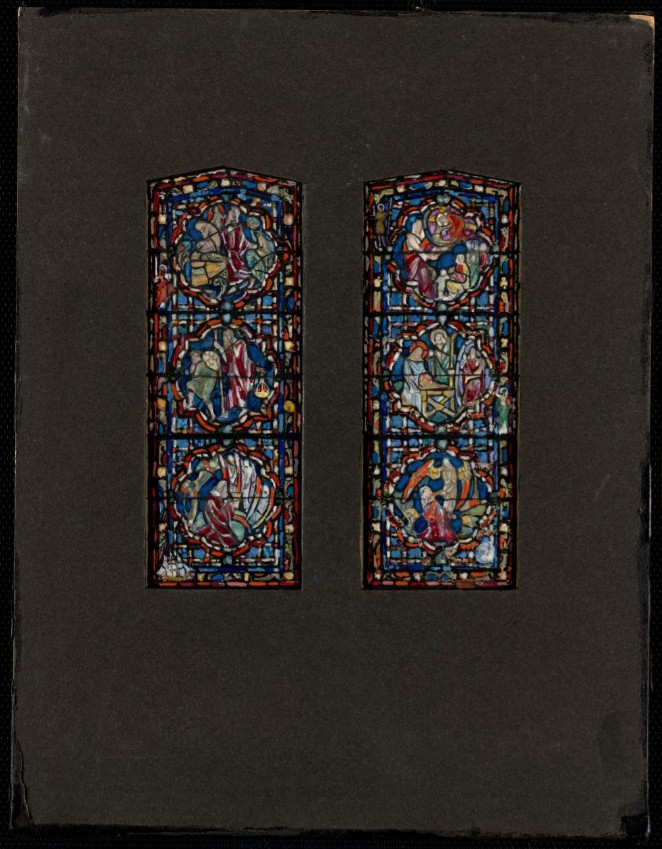
Prior to their installation in the Blake Chapel, a select number of the windows were put on display in the music room at the Museum of Fine Arts in Boston, MA. The accompanying photo slider features the original gouache design drawings produced by the Connick Studio.
Dedicated in 1925, the new windows were designed and created by renowned stained-glass artist Charles J. Connick, with stone tracery designed by acclaimed architect Ralph Adams Cram. Together, the windows transformed the chapel into both a place of remembrance and a lasting tribute to the courage, sacrifice, and enduring legacy of generations of Salem residents.
Each window tells a unique story. Read below to learn about the families honored and the history behind these remarkable works of art.
The Saltonstall Memorial Window
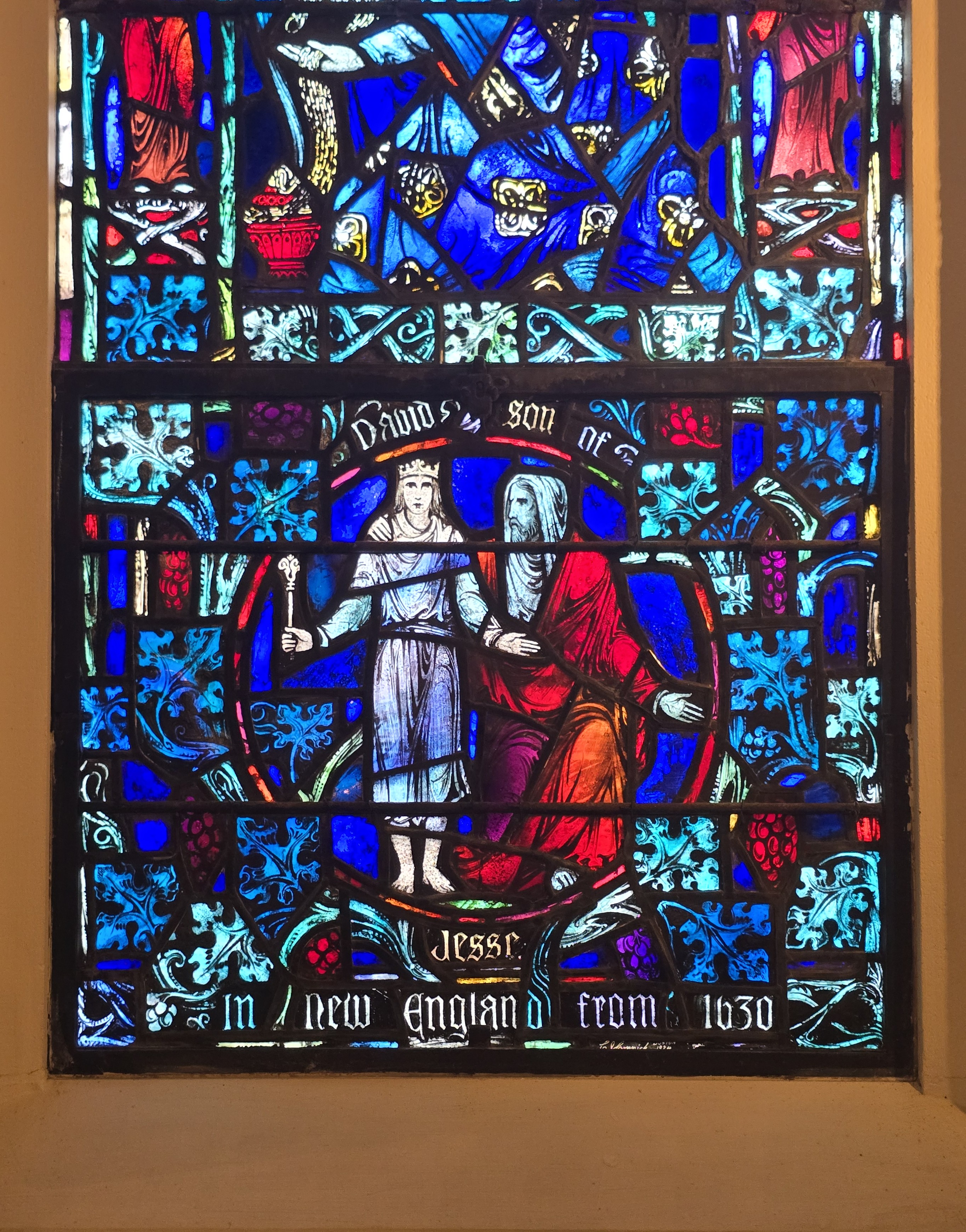
The Saltonstall Memorial Window, located in the sanctuary, is in memory of Sir RichardSaltonstall, an investor, who arrived here in 1630 aboard the ship Arbella. He was also the founder of the city of Watertown along with his brother. Among the descendants of Sir Richard Saltonstall have been many men whose names have been distinguished in law, in learning, and in politics. Henry Saltonstall was a member of the first graduating class of Harvard in 1642. Most of theSaltonstall descendants have continued the tradition as Harvard graduates.
This window is devoted to the Christ Child in design, suggesting the unity of the Old and New Testaments, after the manner of the “Jesse Tree”. “The Boy Christ with the Doctors in the Temple” occupies the center lancet. Surrounding the group, in severe design, are the four evangelists, and on scrolls held by the doctors are the words from Isaiah “Break forth into joy, sing together, ye waste places of Jerusalem: for the Lord hath comforted his people”.
Shepherds, with small figures of Old Testament prophets ofChrist’s coming, are arranged in the left lancet with a herald angel holding a scroll, balanced by a similar composition of the three wise kings of the Epiphany, the kings of Judah, and a herald angel in the right lancet. On both scrolls furuns the illuminating text from Isaiah: “In that day shall the Lord of hosts be for a crown of glory, and for ans the illuminating text from Isaiah: “In that day shall the Lord of hosts be for a crown of glory, and for diadem of beauty, unto the residue of his people.” Small figures of Abraham and Isaac, Jesse and David, complete these lancets. The New Testament is again introduced in the tracery pieces, where St. Peter and St. Paul stand on either side of the symbol of the Star of Bethlehem, the center of a group of seven seraphim and for seven gifts of the Holy Spirit.
The Saltonstall Arms occupy the base of the center lancet.




The Peabody Memorial Window
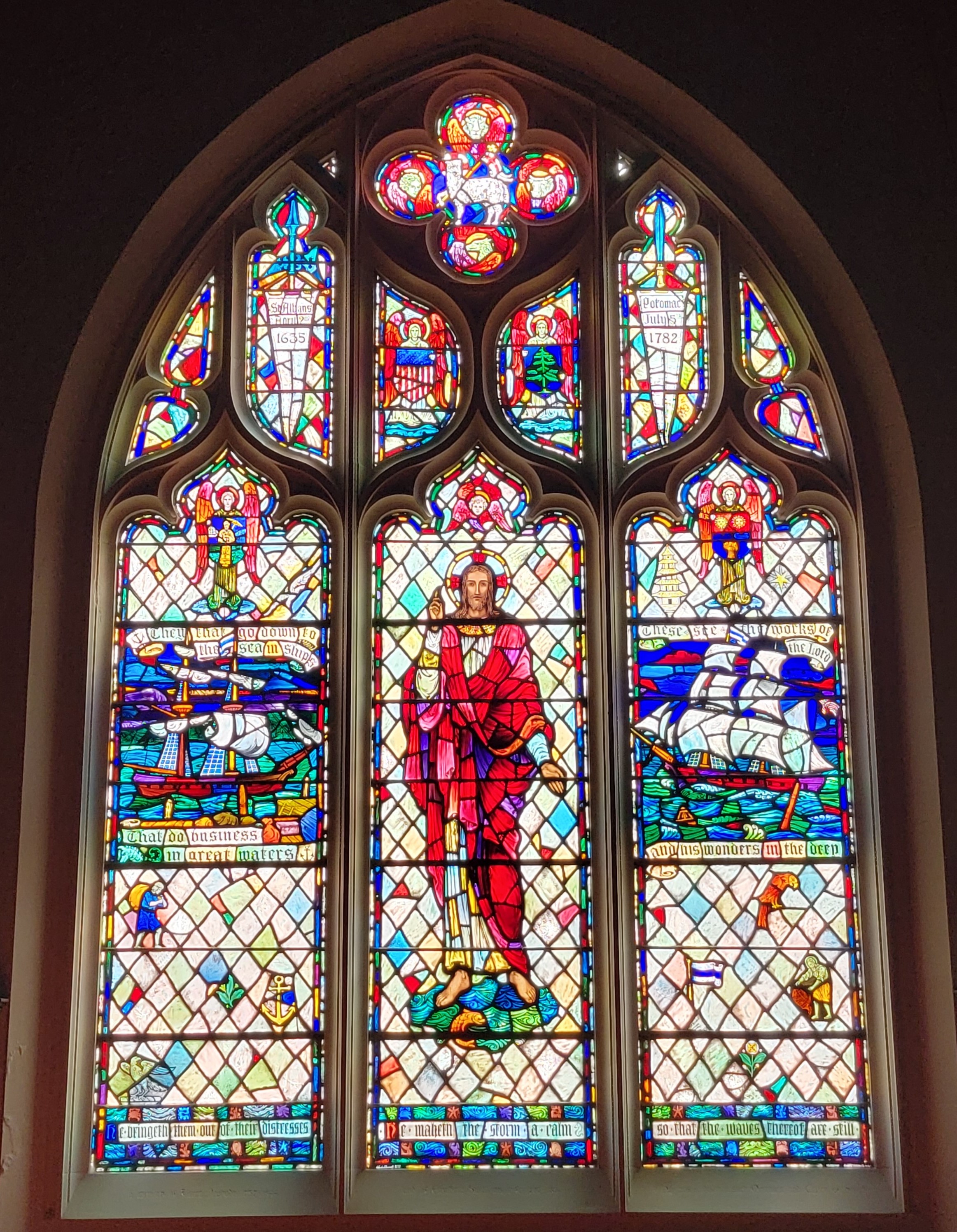
The Peabody Memorial Window, the largest and most impressive window, facing the front of the chapel, was given in memory of Joseph Peabody (1757-1844) and his wife Elizabeth Smith (1767-1854).
As a mere lad, Mr. Peabody walked from Middleton to Salemand offered his services to the prominent merchants at the time – the Derby’s, the Cabot’s, and the Gardner’s. This was after the close of the Revolution. For some years, he sailed upon their ships. After several successful voyages, had amassed enough money to purchase the schooner Three Friends. This was the commencement of his success, and from that time until his death in 1844, he was his own master. Eighty-three ships were built and owned by Mr. Peabody, manof which he freighted himself. At different times, he had in his employ over 7,000 men, 35 of whom had entered his employ as cabin boys and through ability and force of character, were advanced to the rank of ship master.
The general idea of this window is relationship to the great foreign trade of Salem in her glorious commercial days and to a great merchant connected therewith.
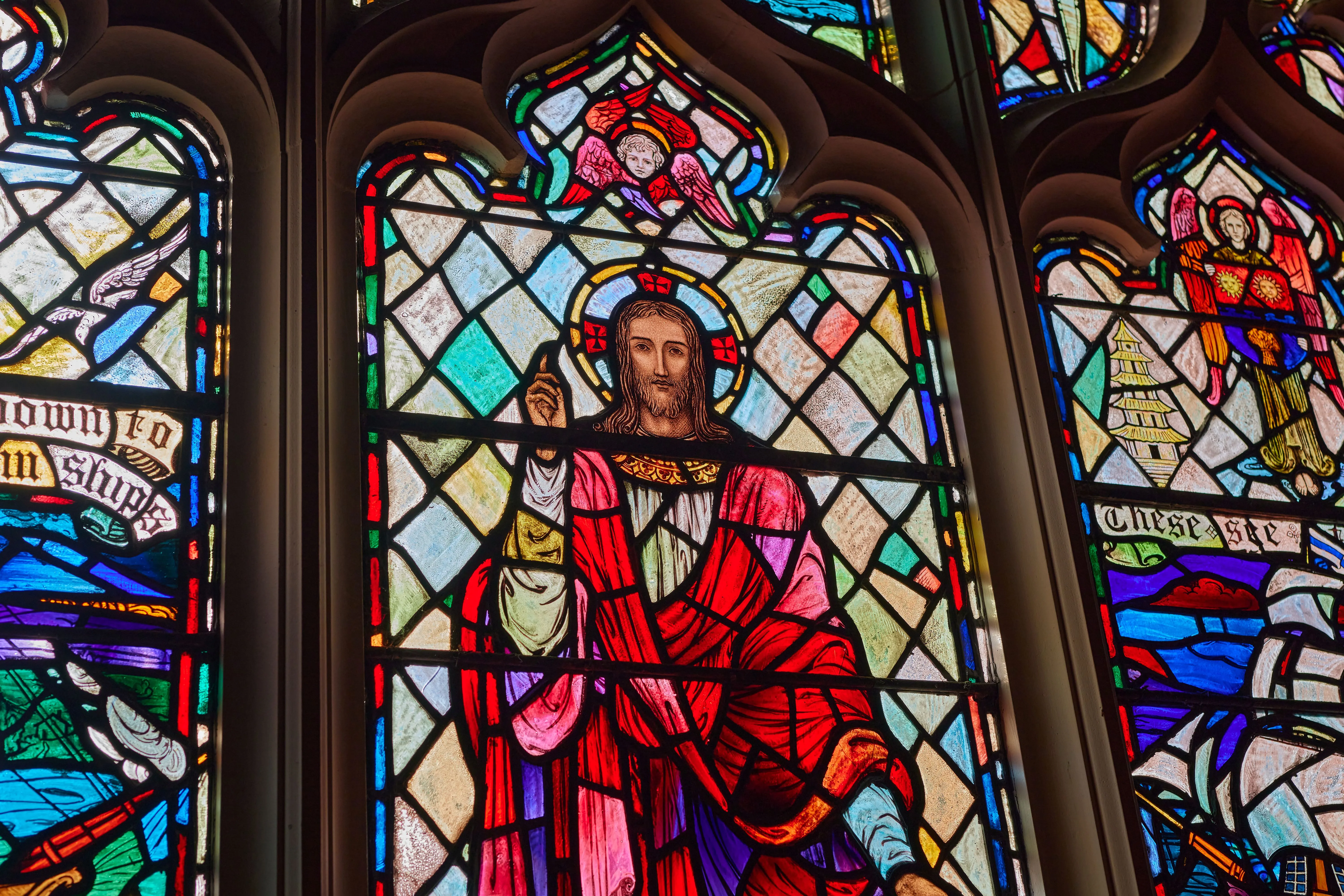
In the central panel, a commanding figure of Christ walking on the water recalls his kinship with shipmasters and fishermen of old. Personal incidents are shown by two ships – one in port, one at sea.
Here and there in the windows are introduced small designs symbolizing ports to which Peabody ships sailed – a pagoda, art, a figure bearing goods, etc.
In the left and right lancets are Peabody ships, in port and at sea, with the stirring words of the Psalms: “They that go down to the sea in ships, to do business in great waters; these see the works of the Lord, and his wonders in the deep.” At the bottom of the window, a further quotation from the Psalms: “He bringeth them out of their distress. He maketh the storm a calm, so that the waves thereof are still.”
Through the right and left lancets are devices once associated with the sea, sailors and fishermen, some definitely referring toJoseph Peabody – his house flag, his crest (the Falcon), the Arms of Salem(which was designed by Joseph and Elizabeth’s son, George Peabody) and the Peabody Arms. (This is a relative of George Peabody, the well-known philanthropist.)
In the tracery pieces occur the Arms of Massachusetts, the Pine Tree (early arms of Massachusetts) and the Arms of the United States, together with two treasures of the Peabody family – a halberd and a boarding pike. The halberd was brought to Salem in 1635 from St. Albans by Lt. Francis Peabody – the founder of the family. The boarding pike was given to CaptainThomas Simmons, commander of the privateer Ranger for bravery in the gallant defense of his ship when attacked by two refugee barges of superior force on July 5, 1782 near the Potomac River. After Captain Simmons fell wounded in this fight, the deck fell to Joseph Peabody, the second officer. After the death of Captain Simmons some 20 years later, the boarding pike became the property of Mr. Peabody.
In the quatrefoil, which crowns the window, occur the traditional Lamb of God, with the Banner of Victory and the symbols of the four evangelists.
The Crowninshield Memorial Window
The Crowninshield Memorial, the first window on the left, is in memory of two brothers, Jacob Crowninshield (1770-1808) and Benjamin Williams Crowninshield (1772-1851), and their wives Sarah Gardener(1773-1807) and Mary Boardman (1778-1840).
Jacob and Benjamin Crowninshield were members of theirfather’s firm, George Crowninshield & Sons. Jacob was appointed Secretary of the Navy by Thomas Jefferson in 1805, a position he declined; Benjamin was Secretary of the Navy under President Madison, 1814-1818. Both were well-known members of the great and General Court, and made their mark in Washington as members of Congress, particularly so in all questions relating to maritime affairs, for which their lives as Ship Captains and Merchants especially fitted them.
This wind represents Courage through the exploits ofDavid and Fortitude through the steadfastness of Job. The former is a series of narratives reduced to their simplest terms and the latter a group of allegories centering in one that symbolizes Job’s trials through their personification in little devils, recognized a Robbery, Murder, Disease, Great Wind, and Lightening.
The first lancet “David rescues the Lamb from the Lion”;“His Victory over Goliath”; and “His Courage before King Saul”. (The interpretations are heraldic and personal in character.)
The second lancet “The Angels of the Lord challenges the Devil to try Job’s Faith”; “The trial of Job’s Faith. His Steadfastness”; and“The Restoration of his House, and his Reward”.
These lancets are enriched by many personal comments. The first, for Jacob Crowninshield, has the shield of Massachusetts, the privateer America, the Congressional seal, the famous elephant, “Columbus”, the first to reach America. The second, for Benjamin Crowninshield, has the Congressional seal, the flag of the Secretary of the Navy, the good ship America III, and the Naval seal. Both have the Crowninshield Arms.

The Pickman, Rogers, and Derby Memorial Window
The Pickman, Rogers and Derby Memorial Window, second on left, is in memory of Benjamin Pickman (1708-1779), his wife Love Rawlins Pickman (1709-1786), John Whittingham Rogers (1787-1872), his wife, Anstiss Derby Pickman Rogers (1793-1856), Elias Hasket Derby (1739-1799) and his wife, Elizabeth Crowninshield Derby (1735-1799).
Benjamin Pickman was a well-known merchant, devoted to business and the welfare of his country. He was very active in doing all he could financially and personally to further the Cape Breton Campaign and “it was for service performed in this business that the Providence of the Massachusetts Bay gave him, in 1749, a very handsome Loving Cup”, which belongs to the Commonwealth but is now on deposit in the Essex Institute.
Elias Hasket Derby, one of the most famous Salem merchants, was a pioneer in many lands. His vessels opened trade with St.Petersburg, Marseilles, Mocha, Siam, Bombay, Calcutta, and China. From 1785-1799, his ships made 125 voyages of which 45 were to China and the East Indies. (Derby Wharf on Derby Street, is named after him.)
John Whittingham Rogers was a well-known merchant in the East India trade. He and his brothers, Richard Saltonstall Rogers and Nathaniel Leverett Rogers, were partners in the N.L. Rogers and Brothers firm. A prominent citizen of Salem, he was a Representative from Salem in the Great and General Court.
This window is devoted to Love and Liberality in narrative medallions from the lives of Joseph and Elisha.
First lancet: “Joseph is sold into Egypt” (Judas); “He interprets Pharaoh’s Dream” (A foolish virgin); “He receives his brothers”(Christ with a little child).
Second lancet: “Elisha receives Elijah’s mantle” (Christ’sAscension); “He purifies a spring with Salt” (Christ’s first miracle); and “He feeds a hundred men with twenty loaves” (The Miracle of the Loaves and Fishes).
Also suggested in this ornament are the Pickman and Rogers private ship signals, the Pickman and Rogers Arms, the Derby private signal, and the famous Derby Ship, Grand Turk.

The Silsbee Memorial Window
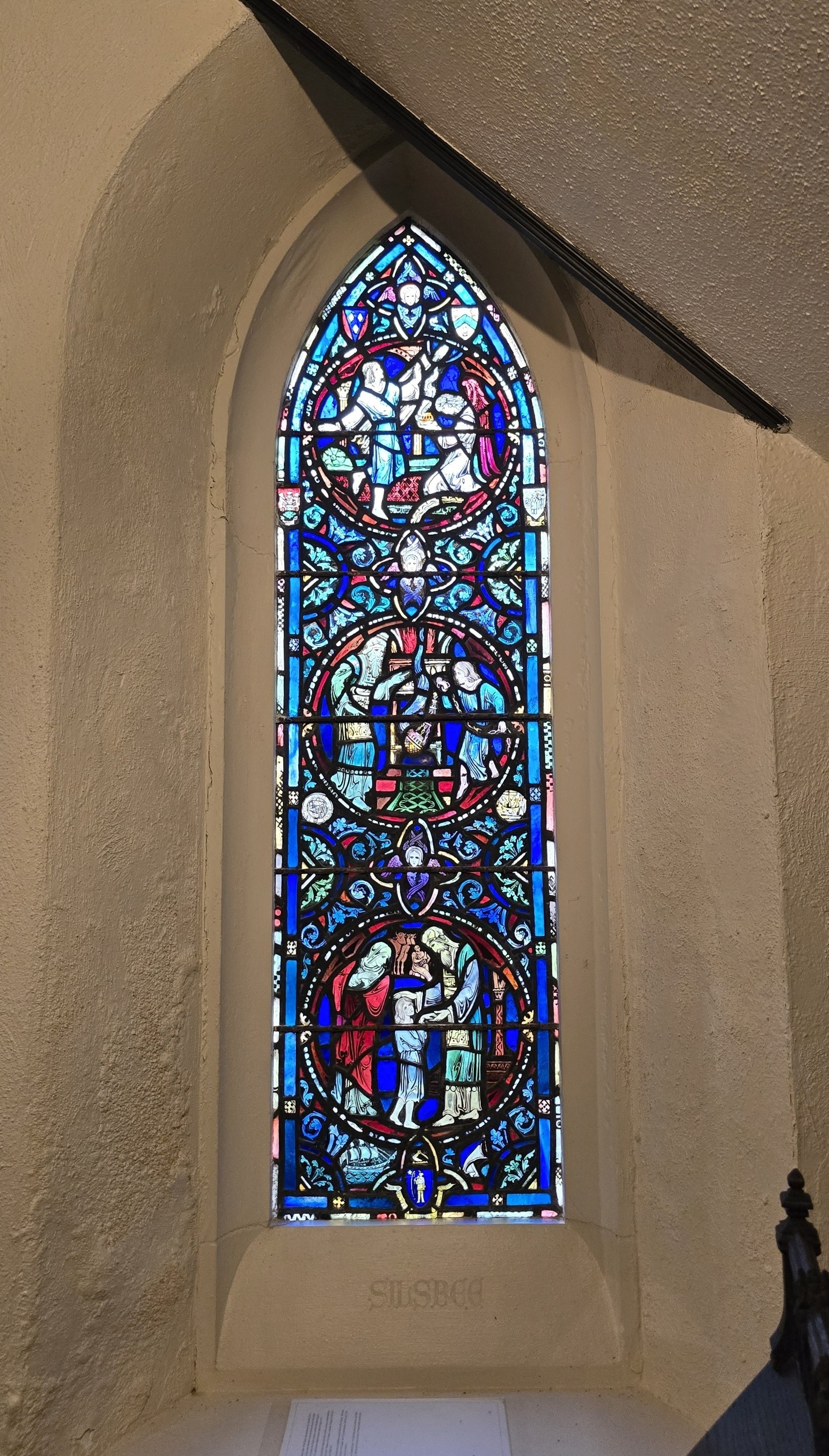
The Silsbee Memorial window, facing the entrance door of the Chapel, was placed there by members of the Silsbee Family. Many of the Silsbee Family were shipmasters and merchants and were held in high esteem in the community in which they lived. One of their members was the honorable Nathaniel Silsbee, who went to sea when only 14, and became a Master Mariner before the age of 19.
Mr. Silsbee was a prominent merchant and later devoted his life to politics, serving as a Representative and Senator in the Great and General Court; President of the Senate, a member of Congress from 1817-1821 and a United States Senator from 1826-1835.
This window represents Worship and presents the medallions, events from the life of Samuel. “Samuel’s Presentation in the Temple”; “His Service in the Temple’ and “His Communication with the Lord”. (The interpolations are heraldic and personal in character.)
It contains the Arms of Northampton (England), Salem, the Seal of the Senate, the Becket and Silsbee Arms, with the House Flags of Stone, Silsbee and Pickman, the Arms of Massachusetts and the ship Herald are also suggested.
The Choate Memorial Window
The Choate Memorial window, the first window on the right, was placed here by Mrs. Joseph Hodges Choate and the grandchildren of Rufus and George Choate.
The John Choate family settled in Ipswich in 1643, lived on Hog Island or on the mainland nearly, “following the sea at time, and farming for the rest, holding important public offices and enjoying the full confidence and esteem of their neighbors”. The habit of the sea was so strong in their blood that to dates of importance in his family life were recorded according to the tide.
Rufus Choate was such a marked personality and left his name on pages of history. He left behind a tradition as a great lawyer, statesman and orator.
George Choate came to Salem in 1822 and had a very extensive practice as a physician. He had four sons and two daughters. William Gardner Choate and Joseph Hodges Choate graduated from Harvard in the class of 1852, of which William was the first scholar, “so much so that there was really nobody second”. Joseph was the fourth scholar. When their mother came from Salem to the Commencement exercises and appeared “with her characteristic modesty”, Mrs. Jared Sparkes, wife of the President of the college, greeted her with the question, “Why Mrs. Choate, how did you come up from Salem?”, “I came in the usual way”, said Mrs. Choate, “by train to Boston and to Cambridge by omnibus”.Mrs. Sparks exclaimed, “You ought to not to come in that way. You ought to have come in a chariot drawn by peacocks. Such thing as this has never been known history of Harvard – two brothers sandwiching the class of the Commencement program”.
These two men later became famous – William was District Judge of the United State for the Southern District of New York; Joseph was Leader of the New York Bar and presented our country as Ambassador at the Court of St. James. The other two brothers were equally well-known: Dr. George Cheyne Shattuck Choate was a distinguished alienist, and Charles Francis Choate was a first scholar at Harvard in the class of 1849 and a well-known businessman and the President of the Old Colony Railroad for many years. Their two sisters were remarkably equal in intellect.
This window, Justice and Wisdom, presents three medallions from the Life of Moses, the just Law-giver and three from Solomon, the wiseJudge and King. The subjects from the base up (with interpolations in parentheses) are as follows:
In the first lancet you see “The Burning Bush” (The Blessed Virgin), “Presentation of the Table of Law” (Boy Christ in Temple), and the“Elevation of the Serpent” (a crucifix).
The second lancet is “Solomon’s Choice of Wisdom” (owl, for wisdom), “His wise Judgement” (St. Michael, Archangel, for Justice) and“Building the Temple” (beaver, for Industry).

The Peele Memorial Window
The Peele Memorial window, the second window on the right, is in memorial of Jonathan Williard Peele (1804 – 1871) and his wife Sarah AnnSilsbee (1814-1887).
Mr. Peele, one of the first Trustees of Harmony Grove andhis family were prominent in the life of Salem from the end of the 17thcentury as merchants. His success was attainted in part by his engagement inthe Manila trade. His wife Sarah Ann Silsbee, is remembered as a handsome,charming, gracious woman.
This window presents a slightly different design, Humilityand Temperance, in medallions devoted to Elijah and Daniel.
In the first lancet you see “Elijah fed by the Ravens” (St.John the Baptist in Wilderness); Elijah raises Widow’s Son (Christ raisesJarius’ daughter); and “The Transfiguration” (Christ washing Peter’s feet)(Simeon with Christ child).
The second lancet: “Daniel interprets Nebuchandnezzar’s meatand wine” (Christ’s temptation in Wilderness); “Daniel interpretsNebuchadnezzar’s Dream” (Rich man and Lazarus); “Daniel in the Lion’s Den” (Christ calming the storm).

The Gray Memorial Window
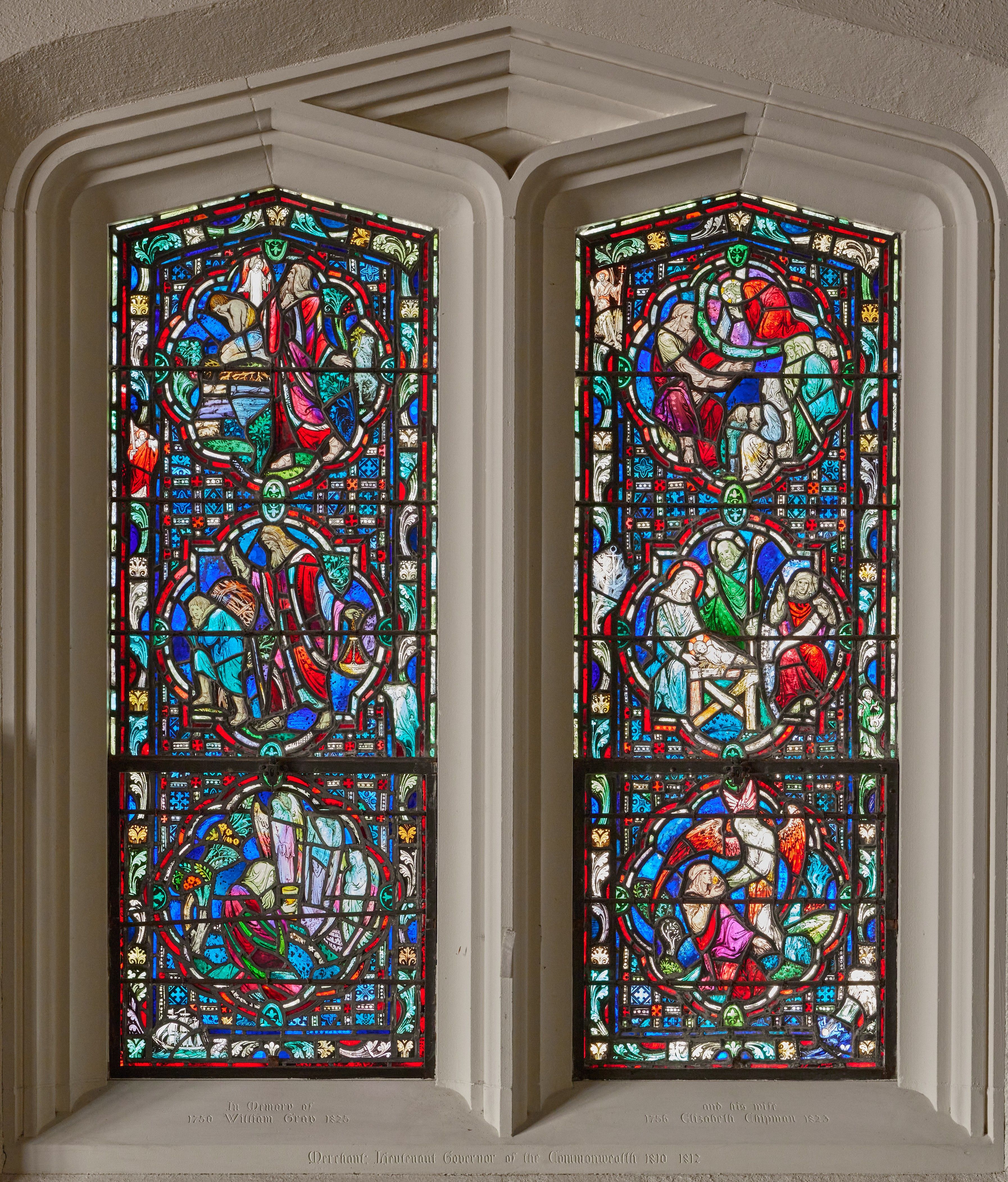
The Gray Memorial window, the third window on the right, is in memory of William Gray (1750-1825) and his wife Elizabeth Chipman (1756-1823).
The Honorable William Gray, familiarly known in this community as “Billy Gray” moved from Lynn to Salem at an early age, and entered the counting room of Richard Derby. Soon, he became one of the largest shipowners in Salem; in 1807, he owned one-quarter of the tonnage in the Port of Salem, carrying his trade to the farthest part of the earth. When he moved to Boston in 1809, he owned 15 ships, 7 barks, 13 brigs, and one schooner. In politics, he held many offices, from Selectman of the Town of Salem to that of Lieutenant Governor of the Commonwealth of Massachusetts from 1810-1812. As a merchant he was considered industrious, far-seeing and energetic; as a citizen, he was patriotic and public-spirited.
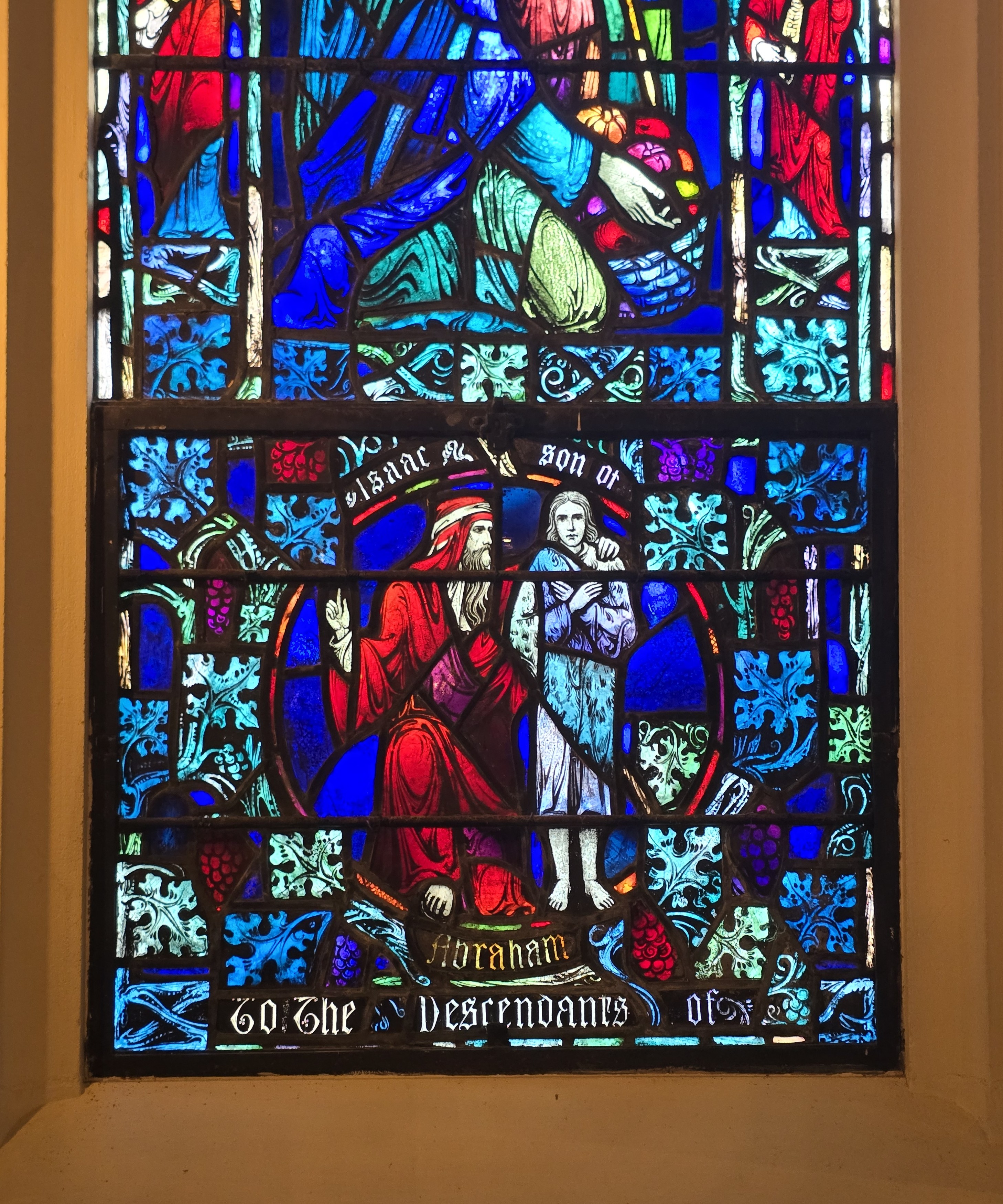
This window, through Abraham and Isaiah, symbolizes Faith and Hope. The first lancet “The Angels appear to Abraham” (A Gray Ship in Border): “Abraham and Isaac on the way to the mountain” (Angel with Lamb of Faith); “The Sacrifice of Isaac” (St. Paul, who mentions the faith of Abraham).
The second lancet shows “An Angel cleanses the lips of Isaiah with Coal from the Alter” (The Gray House Flag blown by wind sprites);“Isaiah prophecies the Birth of Christ” (St. Matthew), (An Anchor) and “Isaiah prophecies the Passion of Christ” (St. John the Baptist preaching).
The Lectern
The Lectern was given by Florence Saumarez Wheatland, in memory of her father-in-law, George Wheatland, a prominent member of the Essex County Bar; George Wheatland, Jr., a well-known businessman, and George Wheatland III, who through years of suffering, showed great courage and will always be remembered by his friends as a cultivated, delightful gentleman.

Join the Community
Support Harmony Grove and be among the first to hear about our programs.