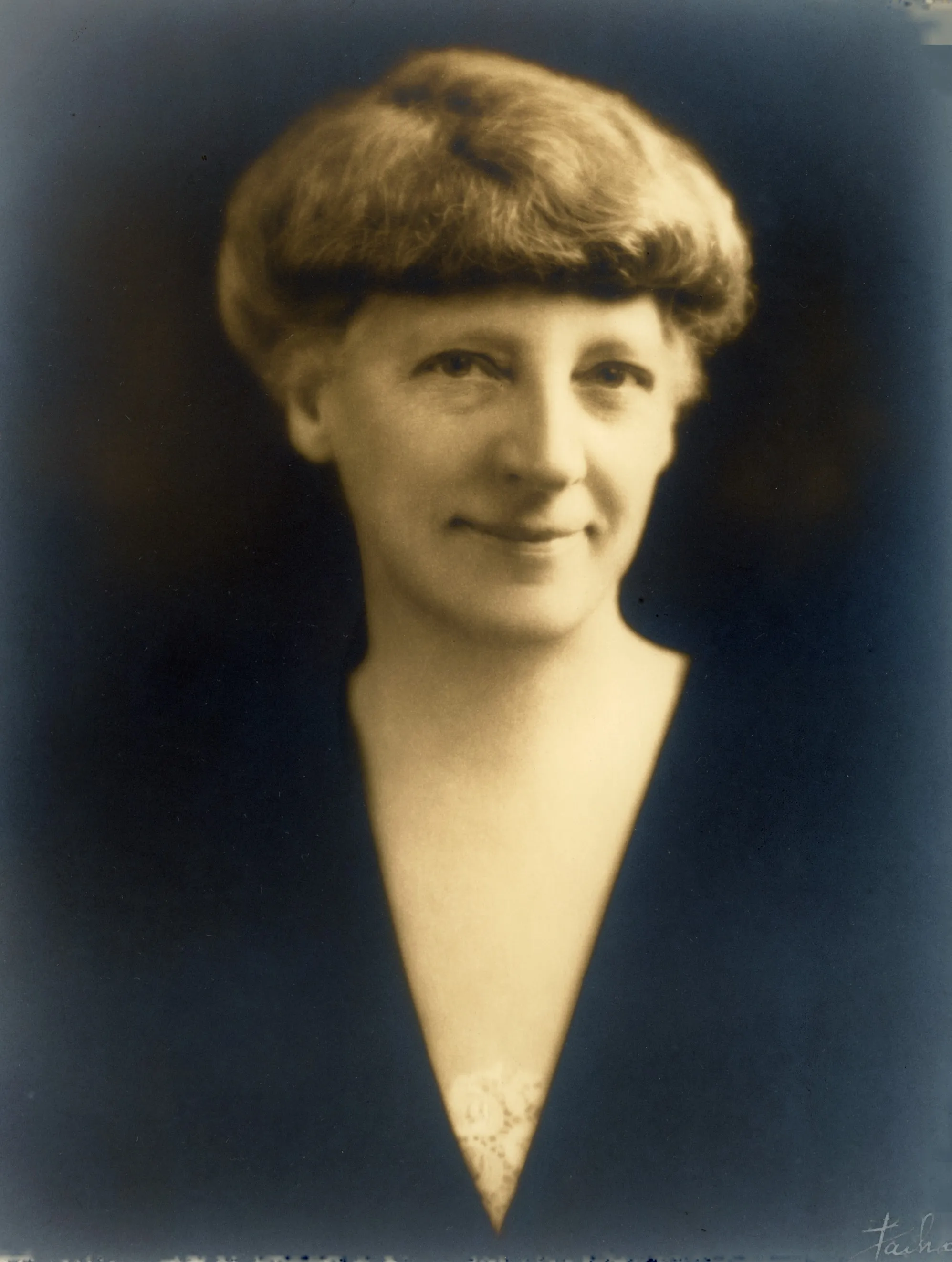
Agnes Baldwin Brett
Agnes Baldwin Brett was a pioneering American numismatist and archaeologist who, through her intelligence, determination, and scholarly excellence, became an internationally respected authority on ancient coins and a trailblazer for women in her field.

Agnes Baldwin Brett
Agnes Baldwin Brett, Ancient coin expert
September 25, 1876 - December 26, 1955
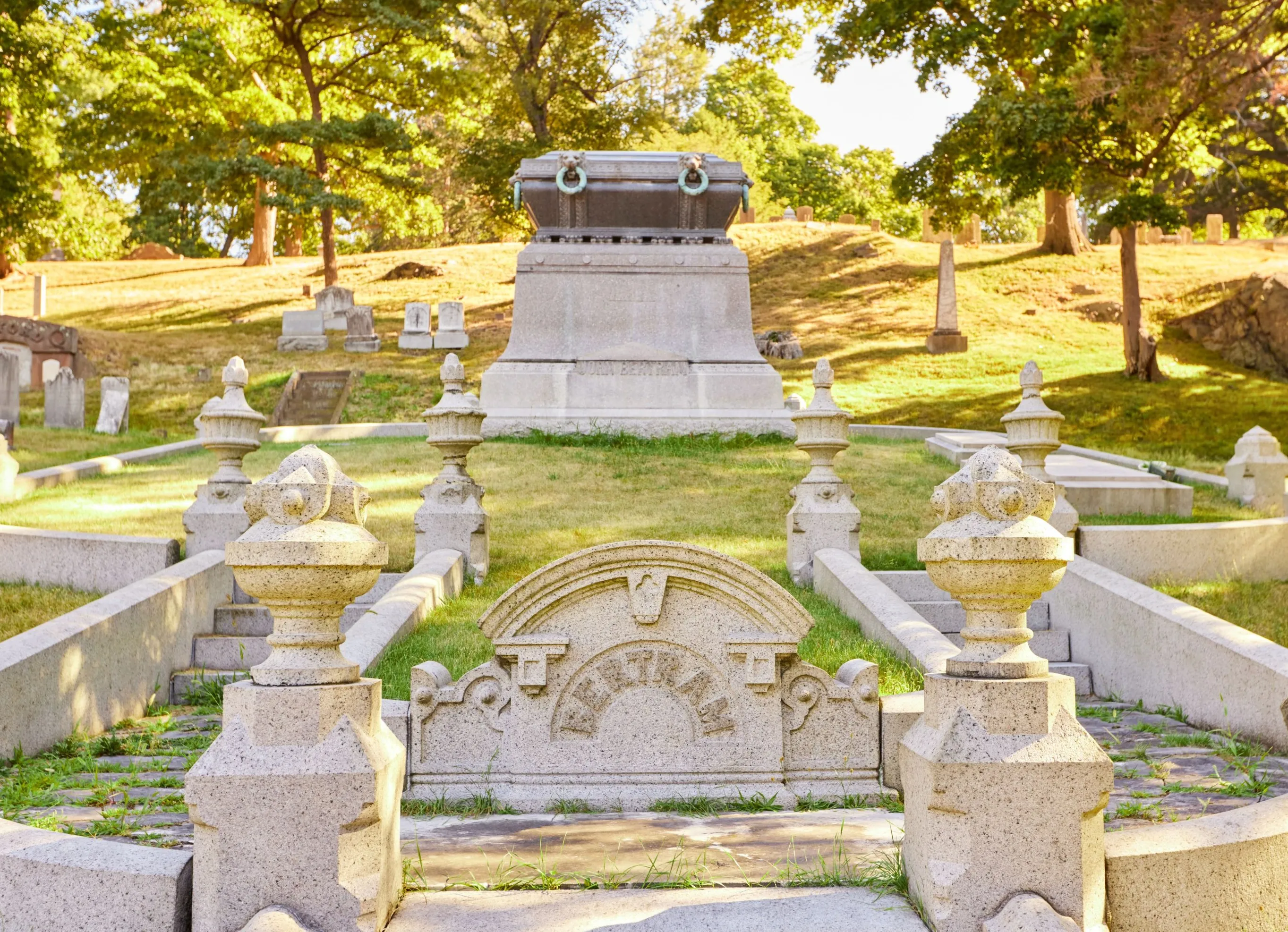
Burial location: Meadow Ave. Sec. F, Grave 1
Agnes Baldwin Brett was born in Newark, NJ, on September 25, 1876, the daughter of Frederick Wellington Baldwin and Mary Augusta Wheeler. She was the third of the Baldwin’s children, and had one brother and four sisters. Early in life, Agnes displayed attributes of intelligence, determination, and a willingness to defy the conventions of her gender, all of which were apparent throughout her life. Agnes attended Barnard College, “the only college in New York City, and one of the few in the nation, where women could receive the same rigorous and challenging education available to men.”[1]
Agnes received a B.A. degree in classics from Barnard College in 1897, and went on to receive a master’s degree in archaeology from Columbia University in 1900. The first women to receive a master’s degree in any subject at Columbia did so only four years earlier. After graduation, she spent two fellowship years at the American School in Athens, where she first developed her interest in ancient coins. In 1910, she worked as Curator of the American Numismatics Society in New York City, the first female to hold this position. During this time, she studied at the Cabinet des Médailles in Paris (now The BnF Museum), and published her first treatise, “The Electrum Coinage of Lampsakos.” In 1919, she received the ANS’s Archer M. Huntington Medal Award for her work. She went onto compile important catalogues for the ANS and National Sculpture Society. She was a visiting lecturer in archaeology at Columbia, as well as an instructor in numismatology, the study of ancient coins. She published books, articles, and papers extensively, including four books on Roman medallions, and while honorary Curator of Classical Coins at Boston’s Museum of Fine Arts, published the acclaimed Catalog of Greek Coins. In 1943, Agnes became the second American, and first American woman to receive a medal from the Royal Numismatic Society in London.[2] She was a pioneer in the male dominated study of ancient coins and archaeology, and was greatly respected among her peers in this field. At the height of her career and for decades afterword, she has been acknowledged internationally as the foremost authority on ancient coins. To her friends and family, Agnes was warm and kind, had a wonderful, dry sense of humor, and was very quiet about her accomplishments. She had a wide life-long circle of friends, many of whom knew little about what she did.[3]
In 1914, Agnes married George Monroe Brett, an accounting professor and academic kindred spirit. Together they traveled extensively, each writing books in their specialized field. Agnes and George became fascinated with ancient Egyptian culture and artifacts, and were present at the excavation of ancient Egyptian tombs in the 1930s. Agnes taught herself several languages, including Greek, German, and Hungarian. She was a brilliant and intrepid life-long seeker of knowledge. George and Agnes had one daughter, Barbara Brett Sanders, born in 1920, who they doted on. George passed away in 1941, and Agnes and Barbara moved to Marblehead, MA, in 1951. Agnes died of pneumonia in Marblehead on Dec. 26, 1955, at age 79.[4]
Text and photo: Martha Baldwin Sanders.
Sources Consulted:
[1] Barnard’s History - barnard.edu
[2] American Numismatics Society’s bio - numismatics.org/authority/brett
[3] American Numismatics Society’s interview of Barbara Brett Sanders, 2005.
[4] American Numismatics Society’s interview of Barbara Brett Sanders, 2005.
Join the Community
Support Harmony Grove and be among the first to hear about our programs.