Charles "Spike" Sanders
Charles “Spike” Sanders was a daring adventurer and decorated U.S. Navy officer whose remarkable life—from biking to Florida on $10 to commanding six battleships and earning the Bronze Star—reflected a legacy of courage, service, and resilience.

Charles "Spike" Sanders
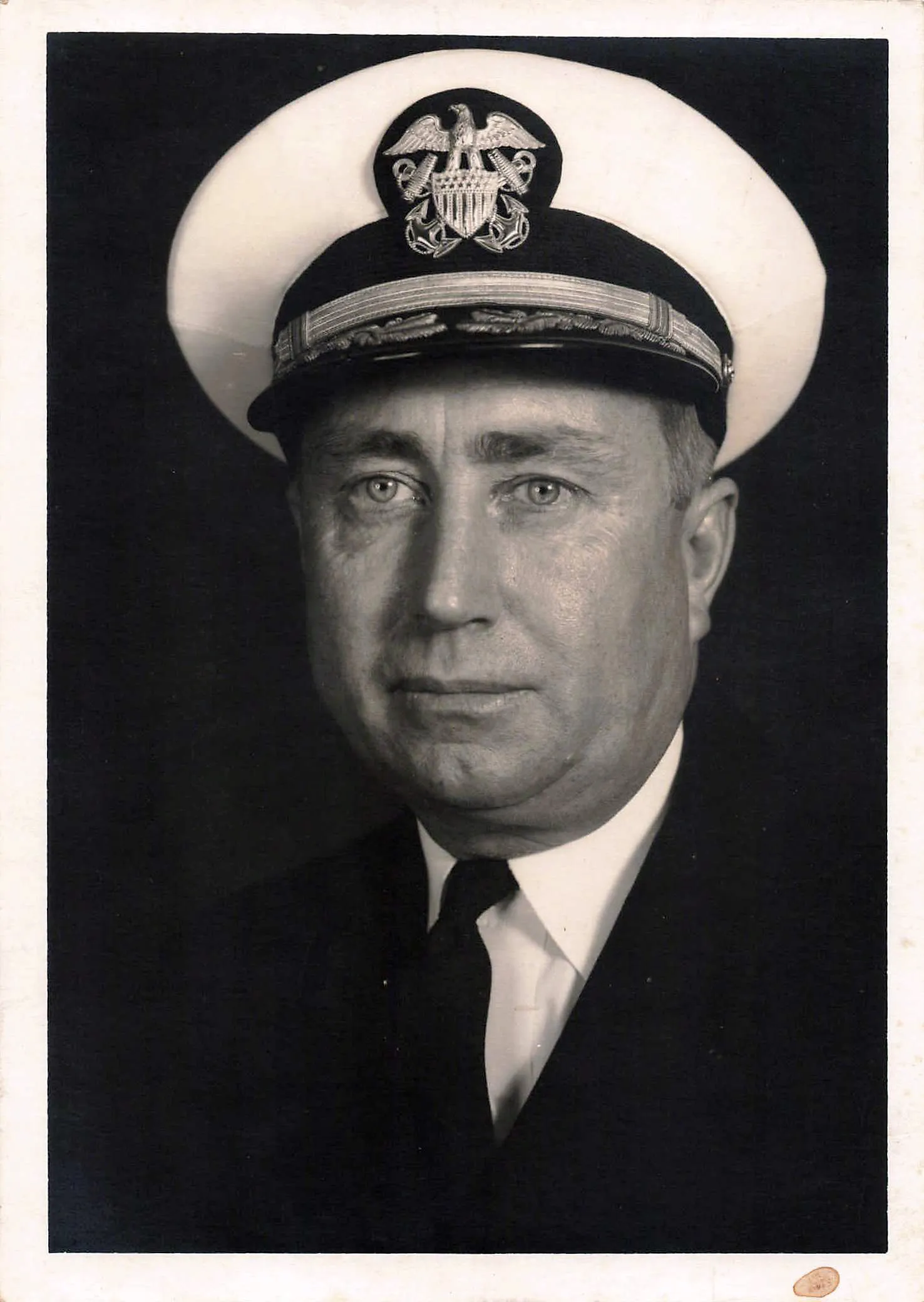
Charles Sanders, Commander, US Navy and Bronze Star Recipient
May 14, 1915 – November 18, 1990
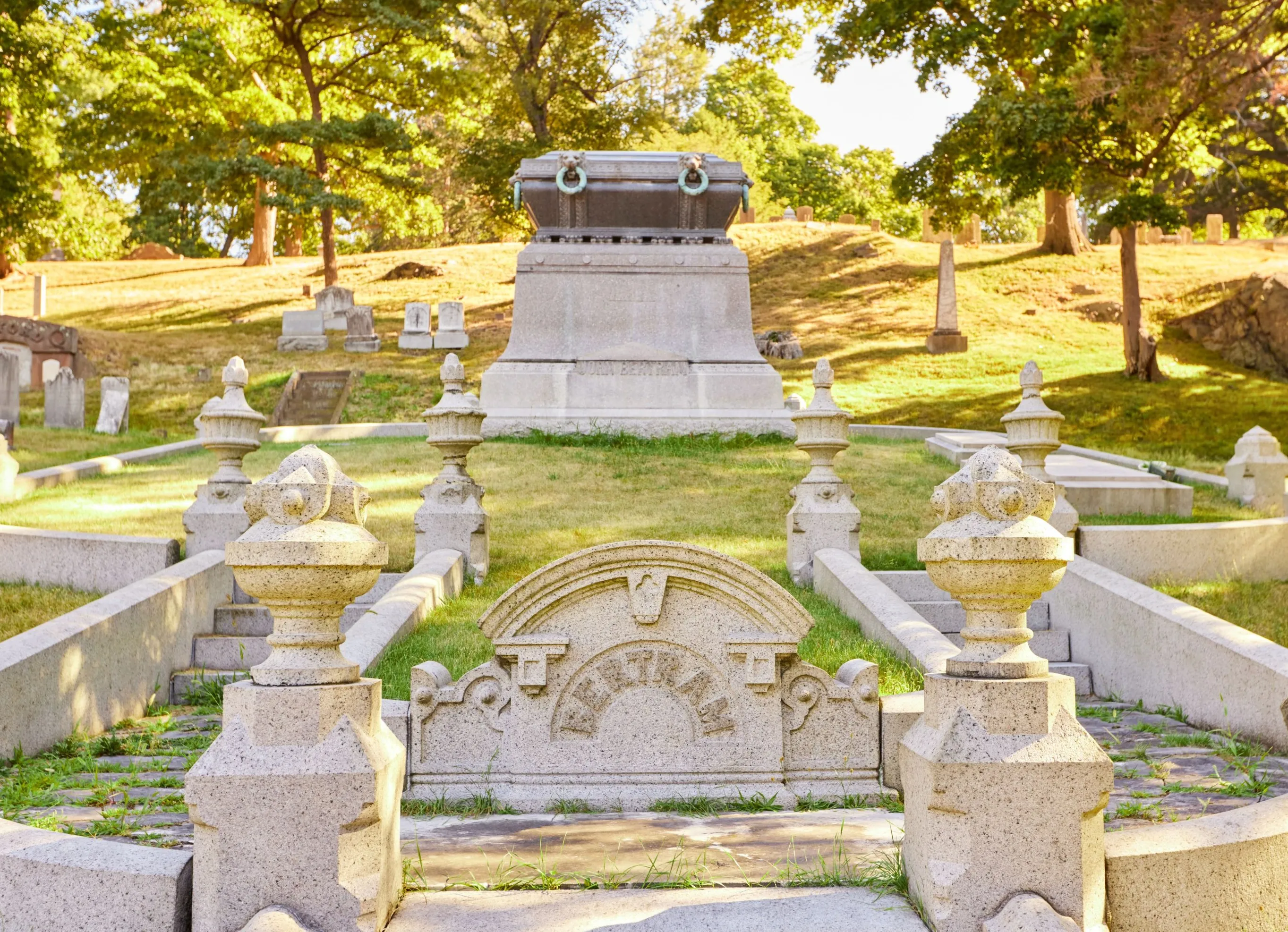
Burial Locations: Halidon Ave., #1615, Grave 13
Charles “Spike” Sanders, son of Richard Downing Sanders and Anna Devereux Hathaway Sanders, was born May 14, 1915, at 43 Chestnut St. in Salem. Charles had an older sister Helen, and younger brothers Robert and Richard. Richard, known as “Dickie,” was tragically killed in 1943 in a plane crash during a training flight at Pensacola Naval Air Training Center in Florida. He was 21 years old.[1]
Spike was born into a family with a strong heritage of military service. His grandfather Charles Sanders served in the Civil War. Uncle William Huntington Sanders was a Rough Rider under Lt. Teddy Roosevelt and died in Cuba during the brief Spanish American War. Uncle Thomas Sanders joined the Pancho Villa Expedition, and served in France in WWI with honors, receiving the Silver Star and Croix de Guerre for bravery and gallantry in battle.[2]
From early on, Spike had an inclination toward adventure. In 1935, at age 20, he and his cousin Nathaniel Sanders set out on bicycles to ride from Salem to Miami, Florida, and achieved this feat in 19 days, 12 of which rained, according to Spike when interviewed after the adventure. The young men slept outside every night, and for food hunted small game such as birds, squirrels, and rabbits, which they’d roast over campfires. Their intention was not only to ride their bikes to Florida, but to see how little they could spend doing it. The answer? $10.[3]
An avid and skilled small boat sailor, in 1939, Spike joined a group of six young men in their 20’s who were serving as part of a crew in bringing a 160’ steel-hulled schooner formerly owned by Kaiser Wilhem II from the Panama Canal to Boston. The captain of the vessel was Sterling Hayden, already a remarkably able sailor at the young age of 23, having just captained a large wooden schooner in its voyage from Gloucester, MA to Tahiti. Hayden went on to have a career as one of Hollywood’s leading men in the 1950s. In Hayden’s autobiography “Wanderer”, he recollected of that voyage: “I thought of a night southeast of Cape Hatteras back in ’39 –Christmas Eve… with a Gulf Stream sea gone mad in a northerly gale. With some sails blown out and her deck awash and five feet of water in the bilge. Oh, it was a mess all right.”[4] They lost use of their engine, and for 12 hours battled enormous waves. In a letter to his parents, Spike recounted “because of full gale we encountered 170 miles SSE of Hatteras, the bow and stern and amidships were awash all at the same time. The waves were a good 50-60 feet high. We had no pumps that would work so we formed a bucket brigade to the engine room bilge. Oil and water, what a mess. The galley was awash. All we could get to eat for 36 hours was crackers and jam.”[5]
Undeterred by this experience, Spike enlisted in the Navy in 1940 as a quartermaster. Five years later, after a rise through the ranks in the U.S. Navy described in later years by the Salem Evening News as “something akin to meteoric,” Spike was commanding the U.S.S. PCE 849, a small warship, in the South Pacific. After delivering much needed signal equipment to Leyte Gulf in Manila Bay through treacherous waters with floating mines and sunken ships, all while shooting down three enemy planes, Spike was awarded the Bronze Star for “his exceptional daring, initiative, and outstanding devotion to duty in entering a dangerous mined harbor.”[6]
Spike went on to have an illustrious Naval career. In the 24 years from his commission in gas quartermaster in 1940 to his retirement in 1964, Spike commanded six battleships. In 1953, he served as Director of Secretariat at Headquarters Supreme Commanders Atlantic, under William Henry Draper, the first US Ambassador to NATO. In addition to the Bronze Star, Spike was awarded the American Defense Medal, Pacific Area Medal, World War II Medal, the European Occupation Medal, the Korean Emergency Medal, The Philippines Liberation Medal, the American Defense Service Medal, and the National Defense Medal.[7]
In 1950, Spike married Jane Cameron Cook, and they enjoyed 40 years of marriage until his death on November 18, 1990.
Text and photo: Martha Baldwin Sanders.
Sources Consulted:
[1] Newspaper article, Sanders family papers.
[2] See bios of Charles Sanders, William Huntington Sanders, and Thomas Sanders.
[3] Boston Globe article, December 1935.
[4] “Wanderer,” by Sterling Hayden, page 33, published 1963.
[5] Salem Evening News article.
[6] Letter from General Headquarters, United States Army Forces, Pacific, August 19, 1945.
[7] Charles Sanders, retired naval commander, Salem Evening News, November 1990.
Join the Community
Support Harmony Grove and be among the first to hear about our programs.