Thomas Sanders
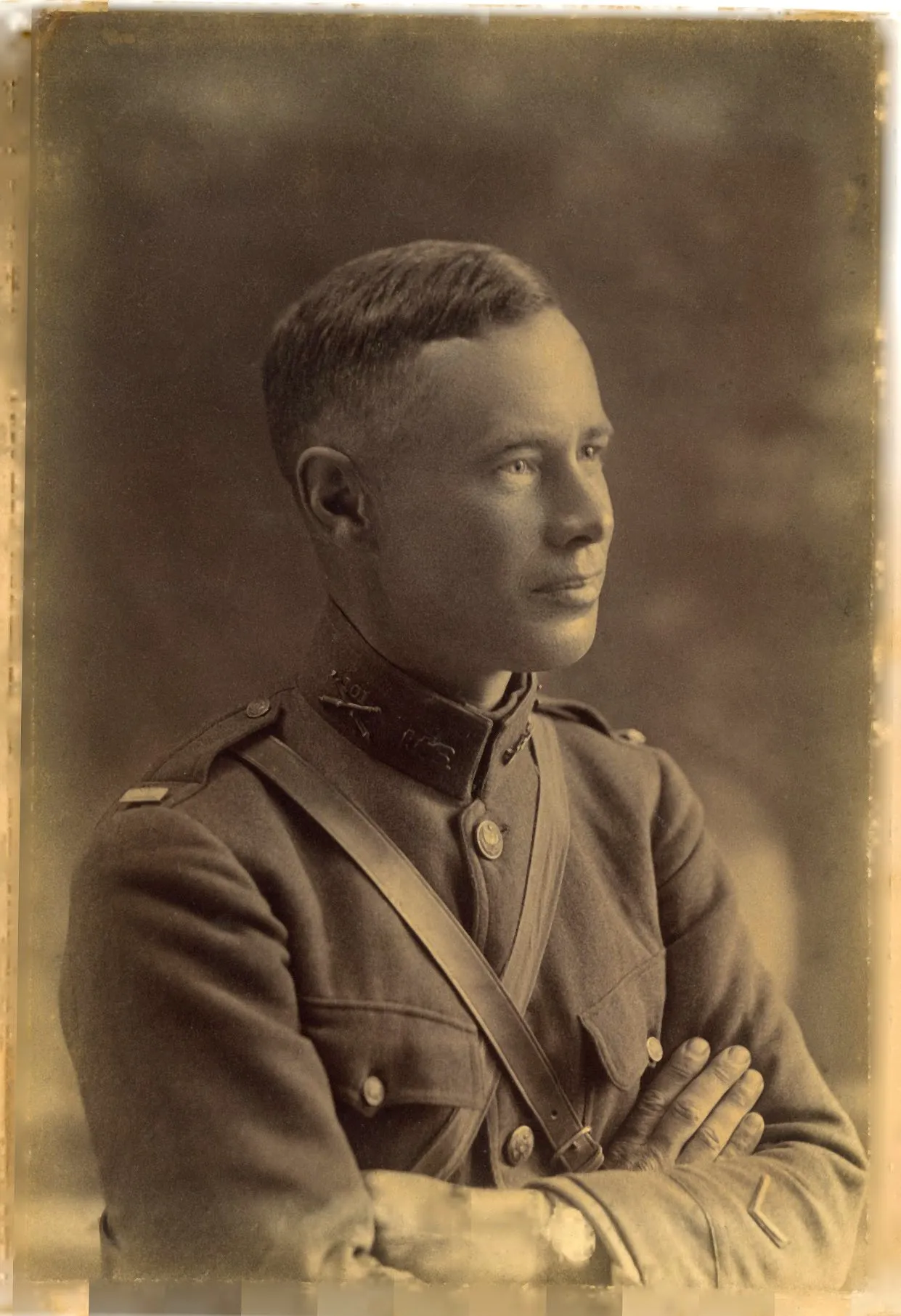
Thomas Sanders was a decorated World War I hero awarded the Silver Star and French Croix de Guerre for extraordinary bravery, whose life was marked by devoted military service, personal resilience through profound loss, and unwavering integrity.

Thomas Sanders
Thomas Sanders
December 29, 1881 - May 24, 1954
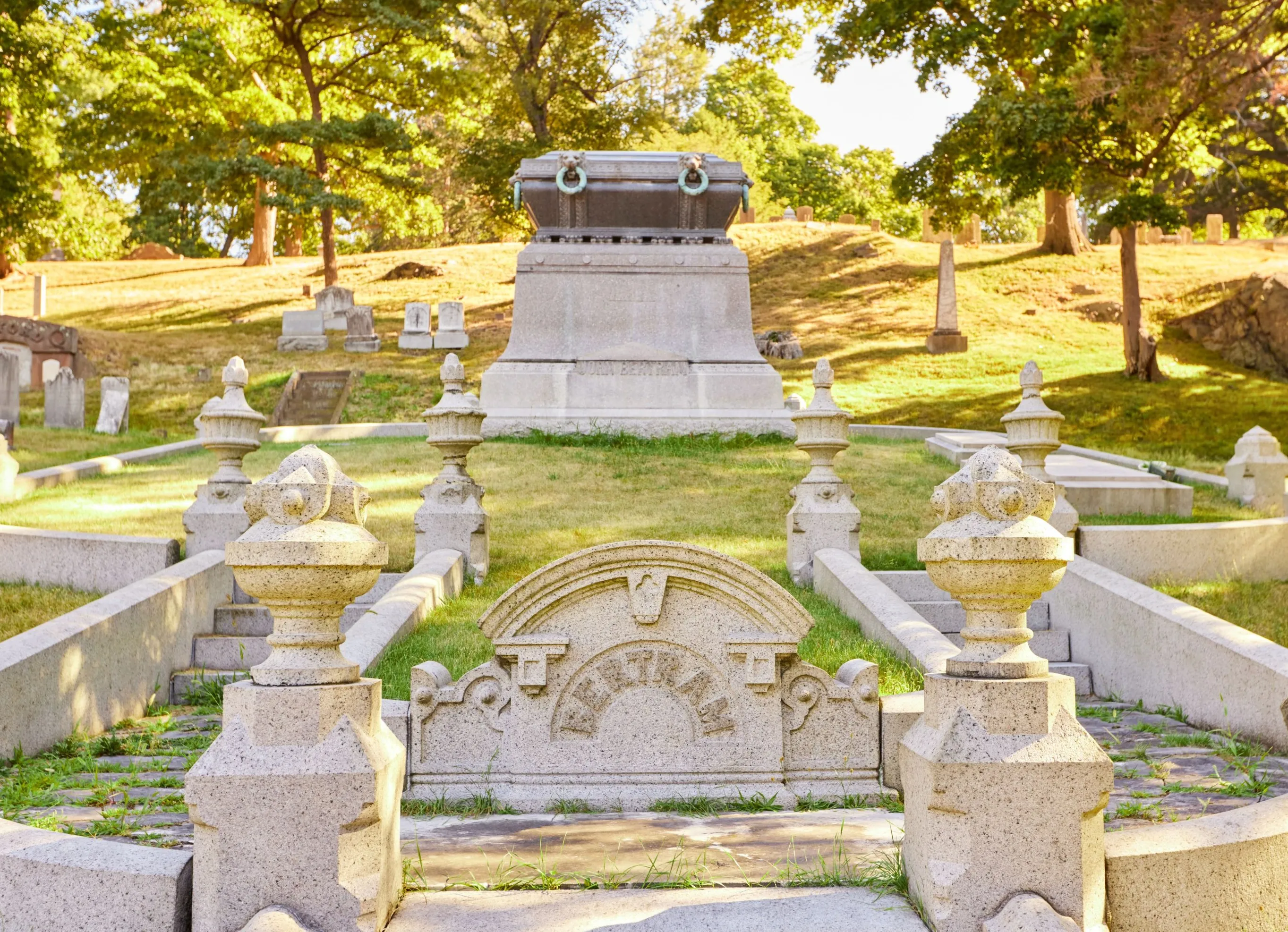
Burial lot #1615, Grave 9, Halidon Ave.
WW1 Silver Star and French Croix de Guerre Recipient for Gallantry and Bravery
Thomas Sanders was born in Salem on December 29, 1881, to Charles Sanders and Helen Lord Sanders, the second youngest of his siblings: Arthur, William, Katharine, and Richard. He grew up at 43 Chestnut St. in Salem, attended Milton Academy and graduated from Harvard College in 1905. On June 22, 1907, Thomas married Eleanor Colman Harris, with whom he had three children, Katharine, Elizabeth, and Thomas Jr.[1]
In 1916, after a raid in Columbus, New Mexico by Mexican revolutionary Pancho Villa in which 17 Americans were killed, President Woodrow Wilson called for troops to be sent to the border with Mexico to assist with the search for Villa, and to guard the US Mexico border to prevent future attacks by Villa and his followers.[2] In response, Tom, along with the Massachusetts Volunteer Militia, joined the 1stMassachusetts Field Artillery, Battery D, in El Paso, Texas in July, 2016. In El Paso, he spent several months in a tent camp with no enemy engagement, training and honing his artillery skills under General John J. Pershing.[3]
In November 1916, Tom returned to his wife and children in Salem for several months, then shortly after the start of WW1 on July 25, 1917, he enlisted in the US Army’s Expeditionary Forces as 1st Lieutenant, Battery D, 101st Field Artillery, the 26th Division, also known as the “Yankee Division.” On September 9, 1917, he sailed for France, bringing with him his horse, Chip. On March 29, 1918, he was promoted to captain, and commanded Battery E in the same division until his honorable discharge on April 10, 1919.[4]
During his service in France, Tom received three citations for bravery. According to a citation Thomas received from Headquarters, 26th Division, “on April 10, 1918, after telephone wires were cut, he stationed himself in the open at the rear of his battery. He directed its fire with great coolness and excellent judgment, encouraging the cannoneers and directing the care of the wounded.” Thomas was cited again for “marked gallantry and meritorious service…during the advance of this Division against the enemy from July 18th to 25th, 1918, in the second Battle of the Marne.” Thomas also received the French Croix de Guerre, with the citation, translated from French: “An officer of remarkable bravery, composure and decisiveness. Telephone communications being cut off by a violent enemy bombardment, he placed himself behind his battery and directed the fire himself, thus giving to all a fine example of contempt for danger.”[5] After returning home in 1919. Tom went to Washington, DC where he received the Silver Star medal for gallantry in action.[6]
When Tom was discharged from the Army, he was informed that the Army didn’t have the ability to transport his beloved horse Chip back home to Salem. He refused to accept this and demanded that Chip be provided transportation home. The Army agreed, and Chip returned to Salem with Tom.[7]
Tom was a man of integrity, loyalty, and like his father Charles, had a quick temper. He had many challenges in life. He had lost two older brothers, Arthur and William, as young adults, his father Charles died in November of 1918 while Tom was serving in France. Tom’s youngest child, Tommy, had been born six weeks prematurely on June 15th, 1917, and at only four pounds at birth at a time when there were few medical interventions available for premature babies, was not expected to survive. This was a source of great concern for Tom and especially Eleanor in the first few months of Tommy’s life, with Tom having left for France a few weeks after Tommy’s birth. Tommy gained little weight during his first months of life, and at seven months old weighed only eleven pounds. He survived though and was normal in every way but height; he was smaller than average for the rest of his life. In a final heartbreaking loss to Tom and his children, his beloved wife Eleanor died on July 14th, 1919, at age 38 of a ruptured appendix, three months after Tom’s return from France. In 1921, Tom married Katherine Fabens and became stepfather to her four children. They remained happily married until Tom died unexpectedly on May 24, 1954.[8]
Text and photo: Martha Baldwin Sanders.
Sources Consulted:
[1] Harvard College Class of 1905 directory
[2] Pancho Villa, Mexican revolutionary, Britannica.com
[3] Massnationalguard.org, family papers
[4] Harvard’s Military Record in the World War, copyright 1921, Harvard Alumni Association.
[5] Harvard’s Military Record in the World War, copyright 1921, Harvard Alumni Association.
[6] Newspaper articles, family papers.
[7] Family papers.
[8] Family papers.
Join the Community
Support Harmony Grove and be among the first to hear about our programs.