Mayors of Salem Self-Guided Walking Tour
Explore Salem’s mayoral history through this self-guided walking tour of Harmony Grove Cemetery, featuring the final resting places of 21 Salem Mayors whose leadership helped shape the city’s history.

Walking Tour Map

Mayors of Salem Self-Guided Walking Tour
Explore Salem’s mayoral history through this self-guided walking tour of Harmony Grove Cemetery, featuring the final resting places of 21 Salem mayors whose leadership helped shape the city’s history.
Created as part of the Salem 400+ program “From City Hall to Sacred Ground: Honoring Salem’s First Mayor Leverett Saltonstall and Those Who Followed,” this tour commemorates a landmark year in Salem’s history. In 2026, the city celebrates both the 400th anniversary of its founding and the 190th anniversary of its incorporation as a city.
- Accessibility Note: Portions of the route include steep terrain, uneven ground, and stairs. Comfortable footwear and weather-appropriate attire are recommended.
The self-guided tour will remain available throughout the year. Visitors are welcome to explore at their own pace anytime the cemetery is open. Tour maps will be available at the cemetery office and online.
Notable Residents
.png)

David Mason Little
David Mason Little was born into a prominent Swampscott family, studied naval architecture at MIT, and later settled in Salem (like his artist brother Philip Little), where he opened a boat-building business. His true passion, however, combined photography and sailing, exemplified by his 1883 photo book Instantaneous Marine Studies, now considered an early classic of its kind.
Civil service was important to Little: he served on the Salem School Committee and Board of Aldermen, and in 1899, he ran successfully for the city’s mayoral seat. His sole term as mayor has been described as “clean if not inspiring.” Little managed to significantly reduce the city’s bonded debt and tax rate and oversaw extensive street paving.
However, Little lost his bid for reelection to John “Silk Hat” Hurley, who mobilized Salem’s growing working-class population, marking the end of upper-class dominance in the mayor’s office.
David Little did not stay idle for long. He remained active in public service, serving as the last Collector of Customs for Salem and Beverly (1903–1913) and at the Charlestown Navy Yard during World War I. He died in 1923.
He is buried on Violet Path, Lot #1612.
.png)
Charles Wentworth Upham
Charles W. Upham was Salem’s first foreign-born mayor, born May 4, 1802, in Saint John, New Brunswick (then the New Brunswick Colony of British Canada). A Harvard College graduate (1821), he continued at Harvard Divinity School and served as a colleague-pastor of Salem’s First Church from 1824 to 1844, resigning after a bout of bronchitis but remaining active there.
He held numerous public offices, serving in the Massachusetts House of Representatives (1849, 1859, 1860), the State Senate (1850, 1857, and 1858, the latter two years as president), and one term in the U.S. Congress as a Whig (1853–1855).
Upham’s career combined ministry, scholarship, and public service. He was a historian, best known for Salem Witchcraft, the first comprehensive study of the 1692 events. He remained active in civic and intellectual life until his death in Salem on June 15, 1875.
He is buried on Anemone Path, Lot #132.

William Cogswell
Born: August 23, 1838, Bradford, Massachusetts.
Died: May 22, 1895, Washington, D.C.
Burial: Harmony Grove Cemetery, Lot 1675 Grave 1 Chapel Ave.
William Cogswell’s parents were George and Abigail Parker Cogswell. His father was a surgeon, and was a founder of the Massachusetts Republican Party. He was educated at Atkinson Academy in New Hampshire, Kimball Academy in Meriden, New Hampshire, Phillips Academy in Andover, Massachusetts and Dartmouth College in Hanover, New Hampshire. He entered Dartmouth in 1855, and attended the school for a short time. He went on a voyage around the world, serving as a sailor in 1856 and 1857. When he returned to the United States in 1858, he entered Harvard Law School.
On September 8, 1860, Cogswell was admitted to the bar in Essex County, Massachusetts. He worked in the office of Attorney William D. Northend, and then opened his own office in Salem, Massachusetts in April 1861. He had begun to serve in the Second Corps of Cadets in the winter of 1860-1861.
On April 19, 1861, news reached Salem that the Sixth Massachusetts Regiment had been attacked in Baltimore on its way to defend Washington D. C. at the beginning of the Civil War. Cogswell transformed his law office into a recruiting station. In 24 hours, he had raised a full company; this was the first full company recruited for the war. This became Company C of the Second Massachusetts Volunteers. Cogswell was Captain in command. He was commissioned on May 11, 1861. He was promoted to Lieutenant Colonel on October 23, 1862 and to Colonel on June 25, 1863. He was appointed Brevet Brigadier General of Volunteers by President Lincoln on December 12, 1864. This appointment was confirmed by the United States Senate on February 14, 1865. Cogswell served with General William Tecumseh Sherman on the march through Georgia. He was mustered out of the service on July 24, 1865. He returned to his law practice.
Cogswell served as mayor of Salem 1867-1869, and 1873-1874. He served in the Massachusetts House of Representatives in 1870, 1871 and 1881-1883. He served in the Massachusetts State Senate in 1885 and 1886. He was a delegate to the Republican Convention in 1892.
He was elected to the 50th United States Congress in 1886 and served four succeeding terms until his death in 1895.
On June 20, 1865, he married Emma Thorndike Proctor. They had two children, William and Emma. His wife died on April 1, 1877. Cogswell married second wife Eva M. Davis on December 12, 1881. They had no children.
Photo: Library of Congress, Washington, D.C, via Flickr.
Sources Consulted:
- American Battlefied Trust.
- Salem Links and Lore.
- Wikipedia.
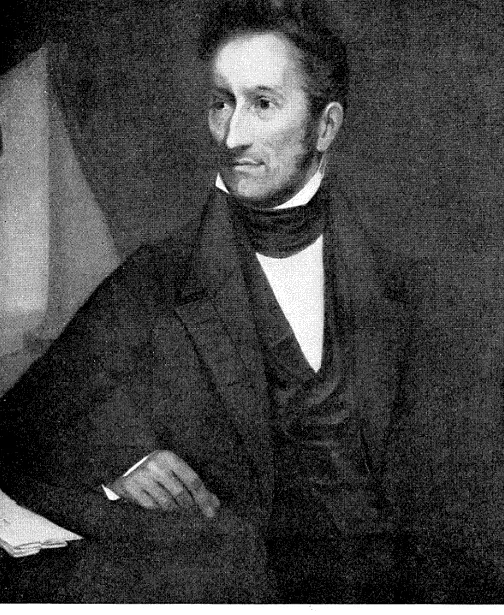
Nathaniel Silsbee
Burial Location: Amaranth Path: Lot 0129, Grave#2
Born on January 4, 1773, to parents Captain Nathaniel Silsbee and Sarah Becket Silsbee, Nathaniel Silsbee was the oldest child in his family. He attended private schools until his father took him out of school when the boy was only fourteen years old and sent him off to sea. It was said that the teenager was rebellious. His father was also having financial difficulties and needed more income for the family. Young Nathaniel earned navigation skills aboard the ships owned by Elias Hasket Derby and was apparently very successful at dealing with his fellow sailors. His pay was five dollars a month. Nathaniel added to this by his “adventures”, which were private speculations and sales of items in which he was able to make more than 100% profit.
By the age of nineteen, he was in command of Elias Hasket Derby’s sloop Sally. When he and his first mate Charles Derby went to pick up their papers at the Custom House in Salem, they were told that they were making history as the first two teenagers to handle a voyage. At 22, he was a part owner of the schooner Betsy. At age 28, Nathaniel Silsbee retired from the sea. He put his brothers William and Zachariah in charge of the vessels that he owned.
On December 12, 1802, Nathaniel Silsbee married Mary Crowninshield. Silsbee began to pursue a career in politics. He served two terms in the US House of Representatives, from March 4, 1817 to March 3, 1821. He was chair of the House Committee on Military Pensions. Returning home to Massachusetts, he served in the state Senate from 1821-1823 and was Senate President from 1823-1825. He was elected to the US Senate from 1826-1829 and was reelected, serving until 1835. He was the chair of the Senate Committee on Commerce.
His son Nathaniel was the mayor of Salem in 1849-1850 and again in 1858-1859.
Silsbee had a large house built next to the Salem Common. It rivaled other houses in the city in size and decoration. Later it became the headquarters for the Knights of Columbus. The Silsbee family entertained many well known politicians, including: John Adams, John Quincy Adams, James Madison, Daniel Webster, and Henry Clay. The Marquis de Lafayette visited in 1824.
Photo : Courtesy of Peabody Essex Museum, Salem, MA.
Sources Consulted:
- Salem Links and Lore.
- Vote View by UCLA.
- Wikipedia.
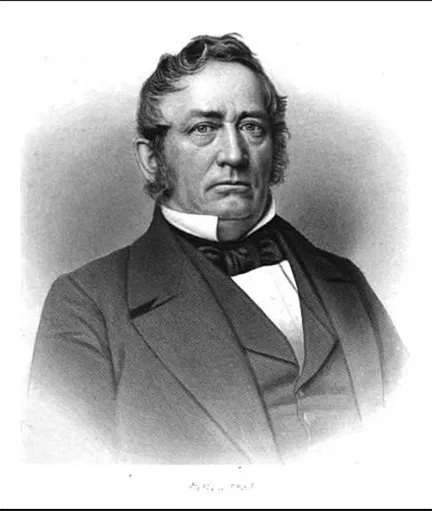
Stephen Clarendon Phillips
Burial Location: Amaranth Path, Lot #150, Grave #8
Stephen Clarendon Phillips was born on November 4, 1801 in Salem. His parents were Stephen Phillips and Dorcas Woodbridge Phillips.
Stephen C. Phillips graduated from Harvard College in 1819. He immediately went into business as a merchant in Salem Massachusetts, but also spent much of his life in elective offices. He was a member of the Massachusetts House of Representatives from 1824- 1829, and then was elected to the State Senate in 1830. He was then elected to the 23rd (1833-1835), 24th (1835-1837) and 25th (1837-1839) sessions of the US Congress. He resigned in 1838 and was elected the second mayor of Salem in which office he served until 1842. He was defeated in his bids for the office of Governor in 1848 and 1849.
He married Jane Appleton on November 6, 1822. She died December 19, 1837. On September 3, 1838, he married his first wife’s sister, Margaret Mason Peele. Eight children were born during his first marriage and four more during his second marriage.
During his later years, Stephen C, Phillips was active in the lumber business in Canada, He is said to have had a hopeful spirit and undaunted courage. After visiting the site of his business, he booked passage on a steamboat called Montreal going from Quebec City to the city of Montreal. Fire broke out. Of the 400 passengers on board only 150 were saved. Stephen C. Phillips was not one of these. He died in the St. Lawrence River on June 26, 1857 His body was recovered and a funeral service was held at the Barton Square Church in Salem on June 30, 1857. In his obituary it was said that; “He was one of nature’s noblemen and as an able, honest, sincere Christian man, added worth to the human race by belonging to it.”
Sources Consulted:
- Find a Grave: findagrave.com /memorial/166382736/stephen-clarendon-phillips
- History/house.gov/People/Detail/19660
- Wikipedia.org/w/index.php?title=Stephen_C_Phillips&oldid1119265873
- Wikitree: Stephen Clarendon Phillips (1801-1857)
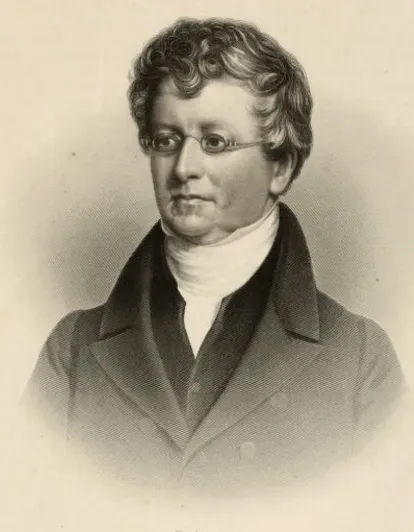
Leverett Saltonstall
Leverett Saltonstall was born on June 13, 1783 in Haverhill, Massachusetts. His parents were Dr. Nathaniel Saltonstall and Ann (White) Saltonstall. He was educated at Phillips Exeter Academy and then went to Harvard College, graduating in 1802 with a law degree. In 1803, he was elected to Phi Beta Kappa. Moving to Salem, he entered the law office of William Prescott, under whose influence and encouragement; Saltonstall became active in the causes and activities of Essex County Federalists.
He met Mary Elizabeth Sanders and the couple married on March 11, 1811. They had four children: Anne (1812), Caroline (1815), Lucy (1822) and Leverett (1825).
His political career began with his election to the Massachusetts House of Representatives in 1813. He was elected to the House again in 1815, 1822, 1827, 1834 and 1844. He served in the Massachusetts Senate in 1817-1820 and as its President in 1831. In March of 1836, Saltonstall was elected to office as the first mayor of Salem. He won office as mayor again in 1837 and 1838. During his term, Salem City Hall was built. When the cornerstone was laid on September 6, 1837, copies of newspapers, the mayor’s speech on the organization of city government, and the new city charter were buried underneath it.
Leverett Saltonstall was popular and his years as a resident and holder of state and city office contributed to his being a founder and vice president of the Essex Historical Society. He also served on the Board of the Harvard Overseers.
In 1838, Saltonstall was elected as a member of the Whig party as a representative from Essex County to the United States Congress from District Two. One of the issues that he considered during his term included the tariff of 1841. Describing himself as a “gloomy politician”, he did not run for a second term.
On his return to Salem, he was semi-retired, seeing a few legal clients, but did accept nomination to the Massachusetts House of Representatives in 1844. On May 8, 1845, Leverett Saltonstall died of complications from gout and asthma at his home, with his wife and children surrounding him. He is buried at Harmony Grove Cemetery, Aspen Path Lot. 724, Grave 2.
Photo: Find a Grave.
Sources Consulted:
- Massachusetts Historical Society: Highlights from the Saltonstall Family Collection at the Massachusetts Historical Society. Saltonstall Family Correspondence. Massachusetts Historical Society, Boston, MA.
- Phillips Library at the Peabody Essex Museum. Mss.243 Papers of Leverett Saltonstall 1783-1845, Biographical Sketch.
- Wikipedia.

Arthur Lord Huntington
Arthur Lord Huntington was born and educated in Salem before attending Harvard (Class of 1870). He then attended law school, studied at the law office of Perry & Endicott, and was admitted to the Essex Bar in 1874. Throughout his lifelong legal career, he was a managing partner in the firms where he worked.
Huntington’s notable political roles included serving as the 24th Mayor of Salem, a position his father, Asahel Huntington, had also held (8th Mayor, buried in Topsfield, MA). He also served on the Common Council from 1875 to 1878 and was its president for the final two years. He was also on the Park Commission, appointed by Mayor Rantoul, and led it until ill health forced his resignation.
His civic roles included director of the Salem National Bank, trustee of the Salem Five Cents Savings Bank, trustee of the Bertram Home for Aged Men, and president of Harmony Grove Cemetery. Huntington died on October 19, 1902, in Norwalk, Connecticut, at age 54. He was unmarried and survived by his sister, Sarah Louisa Huntington.
He is buried on Halidon Avenue, Lot #1597.
Join the Community
Support Harmony Grove and be among the first to hear about our programs.